What is an East West Engagement Ring and How to Maintain It
Engagement ring styles are quietly shifting. More couples are moving away from the usual and looking for something that feels more like them. The east west engagement ring has been catching attention as they are distinctive without being over the top. It takes the elegance of a classic moissanite ring and tilts it sideways, literally, creating something that feels fresh and modern without losing any of its sophistication.
What Is an East West Engagement Ring?
Simply put, an east west ring setting rotates the center stone horizontally across the band. Instead of pointing up toward the fingertip the way a traditional solitaire does, the stone stretches from side to side, that is, east to west across the finger, hence the name.


It's a subtle change that makes a surprisingly big difference. The stone is the same, the setting is similar, but the ring's overall personality shifts. East to west engagement rings have a wider, more relaxed silhouette that feels genuinely contemporary.
What makes this setting so versatile is that it isn't tied to one specific shape of the stone. Oval, emerald, marquise, pear - they all translate beautifully when turned horizontally. Each shape brings something different to the orientation, which gives you a lot of room to find something that feels personal.
Why Choose an East West Setting for Your Engagement Ring?
Turning an elongated moissanite sideways increases its visual spread across the finger, which creates more presence without actually increasing the carat weight. For anyone who wants maximum impact from their stone, this is a genuinely clever way to get there.


Beyond the visual effect, east west engagement rings have a quiet confidence about them. They stand out as they are modern but not flashy, distinctive but not loud, which is what makes east west jewelry work across so many different personal styles. A clean, minimal band lets the orientation do all the talking. A nature-inspired band adds texture without fighting the stone for attention.
There's also a practical side to this setting that doesn't get mentioned enough. The lower profile means the stone sits closer to the finger, which reduces snagging on clothing and fabric during everyday wear. The horizontal placement also distributes weight more evenly, so the ring feels more stable and secure over time.
Moissanite is a natural fit here. Larger elongated stones become far more accessible when you're not paying natural diamond prices, and the visual payoff in an east west ring setting is significant.
Best Moissanite Shapes for an East West Ring Setting
Not every moissanite shape suits this orientation equally. Elongated cuts are the sweet spot, but their length is what creates that graceful horizontal spread across the band.



Oval moissanite is the most popular choice by a wide margin, and it's easy to see why. The soft, curved shape flatters almost every hand and sits beautifully in a sideways orientation - balanced, elegant, and never trying too hard.
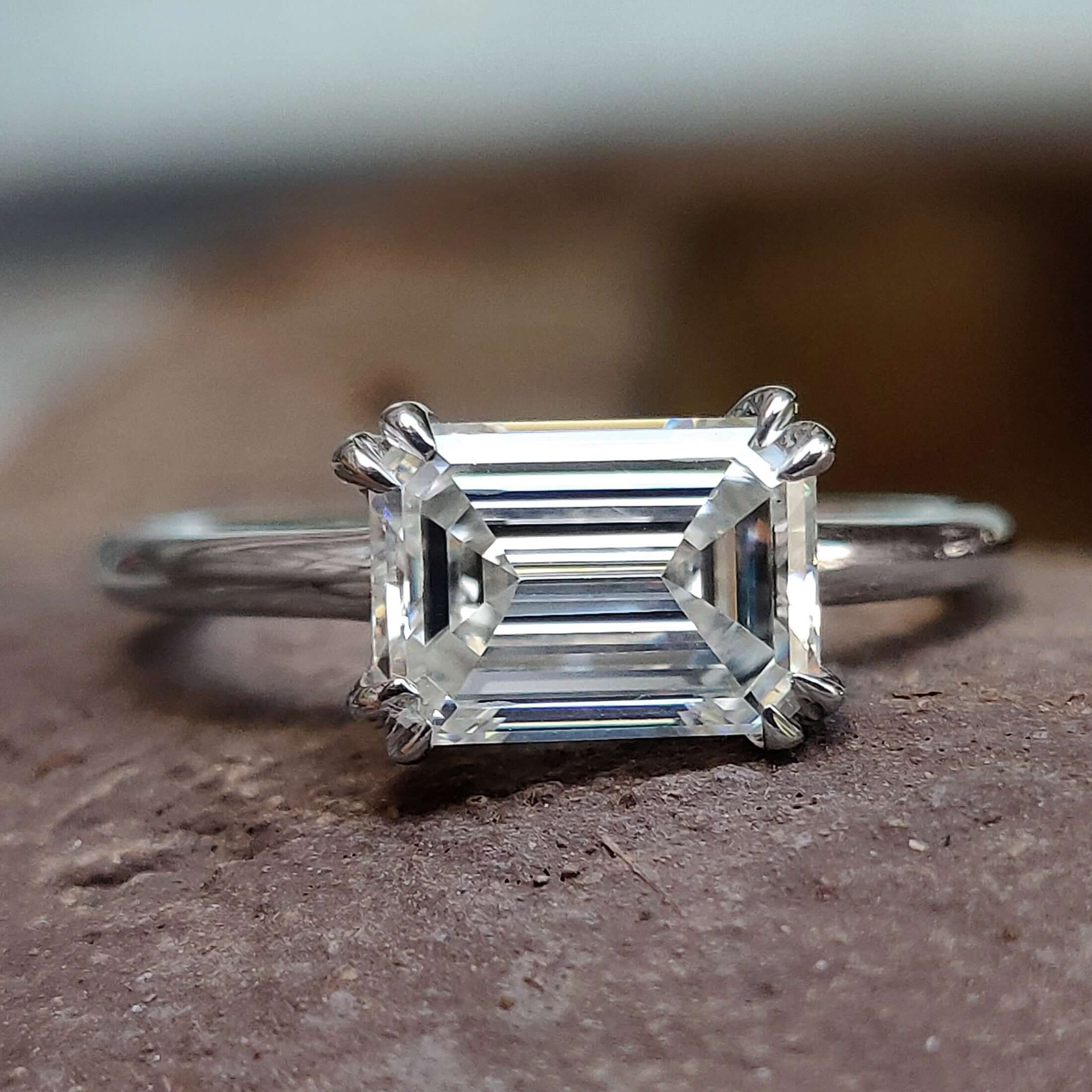
Emerald cuts bring a completely different energy. Those long, clean lines and step-cut facets create quiet flashes of light rather than full sparkle. Horizontally, they look genuinely striking without being excessive.
Marquise moissanite makes a bolder statement. The pointed ends stretch across the band and create real width, though proper prong placement at the tips matters more with this shape than most.
Pear shapes are interesting in an east west ring because the asymmetry becomes a feature rather than something to work around. Rotated sideways, the teardrop shape creates a look that feels genuinely contemporary and a little unexpected.
Rectangular cushion cuts round out the options nicely - softer corners, modern proportions, and a shape that balances well in a horizontal setting.
Moissanite versions of all of these give you more flexibility on size and clarity, which makes east west engagement rings even more appealing from a value standpoint.
How to Maintain Your East West Engagement Ring?
Care for an east west engagement ring isn't complicated, but it does require a little consistency. The horizontal orientation means the stone experiences lateral pressure differently than a vertically set stone, so a few habits go a long way.


The main thing is mindful wear. Take the ring off before heavy lifting, cleaning, or anything that puts real stress on your hands. Apply lotions and perfumes before the ring goes on.
For cleaning at home, warm water, a small amount of mild dish soap, and a soft brush are all you need. Work gently around the prongs and underneath the stone where buildup tends to hide. Circular motions get the job done without scratching the metal.
Prong checks matter more with east west ring designs than with vertical settings. Elongated stones in a horizontal position experience more lateral force, which can gradually loosen prongs over time. A quick visual check every couple of months takes seconds, and a professional inspection every six months keeps everything secure.
A jeweler can also do an ultrasonic clean that removes the residue a home brush can't quite reach. Storage is easy, just keep the ring separate from other jewelry in a soft pouch or lined box. Consistent upkeep means your east west engagement rings stay as brilliant ten years from now as they do today.
Final Thoughts
The east west engagement ring is one of those designs that makes complete sense once you see it on a hand. The horizontal orientation enhances elongated stones, creates a modern silhouette, and delivers real visual presence. When paired with moissanite, the value proposition is hard to argue with.
Diamondrensu crafts east west jewelry with precision-cut moissanite and customizable settings, from oval solitaires to emerald cut designs. If you're drawn to something that feels timeless but quietly different, our collection of east west engagement rings is well worth exploring.
Create a Ring That Feels Like You
Customize your east west engagement ring with stunning Lab Grown or moissanite settings tailored to your style.
Design Your RingFrequently Asked Questions
1. What is an east west engagement ring and how is it different from a traditional setting?
A traditional setting positions the stone vertically. An east west ring rotates it horizontally across the band.
2. Which moissanite shapes work best for an east west ring setting?
Elongated shapes, such as oval, emerald, marquise, and pear, work best. Their length is what makes the horizontal orientation so visually effective.
3. Does a moissanite look good in an east-west setting?
Absolutely! The sideways placement makes elongated moissanite look larger and more striking than they might in a traditional vertical setting.
4. How do I clean and maintain my east west engagement ring at home?
Warm water, mild soap, and a soft brush. Gentle circular motions around the prongs and under the stone, then dry with a soft cloth.
5. Is an east west ring setting more prone to snagging?
Actually, less so as the lower profile keeps the stone closer to the finger.
6. Can I pair an east west engagement ring with a wedding band?
Yes, and it's quite flexible. Straight bands, curved bands, and stacking rings all work well alongside the horizontal design.

Leave a comment
Please note, comments must be approved before they are published.