Here's what you need to know about the Portuguese Cut: An Overview
After seeing page after page of round, oval, cushion, and emerald rings, it is natural to want a center stone that feels more personal. A Portuguese cut diamond can give you that without making the ring feel too unusual for everyday wear. It has a more detailed cutting pattern, so the stone shows small flashes, depth, and bright movement as your hand turns.
That makes it a strong choice if you want a ring with noticeable sparkle and a less common look, but still want something that feels easy to wear. This overview explains what the Portuguese cut is, how it sparkles, how it compares with familiar diamond cuts, why lab grown options can make sense, and which shapes and settings suit it best.
What Is a Portuguese Cut Diamond?
A Portuguese cut diamond is known for its extra-detailed faceting. Instead of one broad flash of light, it gives off lots of smaller sparkles, so the stone can look deep, lively, and almost kaleidoscopic when it moves.
One common mix-up is thinking that “Portuguese cut” refers to the diamond’s shape. It does not. It is a faceting style, so you might see it on a round, oval, or even antique-inspired diamond. This cut typically has 161 facets.
Origin and History of the Portuguese Cut
The Portuguese cut is most often associated with colored gemstones such as topaz and amethyst. In those stones, extra depth and detailed faceting can help create a richer play of light, especially because colored gems often benefit from cuts that show depth as well as brightness.
Facet Structure and Light Performance
The Portuguese cut gets its layered look from extra rows of facets above and below the diamond’s middle edge. Those added rows create more small surfaces for light to enter, reflect, and return to the eye.
For the buyer, the result is simple: the stone can look more active when it moves. You may see tiny flashes, deeper reflections, and a more detailed sparkle pattern than you would notice in a single still image.
Portuguese Cut vs. Other Diamond Cuts
Choose the Portuguese cut if you want a diamond that looks more detailed when it moves. Choose another cut if you prefer a cleaner, softer, or more understated look.
That is the simplest way to compare it. The Portuguese cut is not automatically better than familiar cuts. It gives a different kind of sparkle: more layered, more textured, and more decorative.
Portuguese Cut vs. Round Brilliant
A round brilliant cut gives a clean, classic sparkle. It is the safer choice if you want a traditional solitaire that looks familiar from every angle.
| Aspect | Portuguese Cut | Round Brilliant | Key Difference |
|---|---|---|---|
| Sparkle | Layered, textured sparkle with many small flashes | Bright, clean, uniform sparkle | Round is more familiar |
| Style | Decorative and intricate appearance | Classic and traditional look | Old European feels softer |
| Best For | Those who want movement-based sparkle | Traditional solitaire lovers | Different visual personality |
| Overall Feel | More dynamic and patterned | Simple and consistent | Complexity vs simplicity |
The Portuguese cut gives a more layered sparkle pattern. It can still feel familiar in outline, especially in a round shape, but the stone looks more detailed as your hand moves.
Portuguese Cut vs. Old European Cut
Both old European and Portuguese cut diamonds can suit someone drawn to vintage-style rings, but they create a different kind of sparkle.
| Aspect | Portuguese Cut | Old European Cut | Key Difference |
|---|---|---|---|
| Sparkle | Multiple small, lively flashes | Broad, soft flashes of light | Portuguese is more intricate |
| Style | Uses multiple detailed facets for a textured and intricate appearance | Antique, romantic vintage look | Old European feels softer |
| Best For | Detailed sparkle lovers | Vintage romance seekers | Texture vs softness |
| Overall Feel | Bright and patterned movement | Warm and gentle glow | Lively vs classic antique |
An old European cut usually has a softer, more romantic look, with broader flashes of light that feel very antique. A Portuguese cut tends to look more intricate and lively, with many smaller flashes and a more patterned kind of fire.
Portuguese Cut vs. Rose Cut
Rose cut diamonds are shallow and domed, so they usually give a soft glow instead of bright flashes. That makes them a good fit for quiet, low-profile jewelry.
| Aspect | Portuguese Cut | Round Brilliant | Key Difference |
|---|---|---|---|
| Sparkle | Strong, layered sparkle with depth | Soft glow with minimal brilliance | Portuguese is more active |
| Structure | Deeper cut with more facets | Flat, domed surface | Depth vs surface glow |
| Best For | Statement sparkle jewelry | Subtle, low-profile pieces | Bold vs minimal light |
| Overall Feel | Eye-catching and lively | Calm and understated | Movement vs softness |
Portuguese cut diamonds have more depth and more obvious sparkle as the stone moves. They suit buyers who want the center stone to catch attention from different angles.
Lab Grown Portuguese Cut Diamonds
Lab grown Portuguese cut diamonds make practical sense when you want a less common cut without giving up too much on size, clarity, or documentation. The cut already requires careful faceting, so buyers often want room in the budget to choose the stone thoughtfully rather than treating the cut as the only priority.
Why Lab Grown Makes This Cut More Accessible
A specialty cut usually asks more from the rough stone and from the cutting work. Fewer mined diamonds are cut this way, so buyers may have fewer options to compare.
That can create a common tradeoff: you may find the cut you like, but not in the carat weight, clarity, or shape you had in mind. A lab grown Portuguese cut diamond can reduce that pressure.
This does not mean the choice is only about price. It is also about control: choosing the shape, checking the details, and finding a stone that fits the ring you actually want.
Quality and Certification at Diamondrensu
When you buy a Portuguese cut diamond online, documentation matters because you cannot hold the stone in your hand first. An IGI certificate lets you review key details such as carat weight, color, clarity, and stone identity before you order.
For a cut with this much visual detail, that paperwork gives you a clearer starting point. When you buy from our store, you can compare the certificate with product photos or videos and ask better questions about the stone before making a final choice.
Portuguese Cut Diamond Rings - Shapes and Settings
A Portuguese cut diamond ring already has a lot of detail inside the stone, so the design around it should give that detail space. Shape sets the first impression. Setting affects how the ring feels day to day. The wedding band decides whether the final stack looks balanced or too busy.
Available Shapes - Round, Oval, and Antique
The same Portuguese faceting can feel very different depending on the shape of the stone.
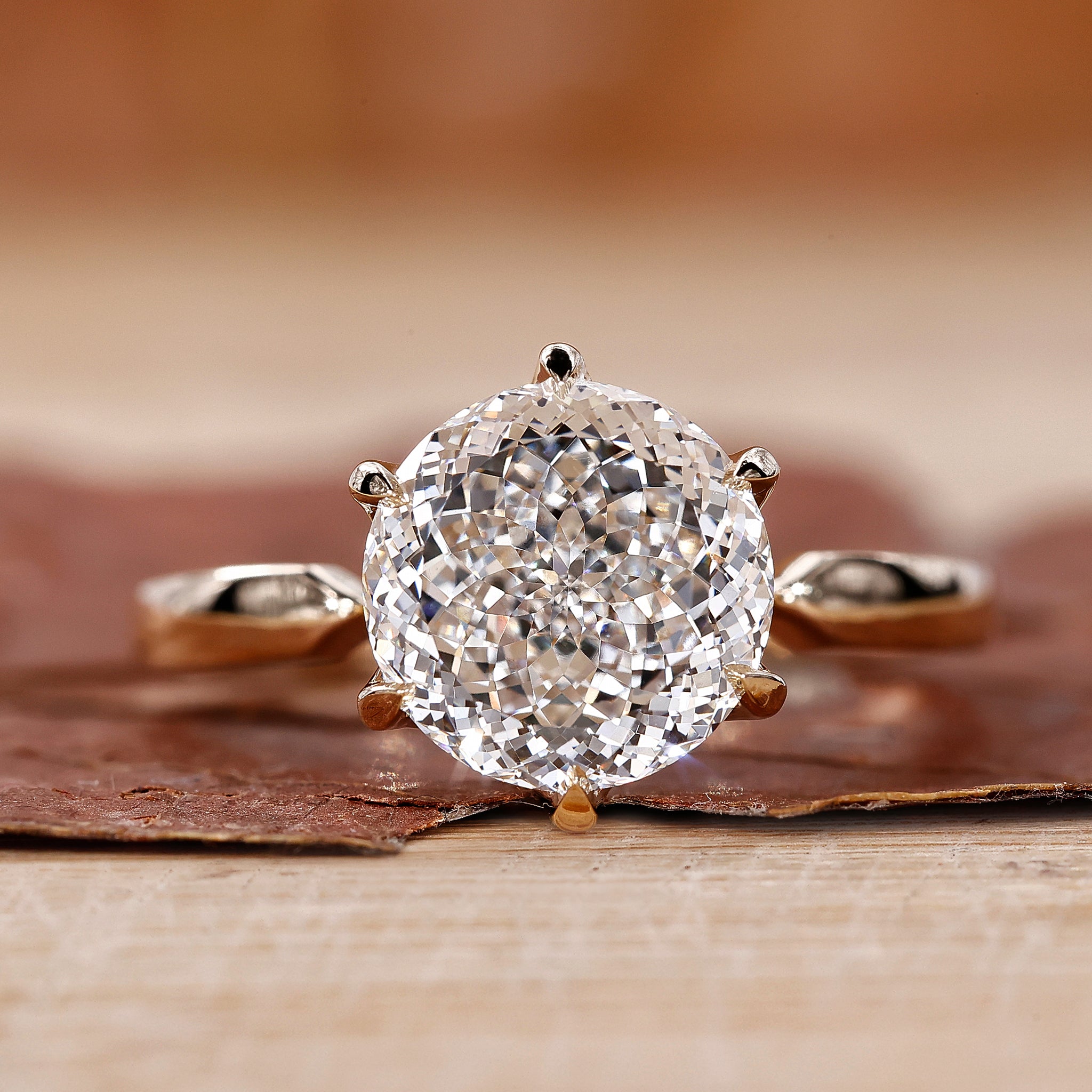
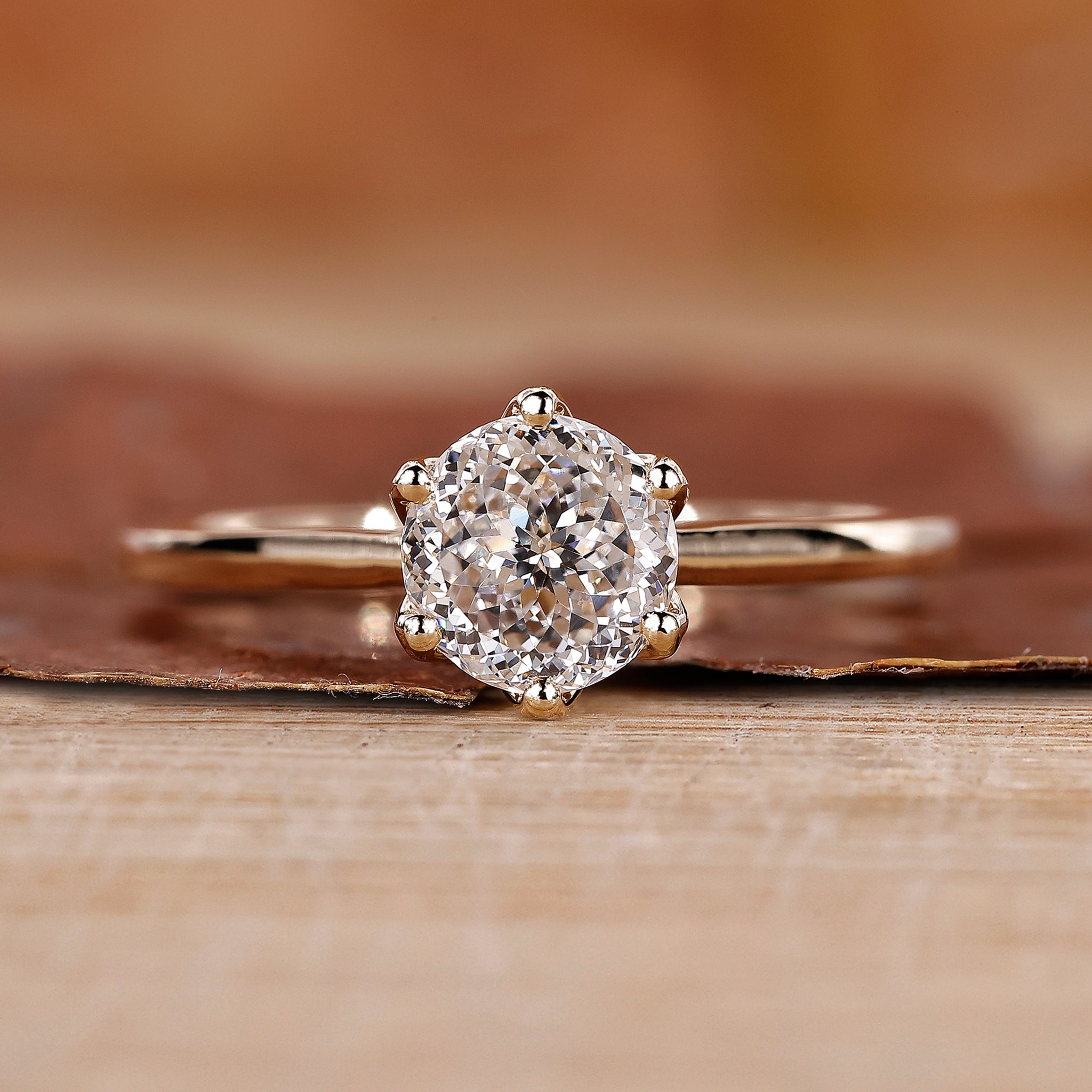
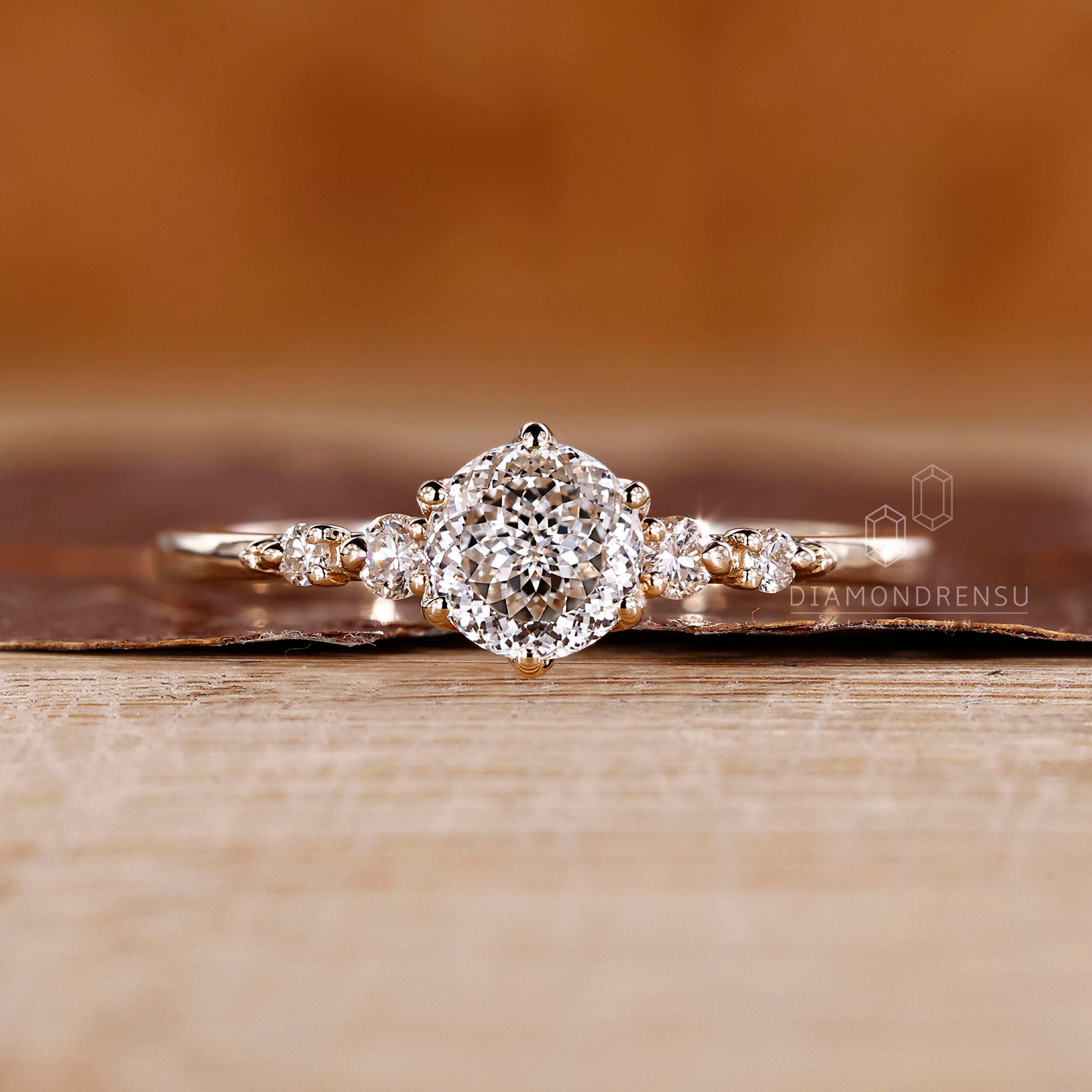
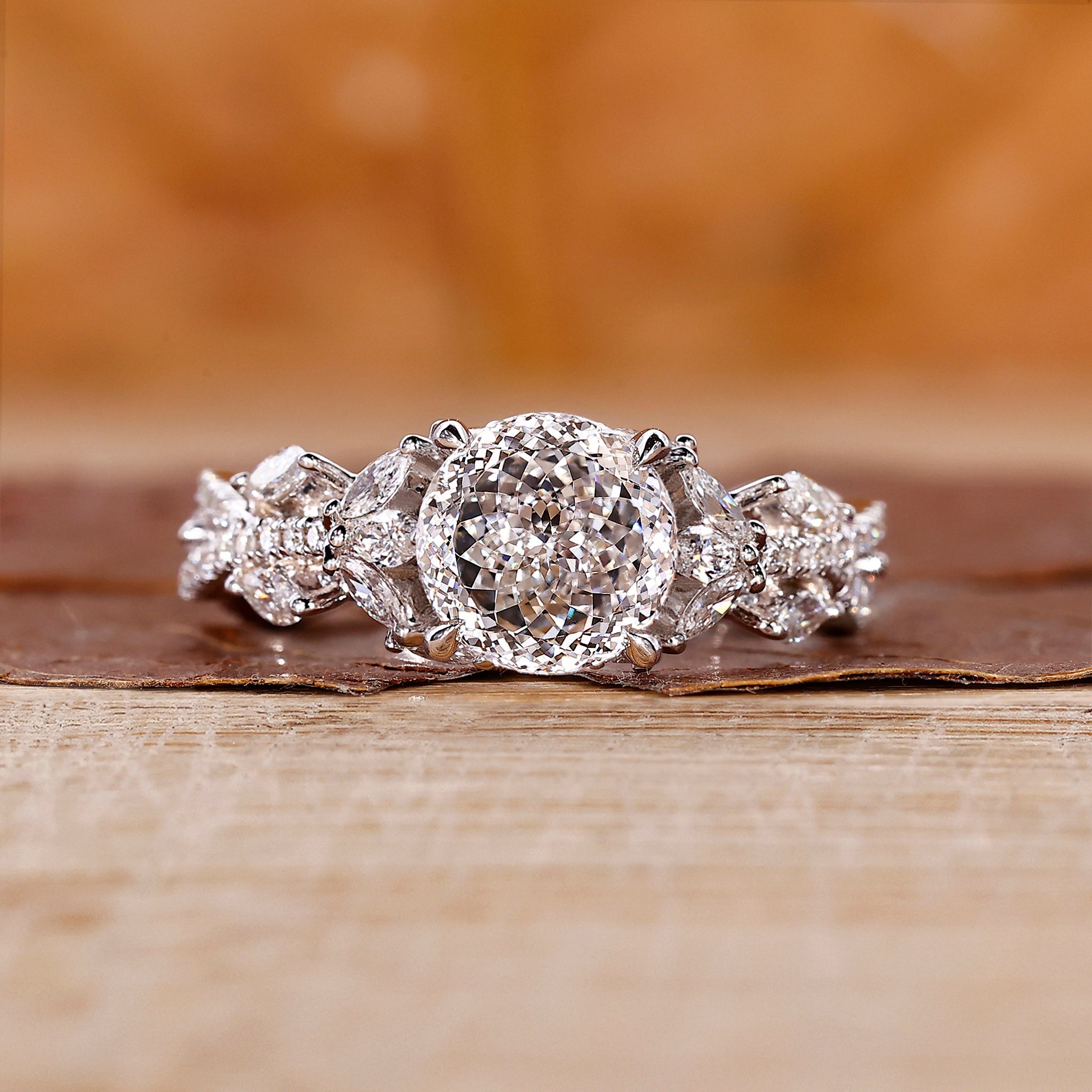
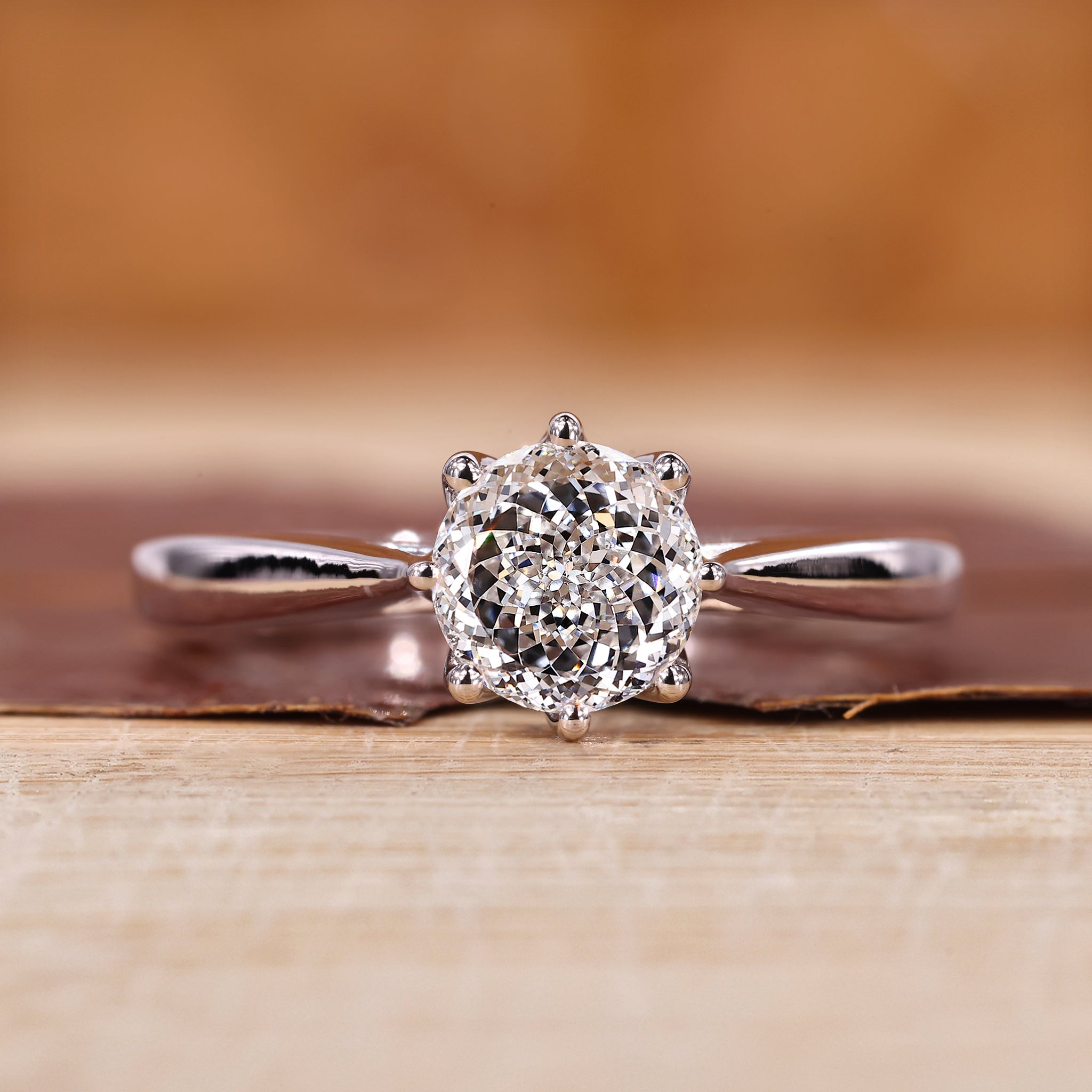
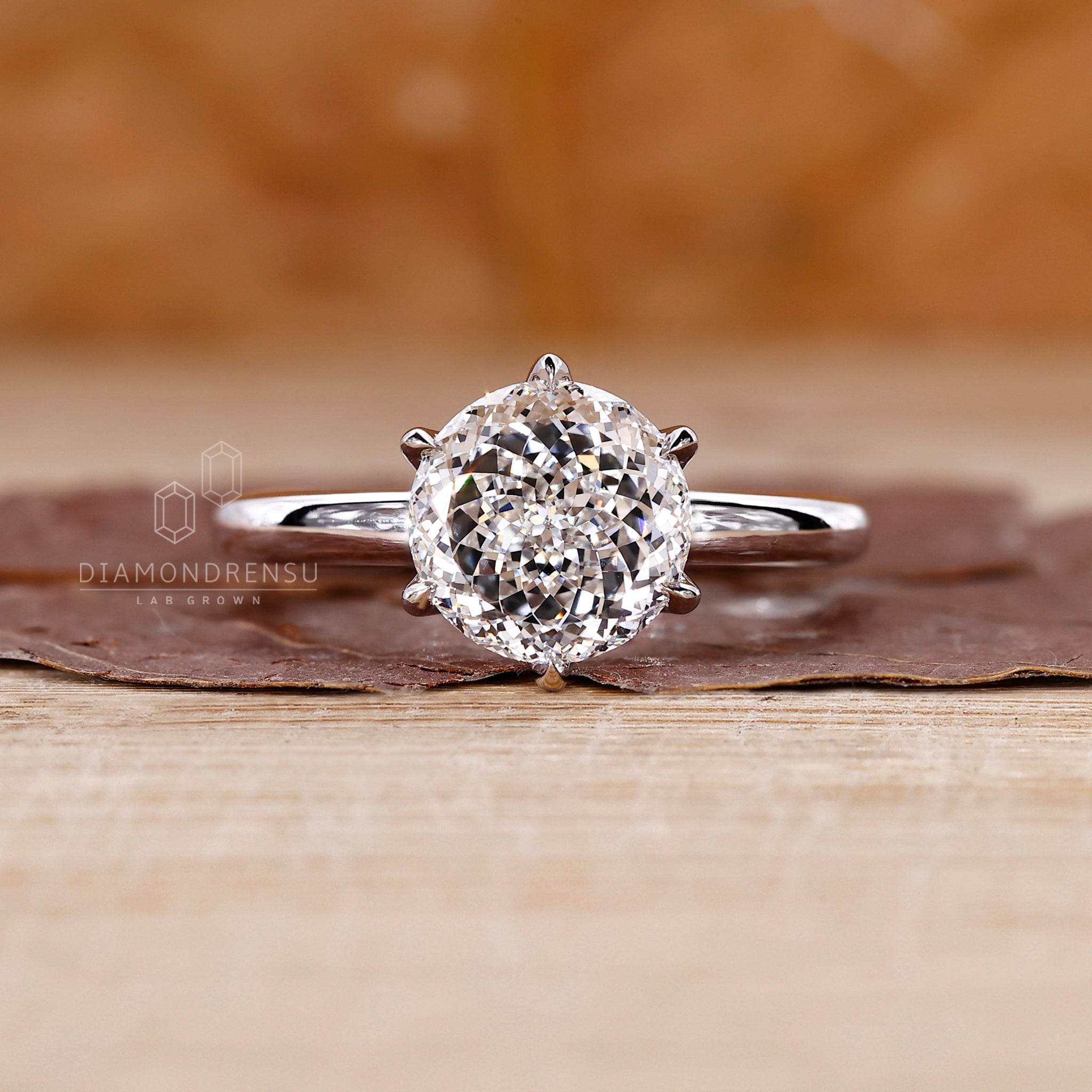
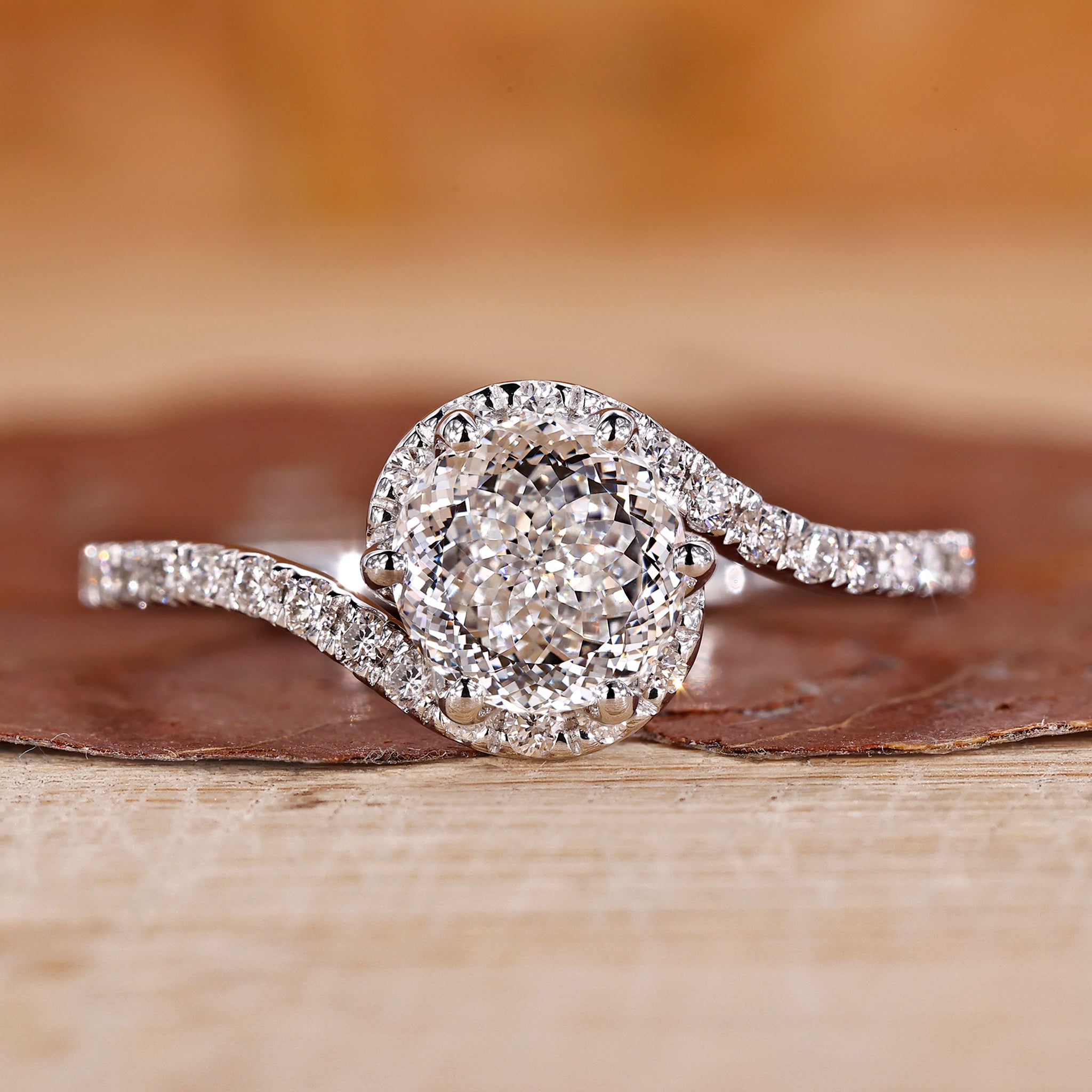
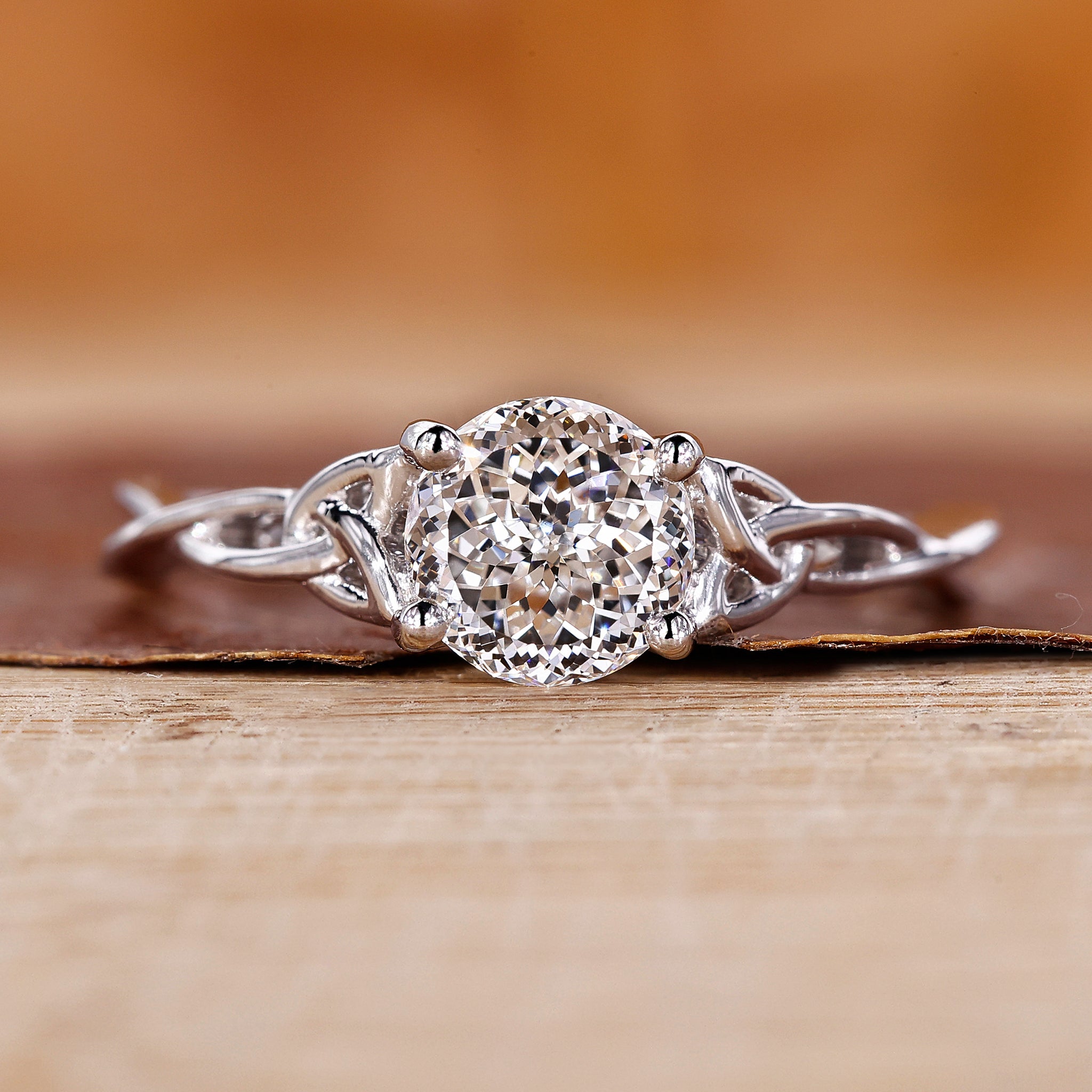
A round Portuguese cut feels the most balanced. The outline is familiar, so the extra detail comes from the faceting rather than the shape itself. This works well if you want something classic at first glance, with added character once the stone catches the light.
An oval Portuguese cut draws the eye along the finger. It can make the ring feel a little more elongated and graceful without moving too far from a familiar engagement ring style.
Antique-inspired shapes bring out the cut’s old-world side. They can make the ring feel more decorative and less standard, especially if you like diamond shapes with a little history in their look.
For a broader view of older-style shapes, our Antique Cut Lab Grown Rings collection can help you compare antique-inspired proportions. Check current product details before assuming a specific Portuguese cut shape is available.
Best Ring Settings for a Portuguese Cut
Because the Portuguese cut already has a detailed sparkle pattern, the setting should support the stone rather than compete with it.
A prong solitaire is the cleanest option. It leaves more of the stone visible, which helps the cut stay central to the design.
A bezel setting gives the ring a smoother edge and more protection around the stone. It can be a good fit if you use your hands a lot during the day or want a lower-maintenance feel.
A halo adds more presence around the center stone, but it works best when the halo is fine rather than heavy. Too much surrounding sparkle can make the Portuguese faceting harder to read.
A pavé band adds brightness along the sides of the ring. A slim pavé band is usually the safer choice because it adds detail without pulling too much attention away from the center diamond.
Pairing With a Wedding Band
A Portuguese cut diamond ring often pairs best with a flat, slim, or gently curved wedding band. The reason is simple: the center stone already has strong visual detail, so the band does not need to do too much.
It helps to think about the wedding band before ordering the engagement ring, especially if the setting is low-profile, wide, or decorative. A wide eternity band can make the full stack look crowded beside a detailed Portuguese cut. A slimmer band gives the center stone more room and makes the finished stack feel more balanced.
A Portuguese cut diamond is worth considering if you want a ring that stands out more clearly but is still easy to wear. Its appeal comes from three clear things: a more detailed sparkle pattern, a center stone that feels personal without looking too unusual, and lab grown options that can give you more room to compare size, clarity, and documentation.
If you continue comparing options, Diamondrensu’s old-cut-inspired and antique lab grown styles can give you a useful reference point; a virtual appointment may also help if you are unsure about shape or setting.
FAQs
Q1:What is a Portuguese cut diamond?
A1:A Portuguese cut diamond has more facets than a brilliant cut, so it gives off lots of smaller flashes of light.
Q2: How many facets does a Portuguese cut diamond have?
A2:There isn’t a fixed facet count for a Portuguese cut diamond. It can change depending on the shape and the cutter’s design.
Q3: What shapes are available in a Portuguese cut diamond?
A3: Portuguese cut diamonds are usually round, because the facet pattern works best with a circular outline. You may also see oval or cushion versions, but they are less common and often need to be specially sourced or custom cut.
Q4: Is a Portuguese cut diamond good for an engagement ring?
A4: It can be, but it depends on the style you want. A Portuguese cut has a lot of small facets, so the sparkle can look more detailed than bold. If you want a diamond that feels unusual and a little more decorative, it is a good option.
Q5: How does a Portuguese cut differ from a round brilliant cut?
A5: A round brilliant cut is built for strong light return and clear flashes of brightness. A Portuguese cut has more rows of facets, which creates a busier pattern of sparkle.
Q6: Are lab grown Portuguese cut diamonds available at Diamondrensu?
A6: Yes, Diamondrensu offers IGI certified lab grown Portuguese cut diamonds in a wide range of metal options. Each stone is meticulously inspected to ensure unparalleled quality.


Leave a comment
Please note, comments must be approved before they are published.