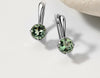
Are the Colors and Shapes of Loose Diamonds Fancy?
Table Of Contents
- The Allure of Fancy Colored Diamonds
- A Rainbow of Colors
- Natural Origins of Color
- The Rarity Factor
- Color Grading for Fancy Diamonds
- Shapes and Cuts Enhancing Color
- Celebrity Appeal and Trends
- Investment Potential
- Customization and Personalization
- Trends in Jewelry Design
- Frequently Asked Questions (FAQs)
"Fancy" sounds like it should mean colorful, unusual, and rare. In diamonds, “what is a fancy diamond?” gets more specific than that. Getting the term wrong can lead to comparing the wrong stones and paying for the wrong thing.
The word "fancy" gets used loosely in jewelry, especially for shapes and colors. Buyers assume anything that looks different must be fancy. That's not quite how it works. This guide clarifies what “fancy color” means versus “what is a fancy shape diamond,” plus how each gets evaluated and what to watch for when shopping for loose diamonds online or in-store. Once you know the difference, you can ask better questions and avoid mixing up two completely separate categories.
The Allure of Fancy Colored Diamonds


Color grabs attention faster than clarity ever will. What are fancy colored diamonds? They're stones graded outside the D-to-Z range used for colorless diamonds. Instead of being valued for lack of color, these diamonds get prized for having too much of it. Yellow, pink, blue, green: each hue tells a different geological story.
Exquisite Beauty
A fancy colored diamond catches light differently than a colorless stone. The color doesn't just sit there; it moves as the diamond tilts. Some buyers describe it as watching a sunset shift through glass. Others compare it to holding a piece of the ocean. Either way, the saturation makes these stones stand out in any setting.
Jewelers often pair fancy colors with simple metal settings to let the hue do the talking. White gold or platinum frames the stone without competing. Yellow gold can warm up a yellow diamond, but it might clash with a blue one.
Distinctive Appeal
Color adds personality, and it changes the whole vibe of a ring or pendant. A near colorless diamond tends to “match everything,” while a colored stone often acts like a signature accessory. That detail matters for people who want jewelry to feel like an identity marker, not just a luxury item.
In many local markets, colored stones also attract shoppers who enjoy one-of-a-kind purchases and ask for independent appraisal notes, not only a grading report. That demand pushes sellers to provide better photos, color descriptions, and return terms, which helps cautious buyers feel calmer about the purchase.
A Rainbow of Colors


Wide Spectrum
Fancy color diamonds cover more than the obvious “pink, blue, yellow” trio. Labs describe color with three building blocks: hue (the basic color family), tone (how light or dark it looks), and saturation (how strong it looks). Those three create a big range, and two diamonds labeled “Fancy Yellow” can still look very different.
Common color families include:
- Yellow and orange (often the most available)
- Pink and brown (popular in modern bridal styling)
- Blue and green (scarcer, often premium priced)
- Purple, violet, and red (very rare in natural form)
Unique Hues
Some colors show up so rarely that most jewelers never see them in person. Red diamonds are the rarest, with only a handful of true reds reported each decade. Purple and orange fall into that same category of "you'll probably never touch one." Even within common colors like yellow, the specific tone matters. A canary yellow commands a different price than a pale lemon shade.
Buyers sometimes get frustrated by how subjective color grading feels compared to the clean numbers of carat weight. But that subjectivity is part of what makes each stone unique. Two "Fancy Vivid Yellow" diamonds can still look noticeably different side by side.
Natural Origins of Color


Formation Process
Fancy colors form the same way colorless diamonds do, deep underground, under intense heat and pressure. The difference is what gets trapped inside during formation. A nitrogen atom here, a structural defect there, and suddenly you have color instead of clarity. The process takes millions of years, which is why lab-grown diamonds don’t replicate the same randomness.
Some diamonds get their color from radiation exposure after formation. The Earth's natural radiation can alter a diamond's structure over geological time, creating green hues, or occasionally blue ones (from boron). That's different from lab treatment, which uses artificial radiation to force color changes in already-mined stones.
Nature's Touch
No two fancy colored diamonds share the exact same origin story. One pink diamond might get its color from pressure-induced lattice distortions. Another pink diamond from the same mine could have a completely different cause. Gemologists can sometimes trace a diamond's color back to specific geological events, like when a kimberlite pipe erupted and carried diamonds closer to the surface.
This unpredictability frustrates miners. You can dig in the same spot for decades and never find the same color twice. That's the nature of working with nature!
The Rarity Factor
Scarcity
Figures vary, but roughly one in 10,000 diamonds shows enough color to qualify as fancy. That ratio gets lower as you move toward rarer colors. For every thousand yellow fancy diamonds, you might see one pink. For every thousand pinks, maybe one red. The math makes these stones naturally scarce before anyone even starts marketing them as exclusive.
Mines occasionally close or run dry, which tightens the supply even more. When Australia's Argyle mine shut down in 2020, it took the world's primary source of pink diamonds offline. Prices for existing pink stones rose quickly. That's what happens when geology and economics collide.
Investment Value
Some buyers treat fancy colors as collectibles, and that can work if the stone has strong documentation, stable demand, and a quality profile that holds up over time. Still, resale value depends on market timing, grading confidence, and whether the color earns broad buyer appeal. A person can love the idea of “investment,” yet still keep the purchase grounded in wearability and budget comfort.
Local resale norms also matter, since some regions prefer certain hues for bridal jewelry while others lean toward classic, near colorless stones.
Color Grading for Fancy Diamonds
Grading System
Colorless diamonds get graded on how close they come to having no color. What are fancy colored diamonds graded on? The opposite. Labs evaluate fancy colors based on hue, tone, and saturation. Hue is the actual color: yellow, pink, or blue. Tone measures how light or dark it appears. Saturation describes how pure and intense the color is.
The Gemological Institute of America uses terms like "Faint," "Light," "Fancy," "Fancy Intense," and "Fancy Vivid" to describe saturation levels. A Fancy Vivid stone shows the most concentrated color, while a Faint stone barely qualifies as colored at all. Those distinctions can swing prices by thousands of dollars on larger stones.
Evaluating Quality
A fancy colored diamond can have visible inclusions and still be considered high quality if the color is strong enough. That's different from colorless diamonds, where clarity plays a bigger role. Buyers sometimes assume a diamond with visible flaws automatically worths less, but in fancy colors, the hue can outweigh everything else.
Lighting changes how a fancy colored diamond looks. Natural daylight might bring out a different tone than fluorescent office lights or warm restaurant lighting. Smart buyers ask to see the stone under multiple light sources before committing. If a jeweler refuses, that's a red flag worth noticing.
Shapes and Cuts Enhancing Color
Maximizing Brilliance
Cut matters differently for fancy colors than for colorless diamonds. With a colorless stone, you're trying to maximize brilliance and fire. With a fancy color, you're trying to concentrate and display the hue. That sometimes means choosing a cut that would be "wrong" for a white diamond. What is a fancy cut diamond? It's any shape other than round. These cuts - oval, pear, cushion, and radiant, can trap and reflect color in ways that round cuts don't.
Cutters often use different facet patterns for fancy colors. A cushion cut with larger facets might show off a pink tone better than a round with smaller, more numerous facets. It depends on where the color is concentrated within the rough stone. Sometimes a cutter has to choose between saving weight and showing color. Color usually wins.
Custom Cuts
Some fancy colored diamonds get custom cuts designed specifically for that individual stone. The cutter examines where the color is strongest and shapes the diamond to showcase that zone. This approach wastes more rough material but produces a more striking finished stone. It's like tailoring a suit instead of buying off the rack.
Buyers who want a custom cut should work with a jeweler who has access to skilled cutters. Not every cutter has experience with fancy colors. The ones who do usually charge more, but the results can make the cost worthwhile.
Celebrity Appeal and Trends
Red Carpet Favorites
Every awards season brings out a new crop of fancy, colored diamond jewelry. Actresses wear them to stand out in a sea of white diamonds. Musicians pick them to match album aesthetics. Athletes choose them because nobody else in their team has one. The visibility pushes demand, which pushes prices.
Jennifer Lopez wore a pink diamond engagement ring. Ben Affleck got credit for the choice, but it was probably her idea. Either way, searches for pink diamonds spiked. That's how celebrity influence works in the diamond market; one appearance can shift buying patterns for months.
Trendsetters
Social media amplifies trends faster than traditional advertising ever could. When someone with millions of followers posts a picture wearing a yellow diamond, their audience sees it. Some of those viewers start shopping. The cycle feeds itself, turning niche colors into mainstream choices almost overnight.
Fashion designers have also embraced fancy colors. High-end brands now offer entire collections built around specific hues. That legitimizes colored diamonds as fashion-forward rather than an alternative. Whether that's a good thing depends on whether you prefer exclusivity or accessibility.
Investment Potential
Appreciating Assets
Some fancy colored diamonds appreciate over time. Others don't. The difference comes down to color, size, quality, and market timing. A top-tier Fancy Vivid Pink over two carats will probably hold or gain value. A pale yellow under one carat might not. Are all fancy cut diamonds the same price? Not even close. Shape affects demand and price, but color intensity matters more.
Investors who treat diamonds like stocks sometimes get disappointed. Diamonds don't pay dividends. They don't have ticker symbols or daily price updates. Selling one takes time and effort, and you'll probably get less than retail unless you're very patient. That doesn't mean they're bad investments, just different ones.
Portfolio Diversification
Financial advisors occasionally suggest adding physical assets to investment portfolios. Fancy colored diamonds qualify, though they're less liquid than gold or silver. If you buy at the right price and hold long enough, they can serve as a hedge against inflation. But "long enough" might mean decades, not years.
Insurance costs eat into returns. So do storage and appraisal fees. Anyone buying fancy colored diamonds as investments should factor in those ongoing costs. Otherwise, the math doesn't work as well as it looks on paper.
Customization and Personalization
Unique Designs
What is a fancy cut diamond really offering buyers? Choice. A round brilliant looks like every other round brilliant. An oval or pear shape gives the stone personality. When you add color to that mix, you're creating something that didn't exist before you commissioned it. That level of personalization appeals to buyers who want jewelry that tells their story, not someone else's.
Custom designs take longer and cost more upfront. You're paying for a jeweler's time, a designer's expertise, and sometimes a cutter's specialized skills. But the result is something nobody else owns. For some buyers, that's worth every extra dollar.
Tailored Creations
Jewelers who specialize in custom work often start by asking what the buyer wants the piece to represent. An anniversary might call for a different design than a birthday or a personal milestone. The color of the diamond can reinforce that meaning: blue for calm, yellow for joy, pink for romance. It's not magic, but it's more intentional than grabbing whatever's in the display case.
Some buyers bring in inspiration photos or sketches. Others trust the designer to interpret their vision. Either approach works if the communication is clear. Miscommunication leads to disappointment, so it's worth taking the time to get it right upfront.
Trends in Jewelry Design
Modern Innovations
Designers keep pushing new setting styles, from airy bezel looks to mixed metal details, and those settings can change how color reads from different angles. Technology also shapes the shopping process: better macro video, 360 degree imaging, and advanced light performance tools help buyers compare stones with less guesswork.
If you’re shopping for colored diamonds, these are the style trends to watch for:
- Cleaner silhouettes that let color do the talking
- East west settings for ovals and emerald cuts
- Modular designs that allow future resets
Fashion Forward
Current trends favor asymmetry and organic shapes over rigid geometry. That opens up new possibilities for what a fancy cut diamond looks like in real life. Freeform settings, mismatched earrings, and stacked rings all give fancy colored diamonds room to shine without competing with overly ornate metalwork.
The trend might shift in a few years. Fashion always does. But for now, simplicity and color are winning over complexity and sparkle. That's good news for fancy colored diamonds, which don't need much help getting noticed.
Fancy colored diamonds offer something different from the traditional white diamond experience. They bring color, rarity, and personality to jewelry that might otherwise blend into the background. What is a fancy diamond shape compared to a round brilliant? It's an intentional departure from the standard, a way to express individuality through form as well as color.
The market for these stones continues to grow as more buyers realize they don't have to settle for colorless. Whether someone chooses a fancy colored diamond for its beauty, rarity, or investment potential, the decision reflects a willingness to step outside the conventional. That's not for everyone. But for those who want jewelry that starts conversations instead of just fitting in, fancy colored diamonds deliver.
Frequently Asked Questions (FAQs)
Q1: What are fancy colored diamonds?
They're diamonds that actually have color, yellow, pink, blue, green, whatever nature decided to create. Labs grade them separately from the regular D-to-Z scale used for colorless stones because the whole point is the color itself, not the absence of it.
Q2: Are fancy colored diamonds rare?
Extremely. Most diamonds don't have enough color to qualify as fancy; maybe one in 10,000 does. And if you're looking for something like red or purple? Those show up so rarely that some jewelers go their entire careers without seeing one in person.
Q3: What causes the different colors in fancy colored diamonds?
Usually, it's something that got trapped inside during formation. A bit of nitrogen creates yellow. Boron makes blue. Sometimes radiation exposure over millions of years produces green. Each color has its own backstory written in geology.
Q4: Can I customize jewelry with loose fancy colored diamonds?
Absolutely. Find a jeweler who does custom work, and you can design something from scratch, pick the stone, choose the setting, and decide on the metal. It takes longer than buying something already made, but you end up with jewelry nobody else has.
Q5: Are fancy colored diamonds a good investment?
Sometimes. The rare colors in larger sizes with strong saturation tend to hold value or appreciate. But selling them takes effort, and you're dealing with insurance costs and appraisal fees along the way. They're not stocks; you can't just click a button and cash out tomorrow.
Q6: What is a fancy cut diamond?
In most jewelry conversations, what is a fancy cut diamond points to a non round diamond shape or a non round cutting style, like oval, pear, cushion, radiant, marquise, or heart. The term relates to shape and faceting, not to whether the diamond has a Fancy color grade. A buyer can confirm the meaning by checking whether the lab report discusses shape and cut style versus color intensity.
Q7: What is a fancy cut diamond, and how does it differ from a fancy color?
People often ask what a fancy cut diamond is when they really mean “non round shape,” since the trade sometimes uses the phrases interchangeably. Fancy cut focuses on outline shape and facet pattern, while fancy color focuses on hue and intensity grading in the report. A buyer can avoid mix ups by scanning the report for the color description and intensity label, then reviewing the shape line separately.
Q8: What is a fancy diamond in plain terms?
When shoppers ask what a fancy diamond is, plain language helps: “fancy” can mean a diamond with a fancy color grade, or it can refer to a non round shape, depending on context. The safest move is to rely on the lab report wording, since it separates color grade, shape, and cutting style. That clarity keeps comparisons fair across listings.
Q9: What is a fancy shape diamond versus a round diamond?
The phrase "fancy shape diamond" usually means any shape other than round, including oval, pear, emerald, cushion, radiant, marquise, asscher, and heart. Fancy shapes can look larger than round at the same carat weight, yet they also vary more in outline symmetry and length to width ratios. A buyer can focus on proportions and real video to confirm the shape looks balanced in motion.
Leave a comment
Please note, comments must be approved before they are published.