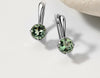
Learn All About Heart Shaped Diamonds: The Perfect Cut for Love
Table of Contents
Heart-shaped diamonds turn a simple outline into a clear message, which is why many buyers choose a heart-shaped diamond ring for proposals and milestone gifts.
This cut also works well in everyday jewelry because the shape stays recognizable even in clean, minimal designs, especially with a well-made heart-shaped diamond.
Romantic Appeal of Curved and Delightful
Romance sits right on the surface of the design, so the meaning reads quickly without extra explanation, making a heart-shaped diamond ring feel personal and direct.
Its rounded lobes and sharp point create contrast that catches the eye, which helps a heart-shaped diamond ring look distinctive without appearing flashy.
Cut


Cut quality controls how bright the stone looks, and GIA recommends checking that both halves match and the cleft looks crisp when selecting a heart-shaped diamond ring.
Symmetry matters more in this shape than in many others, so uneven lobes or a soft cleft can make the outline look off in finished heart-shaped diamond rings.
Stones can also lose their heart at very small sizes, and GIA notes that it may be difficult to perceive the shape in a diamond under 0.50 carats.
Bow-Tie Effect Grading for Heart-Shaped Diamonds
A bow-tie can appear as a darker area across the center in some fancy shapes, and GIA notes the heart shape may show this effect in certain stones, including a heart-shaped diamond engagement ring.
Viewing the diamond under more than one light source helps reveal whether the shadow stays mild or becomes distracting in a heart-shaped diamond ring.
Color and Clarity Grades
Color and clarity follow standard grading, and GIA grades color on the D-to-Z scale while evaluating clarity under specific lighting conditions, which helps buyers compare heart-shaped diamond engagement rings consistently across labs and sellers.


Carat weight sets the visible size, so larger stones typically show the curves and point more clearly than smaller stones.
Brief Background and History
Early references often link heart-shaped diamonds with royal gift giving, and several accounts describe Mary, Queen of Scots, sending Elizabeth I a ring with a heart-shaped diamond in 1562.
Modern jewelry uses the motif beyond rings, and a heart-shaped diamond necklace often replaces older symbolic charms with a piece that feels contemporary.
Style Tip
Solitaire settings keep attention on the outline, so the shape stays clean and easy to read.
Halo designs add sparkle around the edge and can visually sharpen the silhouette, which helps the center stone stand out.
Vintage-inspired work, including engraving and milgrain, pairs well with matching accents such as heart-shaped diamond earrings for a coordinated look.
Length-to-Width Ratio
Proportion changes the personality of the shape, and GIA suggests an ideal length-to-width ratio of about 1.00:1 while also noting that a symmetrical heart can look pleasing from about 1:1 to 1:1.2.


Personal taste still drives the final pick, so comparing several stones side by side often makes preferences obvious.
Prong and Bezel Setting
Prongs let in more light, and GIA advises using a V-shaped prong at the point to protect that area from damage.
Bezel settings surround the edge with metal for added protection, and GIA notes that bezel or three-prong settings can help smaller hearts preserve the shape.
Pendants are best suited in a setting where the point is firmly held and the heart is facing forward to allow easy observation.
In Conclusion
Heart-shaped diamonds succeed when the outline reads clearly at a glance, clean symmetry, a defined cleft, and a protected point are what separate a “cute idea” from a heart that looks intentional in daily wear. If you focus on cut precision (matching lobes, centered point), a balanced length-to-width ratio, and a setting that shields the tip (often with a V-prong), the result is a romantic shape that still looks refined and modern over time.


If you’re ready to own a stunning piece of lab grown diamond jewelry, Diamondrensu is here to help. Discover handcrafted lab-grown diamond and moissanite jewelry in a wide range of shapes, colors, and sizes, useful if you want a heart silhouette that’s crisp at your preferred carat weight and budget.
Diamondrensu also supports custom engagement ring design, so you can choose the exact heart proportions and pair them with protective, practical settings (solitaire, halo, bezel, or three-prong) based on how the ring will be worn. Shop with full confidence knowing we offer free worldwide shipping, a 30-day return policy (where eligible), and are trusted by 27k+ customers all over the globe.
FAQs About Heart-Shaped Diamonds
Q1: What makes a heart-shaped diamond unique?
Strong symmetry, a defined cleft, and a centered point give the cut its unmistakable look and meaning.
Q2: What is the bow-tie effect, and how should it be avoided in heart-shaped diamonds?
The bow-tie shows as a darker band across the center in some fancy shapes, so viewing the stone in multiple lighting conditions helps avoid an obvious shadow.
Q3: What is the most desirable length-to-width ratio for heart-shaped diamonds?
GIA points to about 1.00:1 as ideal and indicates that symmetrical hearts can still look balanced up to about 1:1.2.
Q4: Need to know the best setup for heart-shaped diamonds?
GIA highlights V-shaped prongs at the point for protection, and it also notes that bezel or three-prong settings can help smaller hearts keep their outline.
Q5: Why are heart-shaped diamonds considered a symbol of love?
Royal courts used jewel gifts to signal intent, not just affection. In June 1562, Mary, Queen of Scots, said she would send Elizabeth I a ring set with a diamond “made like a heart.”
Leave a comment
Please note, comments must be approved before they are published.