The Ultimate Princess Cut Ring Buying Guide
Shopping for a princess cut diamond ring means weighing a lot more than shape and sparkle. You're deciding between a natural diamond, a lab grown diamond, and moissanite, each with its own price point and personality. At Diamondrensu, you can build a princess cut engagement ring in either a lab grown diamond or a moissanite stone, so the first real question isn't "which cut" but "which material fits my budget and my values." This guide walks through the shape itself, the 4Cs that actually matter for a square stone, the settings that keep those sharp corners safe, and what you'll pay depending on which stone you choose.
What is a Princess Cut Diamond?

A princess cut diamond ring sits in an unusual spot: it's square like an emerald or Asscher cut, but it's cut with the brilliant faceting pattern you'd expect from a round stone. That combination is what gives it the sharp, modern silhouette jewelers love and buyers keep coming back to.
Square Modified Brilliant - Shape and Facet Pattern
Technically, the princess cut is classified as a "square modified brilliant." Most versions carry somewhere between 49 and 76 facets, cut in an inverted pyramid shape beneath the table. That inverted pyramid shape helps the stone hold onto more of the rough diamond during cutting. That's part of why princess cuts often run a little cheaper per carat than round diamonds of the same visual size.
Chevron Patterns Explained
Look straight down into a princess cut and you'll usually spot X-shaped or chevron patterns radiating from the corners toward the center. These come from the way the pavilion facets meet, and they're one of the easiest ways to tell a well-cut princess shape from a mediocre one. Strong, symmetrical chevrons scatter light evenly across the stone. Uneven or blurry chevrons usually mean the cutter prioritized carat retention over precision. When that happens, the stone ends up looking flatter or duller than it should for its size.
Princess Cut vs. Cushion, Radiant, and Asscher Cuts
| Comparison | Princess Cut | Cushion Cut | Radiant Cut | Asscher Cut |
|---|---|---|---|---|
| Shape | Square | Square or rectangular | Square or rectangular | Square |
| Corners | Sharp pointed corners | Rounded corners | Cropped corners | Cropped corners |
| Facet Style | Brilliant cut | Mixed or brilliant facets | Brilliant cut | Step cut |
| Overall Look | Clean and modern | Soft and classic | Bold and contemporary | Geometric and vintage |
| Centre Stone Style | Structured and square | Rounded and softer | Often elongated | Square and geometric |
| Light Pattern | Strong contrast and bright flashes | Soft flashes with varied patterns | Strong flashes across the stone | Broad flashes with a hall-of-mirrors effect |
| Best For | Modern ring designs | Classic and softer ring designs | Bold centre stones | Art Deco inspired rings |
| Setting Options | Solitaire, halo or three stone | Halo, solitaire or three stone | Solitaire, halo or three stone | Solitaire, three stone or vintage settings |
Princess Cut: Diamond, Lab Grown Diamond, or Moissanite?
A lab grown princess cut diamond is chemically, optically, and physically identical to a mined one. Same carbon structure, same fire, same hardness on the Mohs scale. The difference is entirely in how it forms: mined diamonds take a billion years or more underground, while lab grown ones are produced in weeks using high-pressure, high-temperature or chemical vapor deposition methods. That shorter, controlled process is why a lab grown princess cut diamond ring typically costs 30 to 40 percent less than its natural counterpart at a comparable size and grade. If you want a real diamond without the natural-mining price tag, browse Diamondrensu's lab grown princess cut diamond engagement rings collection and you'll see the difference yourself.
Princess Cut Lab Grown Diamond
Princess Cut Moissanite - A Budget-Friendly Alternative
Moissanite isn't a diamond at all. It's silicon carbide and it actually bends light more aggressively than diamond does, so a princess cut moissanite ring often throws off more rainbow-colored flashes under direct light. Some buyers love that extra fire. Others find it a bit much next to the whiter, more restrained sparkle of a diamond. Either way, moissanite runs dramatically cheaper, often a tenth of the price of a natural diamond at the same visual size, and it's still hard enough for daily wear. If that trade-off appeals to you, Diamondrensu's princess cut moissanite engagement rings collection is worth a look.
The 4Cs of Buying a Princess Cut Diamond
The 4Cs apply to every diamond shape, but princess cuts have their own quirks worth flagging before you shop.
Cut Quality - What to Look for Since Most Labs Don't Grade Princess Cuts
GIA doesn't issue a cut grade for princess cuts the way it does for round brilliants, so you can't just look for "Excellent" on a certificate and call it done. Instead, check the length-to-width ratio and the symmetry of the chevron pattern. Also watch how evenly light returns across the table when you tilt the stone.
Color Grade - Where It's Safe to Save
Princess cuts hide color well, largely because of all that faceting breaking up the light path. Most buyers can comfortably go down to a G or H color grade and still get a stone that looks bright white in a ring setting, especially under yellow gold, which masks warmth even further.
Clarity - Why Corner Inclusions Matter Most
Clarity is where princess cuts get more particular than other shapes. The pointed corners are structurally the weakest part of the stone. Any inclusion sitting near a corner is more visible and carries more of a durability risk than one buried in the center.
Carat Weight and Length-to-Width Ratio
A perfectly square princess cut has a length-to-width ratio close to 1.00, usually somewhere between 0.95 and 1.05. Ratios drifting toward 1.10 or higher start to look visibly rectangular rather than square, which changes the whole character of the stone. For a deeper breakdown of how ratio and carat weight translate to actual millimeter size, Diamondrensu's Princess Cut Diamond Size Chart covers it in detail.
Best Settings for a Princess Cut Ring
The setting matters just as much as the stone here, mostly because of those corners.
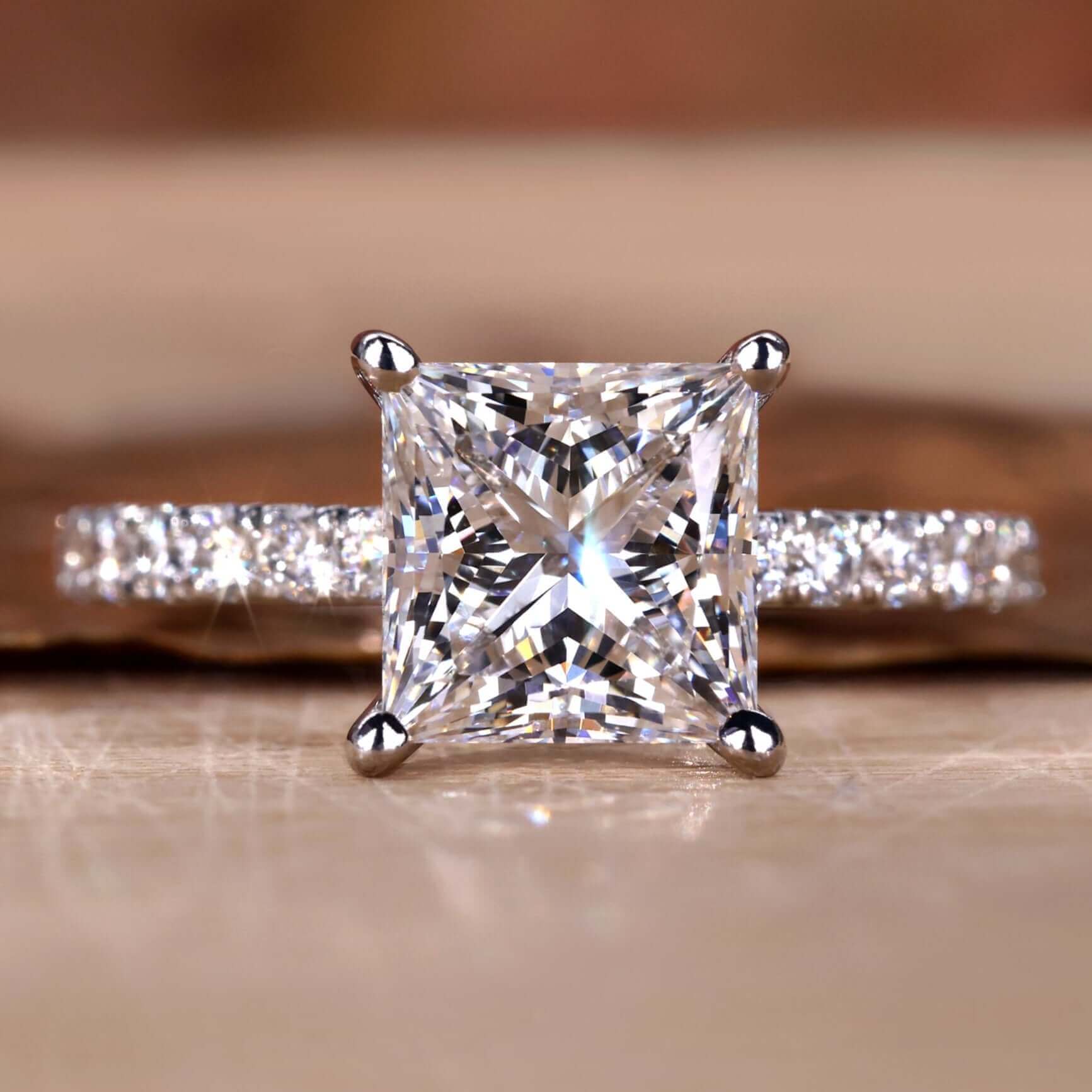
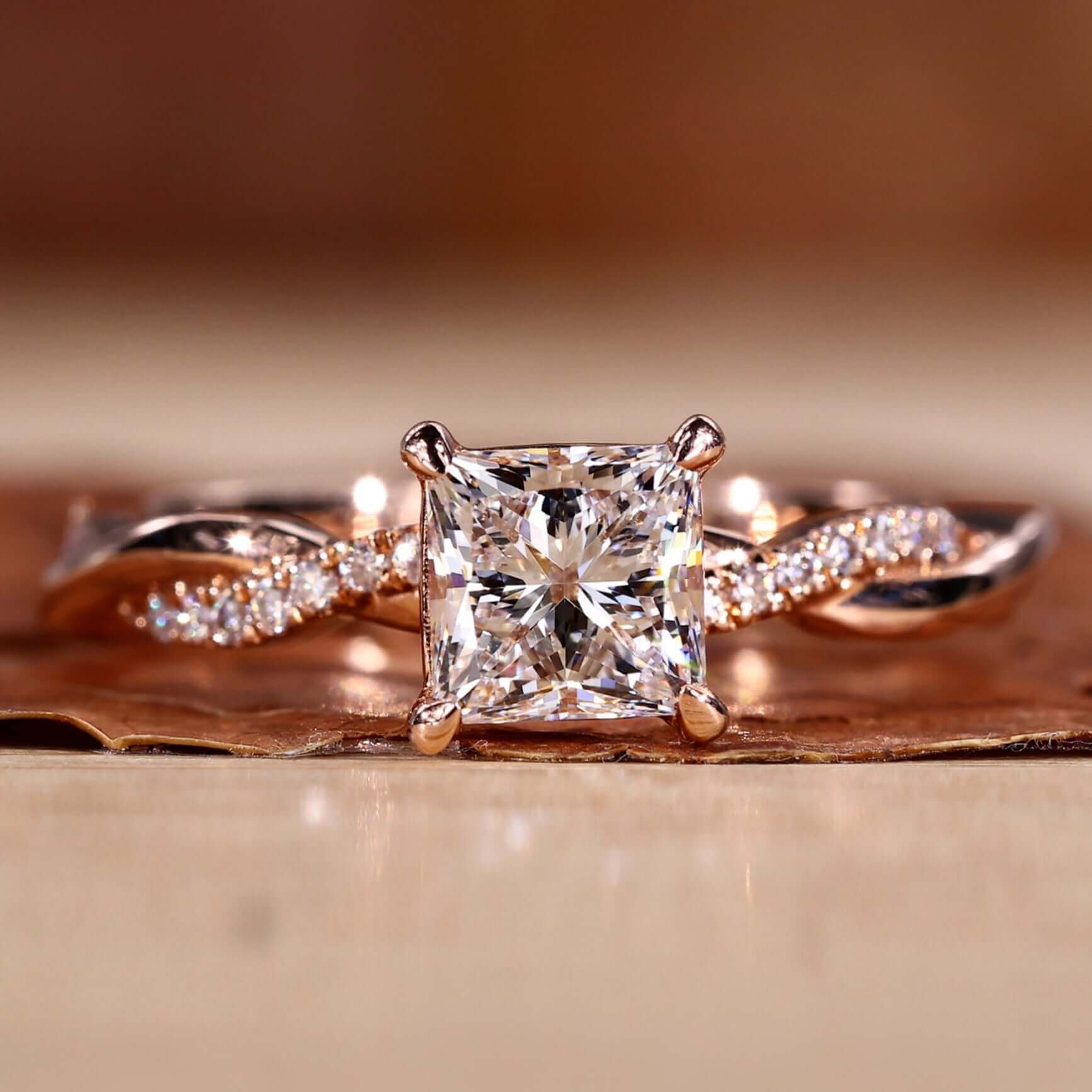
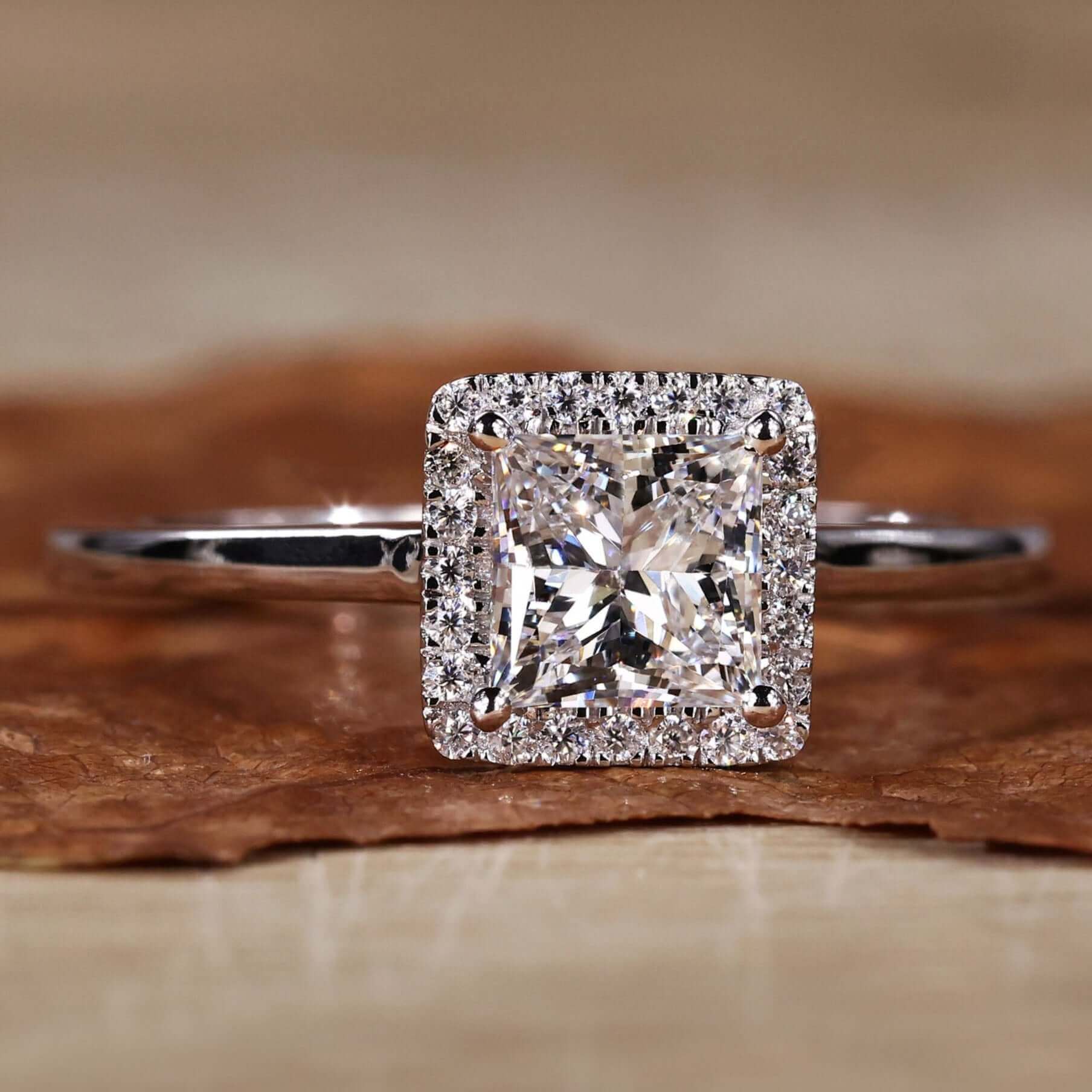
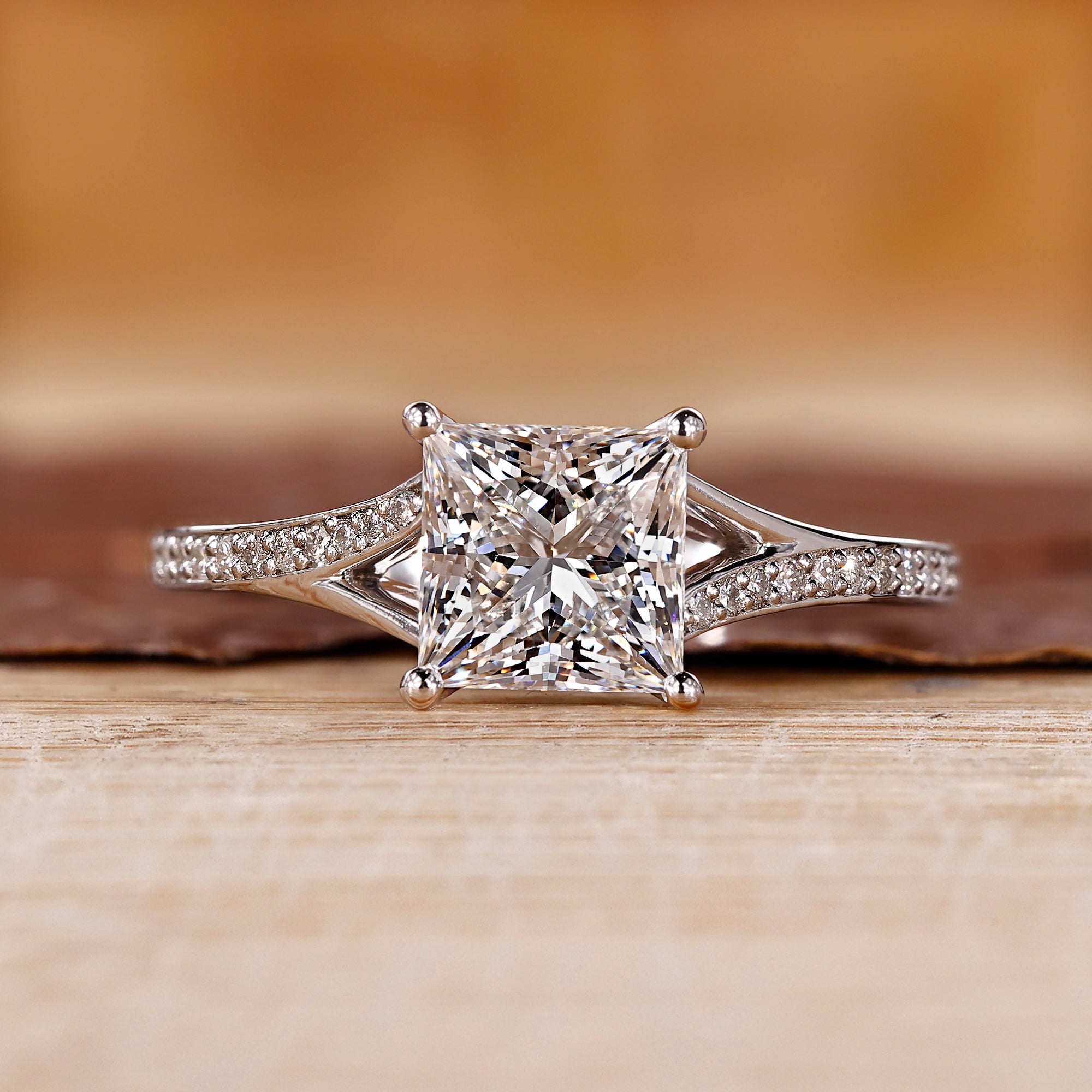

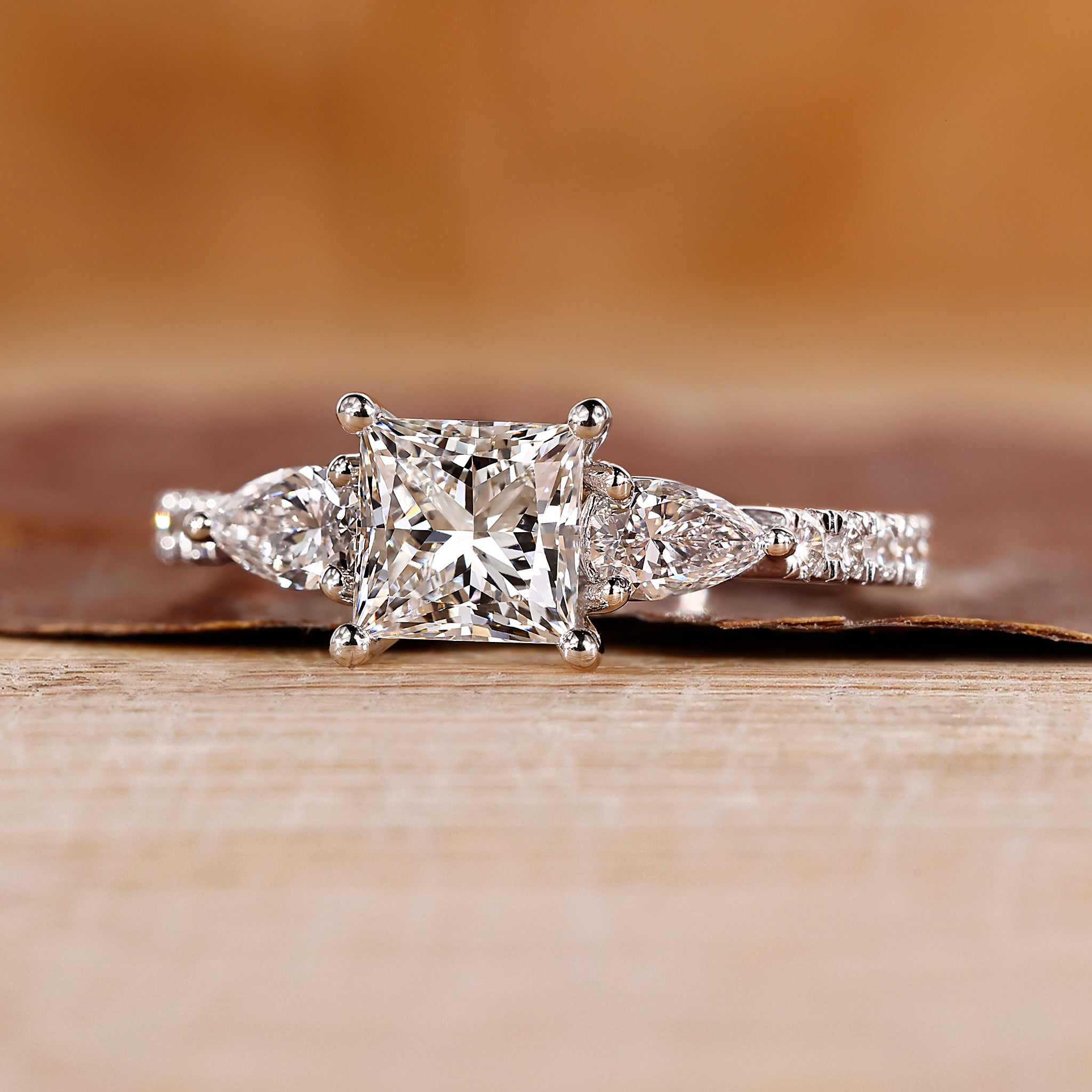
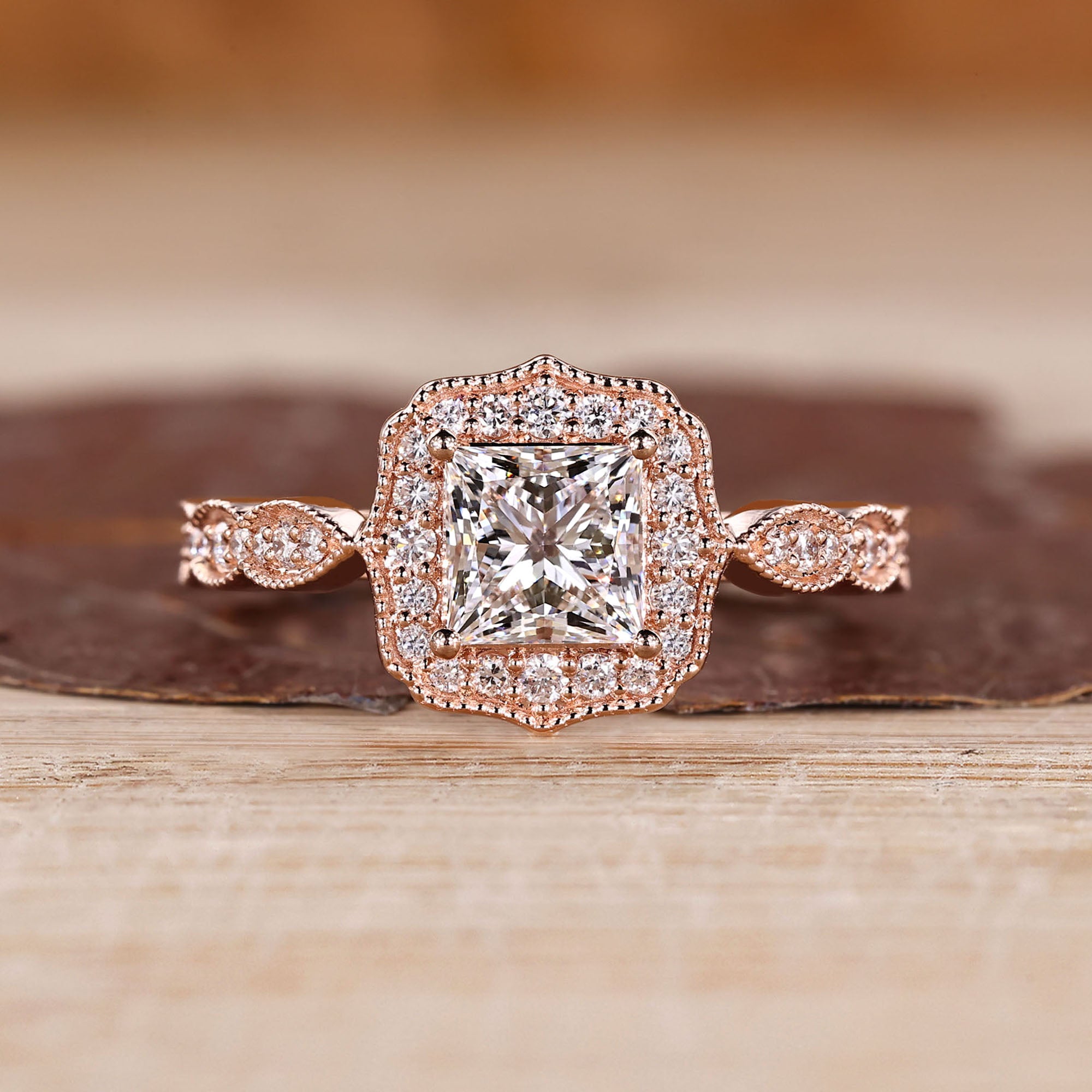
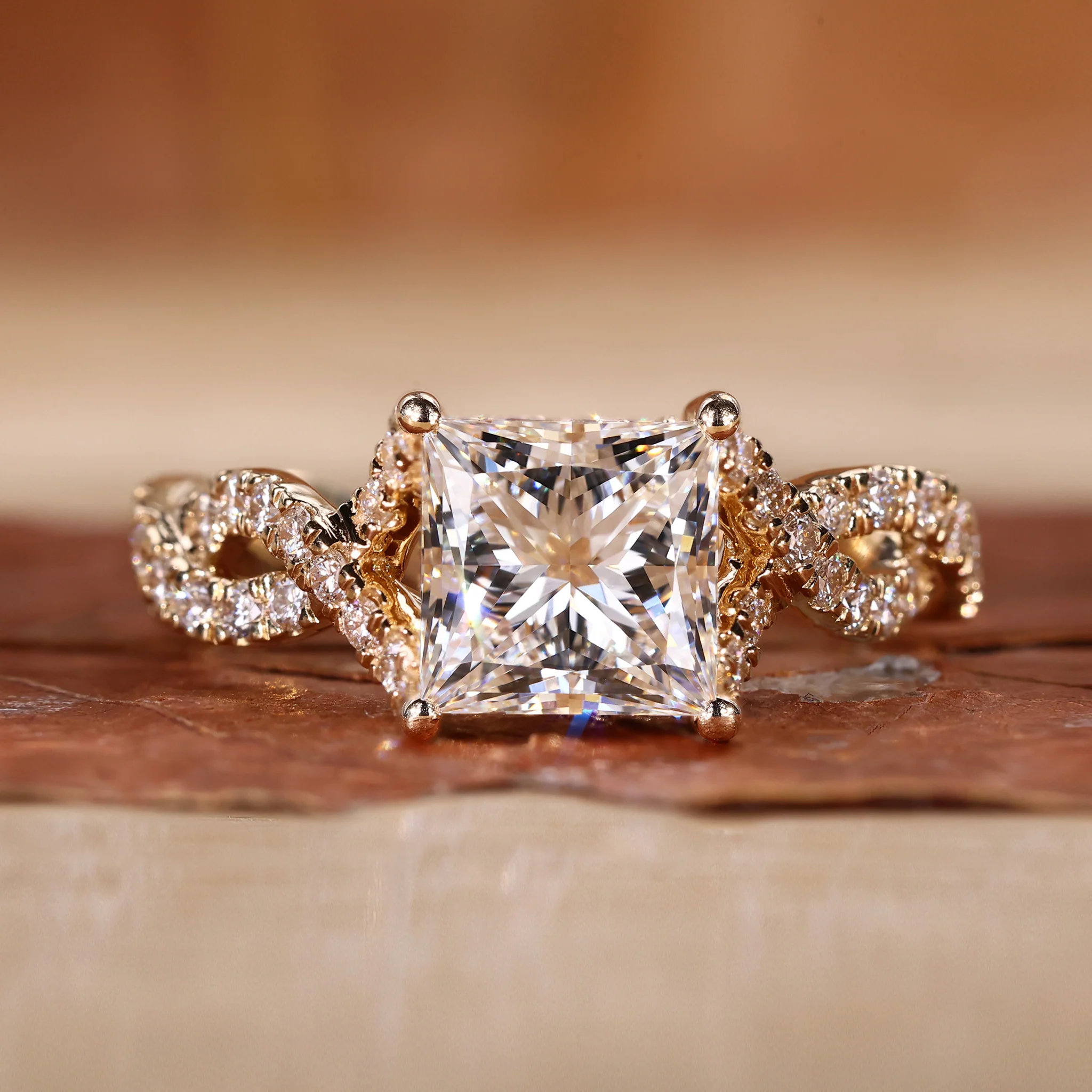
Solitaire Settings and V-Prong Corner Protection
A classic solitaire puts the diamond front and center, but a standard four-prong setting leaves the corners exposed to chipping. V-prongs solve that by wrapping around each corner instead of pressing against a flat edge, distributing pressure and protecting the most vulnerable part of the stone. If you're going solitaire, V-prongs aren't optional. They're the whole point.
Halo Settings for Extra Sparkle and Protection
A halo setting surrounds the center stone with a ring of smaller diamonds, which does double duty: it makes the center stone look larger and adds a physical buffer around those exposed corners. Square halos that mirror the princess cut's shape tend to look more intentional than round halos.
Pavé, Three-Stone, and Bezel Options
Pavé bands extend the sparkle down the shank itself. Three-stone settings flank the princess cut with smaller side stones, often trapezoids or baguettes that mirror its straight lines. Bezel settings wrap metal fully around the stone's edge, offering the most physical protection of any option. The trade-off is less brilliance, since less light enters from the sides.
Real-World Princess Cut Inspiration
Celebrity Princess Cut Engagement Rings
Princess cuts have shown up on plenty of famous hands over the years, often in three-stone or halo settings that play up the geometric shape. One of the more talked-about examples is Princess Beatrice's engagement ring, which mixes vintage design elements with a distinctly modern cut. You can read the full story behind it in All About Princess Beatrice's Engagement Ring.
How Much Does a Princess Cut Engagement Ring Cost?
Natural vs. Lab Grown vs. Moissanite Pricing
For a 1-carat, G color, VS2 clarity princess cut, a natural diamond typically lands somewhere between $4,000 and $6,000 depending on the retailer and setting. A lab grown princess cut diamond at the same specs usually falls between $404 and $3,848. Moissanite at a comparable visual size can run as low as $75 to $508. The gap only widens as carat weight climbs. Natural diamond pricing isn't linear; it accelerates sharply past the 1-carat mark.
Setting a Budget That Works for You
There's no universally "right" amount to spend, despite what old rules of thumb about salary percentages suggest. A useful approach is to decide on the total ring budget first, then work backward from there. Figure out how much you want to allocate to the setting versus the stone. That split will guide which material makes sense. Someone set on a 2-carat look might find that lab grown diamond or moissanite opens up design options that a natural diamond budget simply wouldn't allow.
Buying Your Princess Cut Ring at Diamondrensu
Certification and Customization
Every lab grown diamond at Diamondrensu comes with independent certification from the IGI, so you know exactly what you're getting in terms of cut, color, clarity, and carat weight. Rings can also be customized: metal type, band width, and setting style are all adjustable, so you're not stuck choosing between pre-set combinations that don't quite match what you pictured.
Choosing Between Lab Grown Diamond and Moissanite at Diamondrensu
Both lab grown diamond and moissanite are solid, legitimate choices for a princess cut ring, and neither one is objectively "better." Lab grown diamond gives you the exact mineral composition and resale recognition of a natural diamond at a lower price. Moissanite gives you more sparkle per dollar and a lower price point still, at the cost of not being a diamond at all. Which one fits depends on whether you're prioritizing material authenticity or maximum size and brilliance for your budget. Diamondrensu offers princess cut rings in both, so the decision comes down to what matters most to you, not what's available.
Frequently Asked Questions
Leave a comment
Please note, comments must be approved before they are published.