What is a Dutch Marquise Cut? History, Faceting, and Styling
Most people researching marquise engagement rings stumble across the Dutch Marquise without expecting to, and then spend a while trying to figure out why it looks so different from every other marquise they've come across. The answer lives in the sides. Where a traditional marquise curves from tip to tip, the Dutch Marquise cut diamond uses straight, angled edges that create an elongated hexagonal outline - structured, architectural, and unmistakably vintage. If you've been wondering what is a Dutch Marquise diamond and why it keeps showing up to those who want something genuinely distinctive, this guide walks through everything - history, faceting, styling, and how it compares across lab grown and natural options.
What is a Dutch Marquise Diamond?

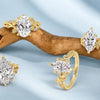
So, what is a Dutch Marquise diamond, really? It's a modified marquise cut where the smooth curved sides are replaced with straight, angled edges, creating a six-sided elongated shape with pointed ends and a noticeably wider center than you'd expect. It reads geometric and deliberate - less like a flowing silhouette and more like something drawn with a ruler and real intention behind it.
Unlike standard marquise diamonds, the Dutch Marquise isn't a GIA standardized shape. It's a specialty cut produced by individual diamond cutters and available in both lab grown diamond and moissanite. That lack of standardization actually works in its favor because no two cutters produce identical proportions. So, these stones carry a handcrafted individuality that mass-produced shapes simply don't.
The Rupee Cut - The Dutch Marquise's Other Name
The Dutch Marquise goes by another name that most buyers don't initially recognize - the Rupee cut. It references the elongated diamond-shaped motif historically used on Indian rupee currency, which shares the same geometric outline. Some jewelers use the terms interchangeably; others have a strong preference for one over the other. But whether it's labeled a Dutch Marquise cut diamond or a Rupee cut, the shape is exactly the same: pointed ends, straight sides, wide center. Knowing both names matters when you're searching, because listings vary considerably between the two.
History of the Dutch Marquise Cut
The classic marquise originated in eighteenth-century France - reportedly commissioned by King Louis XV to mirror the shape of his mistress Madame de Pompadour's smile, prioritizing flowing curves and dramatic elongation. The Dutch Marquise came significantly later as a modern specialty cut, drawing on the precision traditions of Dutch and Belgian gem cutters who built their reputation on carefully proportioned, geometrically balanced stones. It's better understood as a contemporary interpretation of antique cutting sensibilities, one that gained real momentum during the broader resurgence of vintage-inspired engagement rings across the 2010s and 2020s, when buyers started actively seeking shapes that felt less conventional.
Connection to Victorian and Art Deco Jewelry
The Dutch Marquise sits naturally within antique-inspired jewelry because its geometry speaks the same language as those periods. Art Deco jewelry is built around symmetry, precision, and clean architectural lines, and the straight-sided profile fits that vocabulary far more comfortably than a curved marquise ever could. It also works beautifully within Victorian and Edwardian settings featuring milgrain edges, filigree work, and hand-engraved details, where the structured outline creates an elegant contrast against the softer metalwork surrounding it. Among the different types of marquise diamonds, this is the one that most genuinely belongs within that aesthetic rather than simply borrowing from it.
Dutch Marquise Faceting - How It Works
Both versions use approximately 58 facets in a brilliant arrangement, but the geometry of the straight sides changes how light moves through the stone in ways that matter to the buyer's experience. Understanding this helps explain why so many people who've been disappointed by other elongated shapes find themselves drawn to the Dutch Marquise cut diamond specifically.
Brilliant Facets in a Non-Round Outline
The wider midsection of the Dutch Marquise allows facets to distribute light more evenly across the center, producing broader, fuller flashes of brilliance rather than the narrower light pattern many traditional marquise diamonds display. The result is a stone that reads bright and lively across its full face rather than concentrating sparkle only in certain areas.
The Bow Tie Effect in Dutch Marquise Stones
If you've researched elongated diamond cuts before, you've probably encountered the bow tie effect - the darker shadow that appears across the center caused by how light reflects through elongated facets. The Dutch Marquise typically displays a less pronounced bow tie than a traditional marquise of comparable quality, because the wider center distributes light in a way that softens the effect considerably. It isn't eliminated entirely, though, which is why you should always request a 360-degree video rather than relying on still images alone. A grading certificate won't describe bow tie intensity, and seeing the stone move in light is the only reliable way to judge it.
Dutch Marquise vs. Marquise
When people compare Dutch Marquise vs Marquise, the assumption is often that they're choosing between two versions of the same thing. They're genuinely not - these are two cuts with different visual characters, different light behaviors, and different stylistic associations entirely.
| Feature | Classic Marquise | Dutch Marquise |
|---|---|---|
| Sides | Smoothly curved | Straight angled |
| Outline | Long and narrow | Elongated hexagon |
| Length to width ratio | 1.75 to 2.15 | 1.60 to 1.75 |
| Face up appearance | More elongated | Fuller center |
| Bow tie visibility | Often more noticeable | Usually less pronounced |
| Overall style | Dramatic and flowing | Geometric and architectural |
In the Dutch Marquise vs Marquise conversation, someone drawn to flowing curves and dramatic elongation will likely prefer the classic. Someone drawn to geometry and vintage architectural character will almost always respond more strongly to the Dutch Marquise - and usually know it the moment they see them side by side.
The 4Cs for a Dutch Marquise - What to Prioritize
The 4Cs apply here just as they do anywhere, but this shape has specific priorities that differ from a round diamond. Because it's a specialty cut without a GIA cut grade, visual evaluation carries significantly more weight than it does for standard shapes.
Cut - Symmetry is Everything
Without a GIA cut grade to rely on, the visual assessment of a Dutch Marquise becomes the most important part of your purchase decision. The pointed tips should align perfectly along the same central axis, and the straight sides should mirror each other precisely - any deviation becomes immediately apparent because the geometry is so deliberate. A well-proportioned stone typically falls between a 1.60 and 1.75 length-to-width ratio.
Color - Visible at the Tips
Elongated shapes concentrate color at their pointed ends more readily than round diamonds. For a bright near-colorless appearance in white gold or platinum, G to H color is a strong starting point. For a warmer, more antique-feeling tone that looks genuinely at home in a Victorian setting, I to J color in yellow or rose gold can be beautiful and considerably more affordable.
Clarity - Protect the Tips
The pointed ends are the most structurally vulnerable areas of any marquise family stone, and the Dutch Marquise is no exception. Prioritize clarity near the tips even if the center is slightly lower grade. Eye-clean SI1 offers excellent value, while VS2 strikes a reliable balance between clarity and budget for most buyers.
Carat - Faces Up Larger Than Expected
Because of its shallow depth and wide midsection, the Dutch Marquise cut tends to face up larger than its carat weight would suggest - often appearing meaningfully bigger than a round diamond of the same carat weight, which makes it one of the more efficient shapes for maximizing visual presence without stretching the budget.
Styling a Dutch Marquise Ring
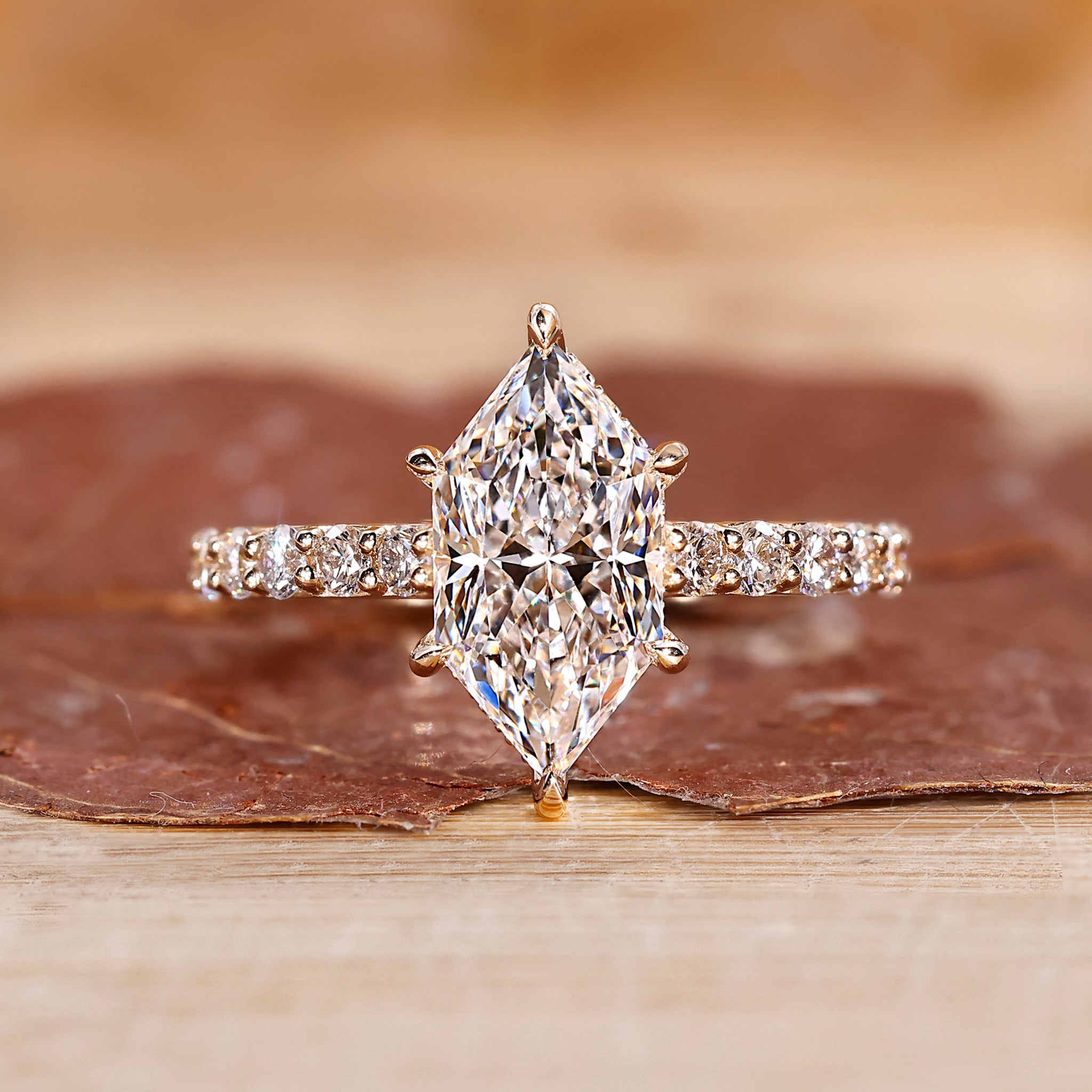
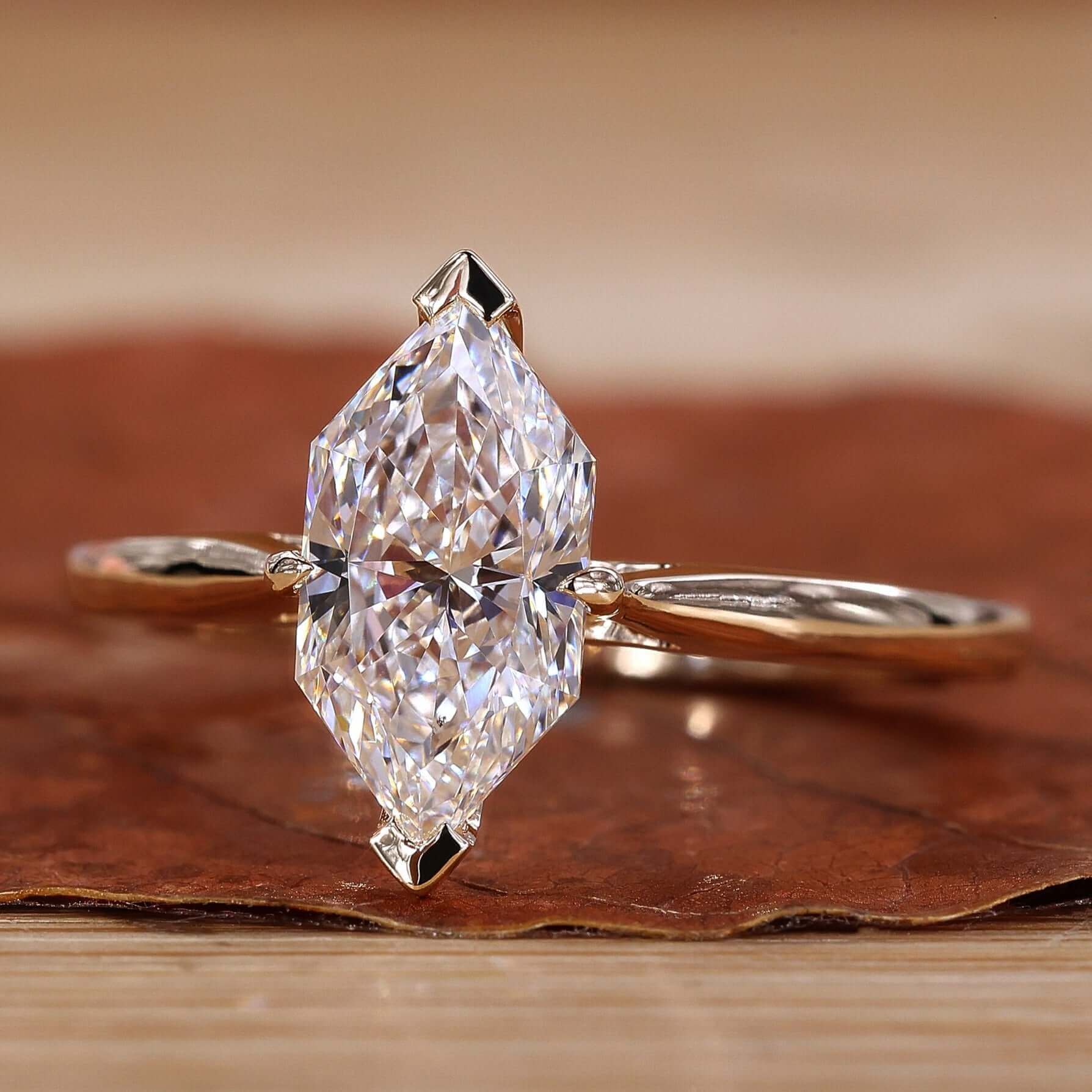
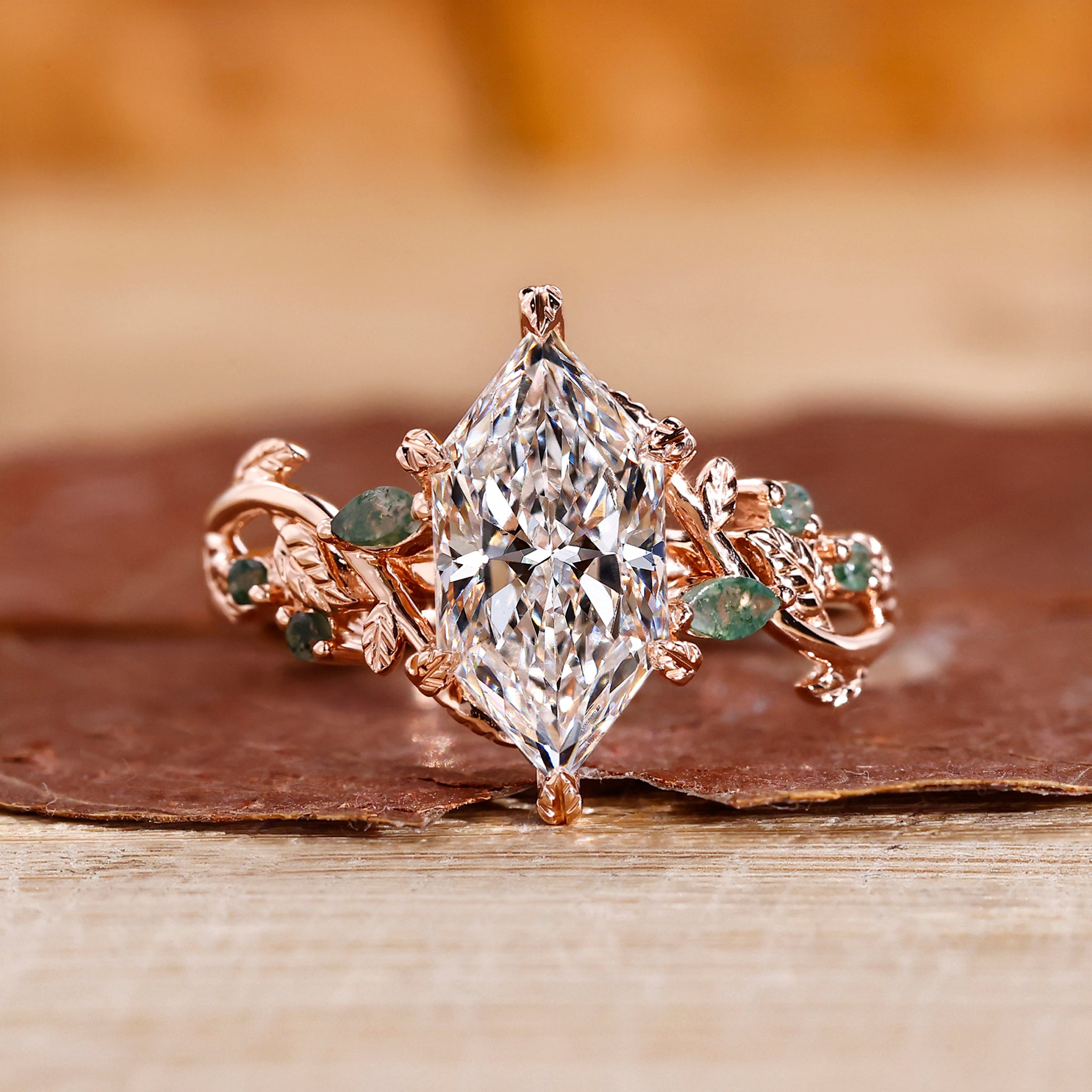
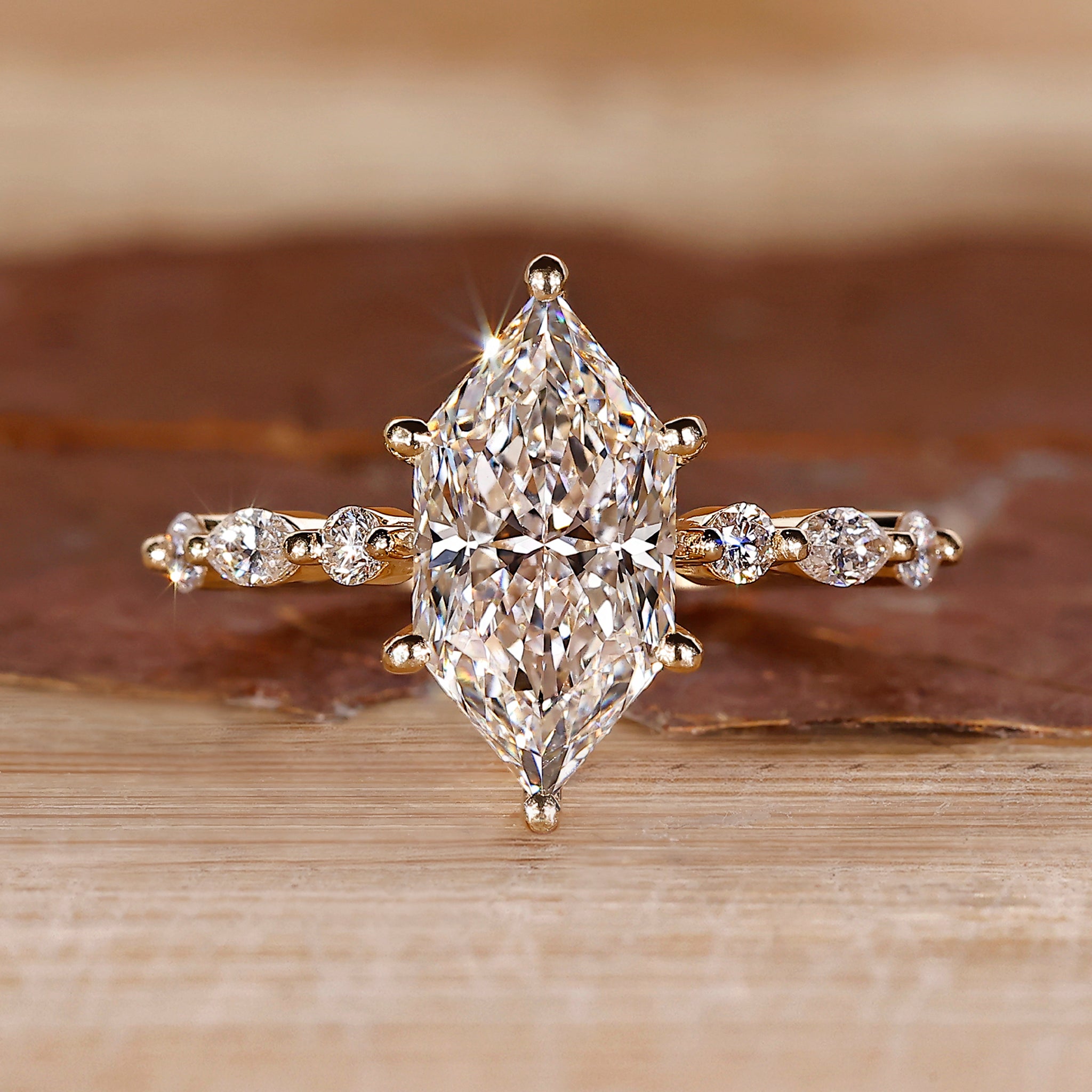
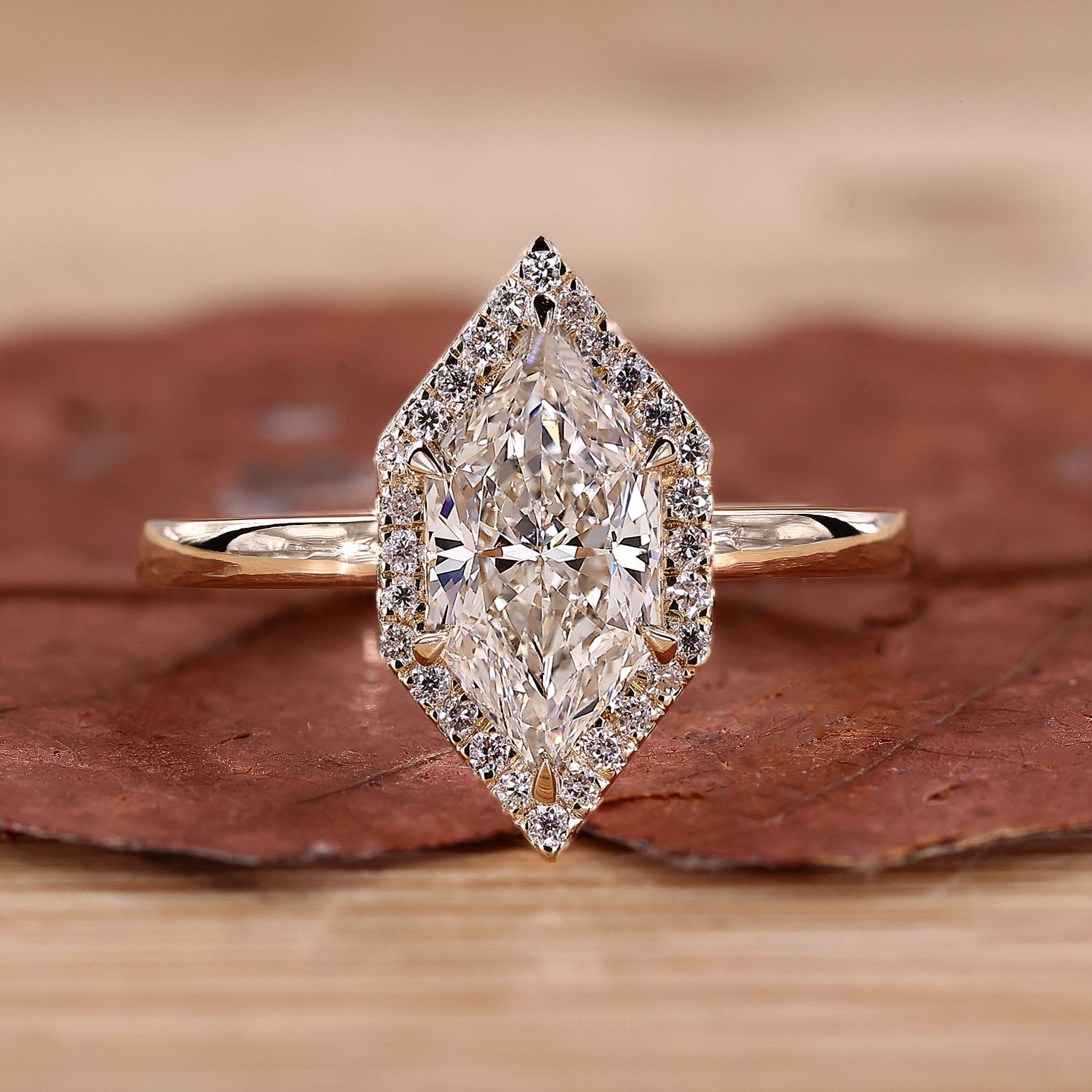
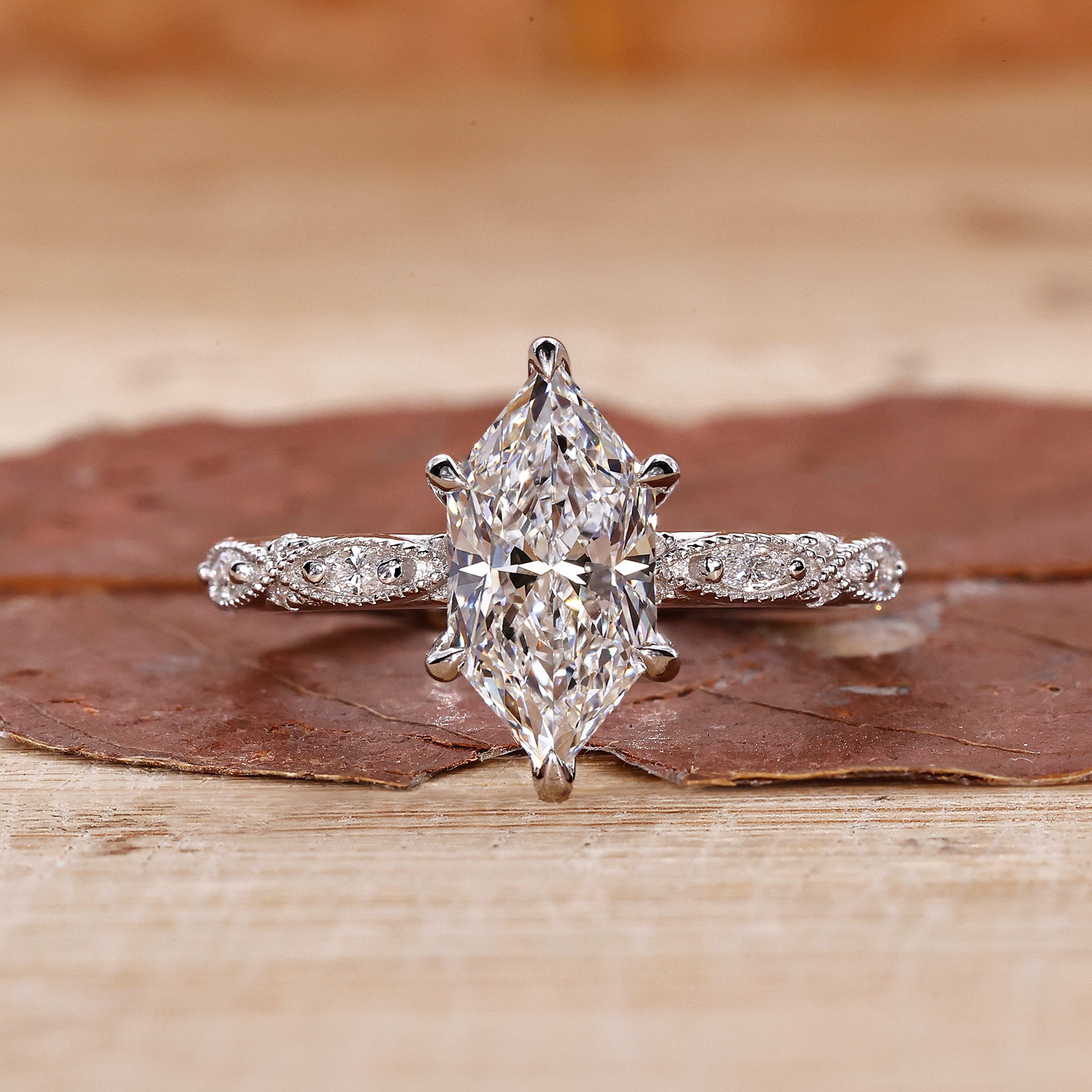
The Dutch Marquise has a strong architectural identity, which means the setting needs to work with that geometry rather than compete with it. These are the choices that consistently complement the cut best, whether you're going with a Dutch Marquise lab grown diamond or a Dutch Marquise natural diamond.
Settings that Suit the Dutch Marquise
- A V-prong solitaire protects the pointed tips while keeping the geometric outline fully visible and central
- An east-west setting creates a clean horizontal silhouette that feels modern and unexpected
- A bezel setting wraps the stone in metal that echoes its geometry while offering maximum daily protection
- Vintage-inspired settings with milgrain, filigree, or Art Deco metalwork align naturally with the cut's antique European sensibility
Metal Pairings
Yellow gold brings out the warmth and vintage character of the Dutch Marquise cut most naturally. Rose gold softens that into something more romantic while still carrying the vintage mood. White gold and platinum maximize brightness and suit buyers who want a more contemporary finish - both work equally well across Dutch Marquise lab grown diamond and moissanite options.
Wedding Band Pairing
The straight-sided profile is actually a practical advantage when it comes to band compatibility. It pairs comfortably with both straight and gently curved bands without the gap issues that halo and deeply curved engagement rings sometimes create.
Dutch Marquise in Lab Grown Diamond and Moissanite
Once the shape is decided, the stone choice is where final budget and visual priorities come into focus. Both lab grown Dutch Marquise diamond and moissanite are available, and understanding the difference helps buyers make a decision they'll actually feel good and confident about.
Lab Grown Dutch Marquise Diamond
Lab grown Dutch Marquise diamond stones carry the same optical and physical properties as mined diamonds - same hardness, same brilliance, same grading standards - and they typically cost significantly less than a comparable Dutch Marquise natural diamond. IGI certified options allow buyers to enjoy this rare, antique-inspired cut with documented quality assurance and genuine diamond identity, without the premium price that a Dutch Marquise natural diamond commands. For buyers who want certification, the word diamond, and strong value per carat, lab grown is consistently the strongest choice among the different types of marquise diamonds available today.
Moissanite Dutch Marquise Rings
Moissanite has a higher refractive index than diamond, which means more fire - those colorful flashes of light that catch the eye in movement. In the Dutch Marquise, that extra fire becomes especially visible across the wider center, creating a genuinely striking presence. A moissanite option delivers a larger, more dramatic statement at a price point that gives buyers considerably more flexibility on setting, metal, and size than a comparable Dutch Marquise natural diamond would allow.
Conclusion
The Dutch marquise isn't another variation of a marquise - it's a distinct cut with its own history, its own light behavior, and a visual character that no other shape among the different types of marquise diamonds quite replicates. Whether the choice is a lab grown Dutch Marquise diamond for certification and diamond identity, or moissanite for exceptional fire and value, Diamondrensu offers both in handcrafted settings designed to highlight what makes each cut genuinely special.
Frequently Asked Questions
Leave a comment
Please note, comments must be approved before they are published.