Dutch Marquise Cut vs Marquise Cut: Key Differences Explained
Many buyers searching for a Marquise engagement ring come across the Dutch Marquise and assume it's just a regional name for the same shape. It isn't. Both cuts share the same pointed ends, but the sides are cut in completely different ways and the resulting outline reads in a distinct manner once it sits on the finger. Anyone comparing Dutch Marquise vs Marquise for the first time usually needs to see both side by side before the difference clicks, and once it does, Marquise vs Dutch Marquise stops being a naming question and becomes a style question.
What is a Classic Marquise Cut?

The classic Marquise is a long, elongated brilliant-cut diamond or moissanite with smoothly curved sides that taper to sharp points at each end. Jewelers also call it the navette, French for "little boat," a name that captures its curved, hull-like outline.
The shape carries a royal backstory: King Louis XV of France reportedly commissioned it to mimic the shape of the Marquise de Pompadour's lips. It uses 58 brilliant facets, and its elongated, shallow profile means it faces up roughly 15 to 20 percent larger than a round stone of the same carat weight. Anyone weighing a Dutch Marquise diamond vs Marquise for size alone should factor that face-up advantage into the comparison.
Key Visual Characteristics
The classic Marquise runs long and narrow, typically landing in a length-to-width ratio between 1.75 and 2.15. Its sides curve outward in a clean, continuous arc from the center to each tip, and those sharp points need a V-prong or bezel setting to stay protected from chipping. Like every Marquise-shaped diamond or moissanite, it also shows a bow-tie effect across the center, though how visible that bow-tie appears depends on the cut quality of the individual stone.
What is a Dutch Marquise Cut?

The Dutch Marquise takes the Marquise concept and rebuilds it with straight, angled sides instead of curves. Those flat planes create a six-sided, elongated hexagonal outline rather than the flowing ellipse of a classic Marquise, and the center reads wider and fuller as a result. The overall silhouette feels less dramatically stretched and more geometrically structured than its classic counterpart. Some jewelers also call this shape the Rupee cut, a nod to the elongated diamond motif that appears on traditional Indian rupee currency. It is more of a specialty cut and buyers can find it in both lab grown diamond and moissanite.
Key Visual Characteristics
Six straight edges meet to form a pointed hexagon, and the stone sits wider through the middle, giving it a fuller face-up appearance than the classic Marquise despite a similar length-to-width ratio of 1.85 to 2.10. The pointed ends still need V-prong or bezel protection just like the classic cut, but the bow-tie effect tends to show up less severely here, since the wider, more evenly distributed midsection spreads light more consistently across the stone.
Dutch Marquise vs. Classic Marquise - The Differences That Matter
| Feature | Classic Marquise | Dutch Marquise |
|---|---|---|
| Side profile | Smoothly curved arcs, flowing boat-like outline | Straight angled edges, six-sided geometric outline |
| Silhouette | Long and narrow, dramatic and blade-like | Shorter and wider, architectural and balanced |
| L/W Ratio | 1.75–2.15, extreme elongation | 1.85–2.10, fuller center, less elongated |
| Bow-Tie Effect | Present, more visible in narrower cuts | Present but typically less severe |
| Point protection | V-prong or bezel required at both tips | V-prong or bezel required at both tips |
| Style character | Royal, dramatic, classic and fashion-forward | Geometric, modern, vintage-meets-contemporary |
| Best setting | Solitaire, halo, east-west, bezel | Solitaire, east-west, vintage, bezel |
The Defining Difference - Curved vs. Straight Sides
This distinction sits at the heart of Dutch Marquise vs Marquise diamond comparisons, and it's the one most buyers can't put into words the first time they see both cuts next to each other. The classic Marquise bows outward in a smooth, organic arc along each side, similar to a lens or the cross-section of a boat hull.
The Dutch Marquise swaps that curve for straight edges cut at angles, so the outline reads as a pointed hexagon rather than a flowing ellipse. Viewed from above, one shape feels organic and continuous, while the other feels structured and deliberate. Once you know what to look for, the difference becomes obvious in seconds.
Sparkle - Both are Brilliant Cuts
Both shapes rely on brilliant-style faceting, so both deliver strong light performance rather than one clearly outshining the other. The Dutch Marquise spreads light more evenly across its wider midsection, which tends to soften the bow-tie effect compared to the classic shape.
A well-cut classic Marquise performs just as brilliantly, but its narrower profile makes it more sensitive to cut quality, so performance varies more noticeably from stone to stone in this shape than it does in the Dutch Marquise.
Finger Elongation
Both cuts stretch the finger far more than round or cushion shapes do, though they don't do it the same way. The classic Marquise pushes elongation to its limit, since its narrow, blade-like profile adds the maximum apparent length of almost any diamond shape available.
The Dutch Marquise still elongates the finger, but without narrowing the stone as dramatically, and many buyers find that proportion sits more naturally against their hand.
Price Comparison
Both shapes cost less per carat than round brilliants, and that advantage carries over whether the buyer chooses lab grown diamond or moissanite. Lab grown and moissanite versions of both cuts open up meaningfully larger carat sizes at the same budget compared to mined diamond equivalents, and that's especially relevant for the Dutch Marquise, since its wider face-up appearance already reads larger at a given carat weight.
Settings That Work for Each Cut
Classic Marquise Setting Recommendations
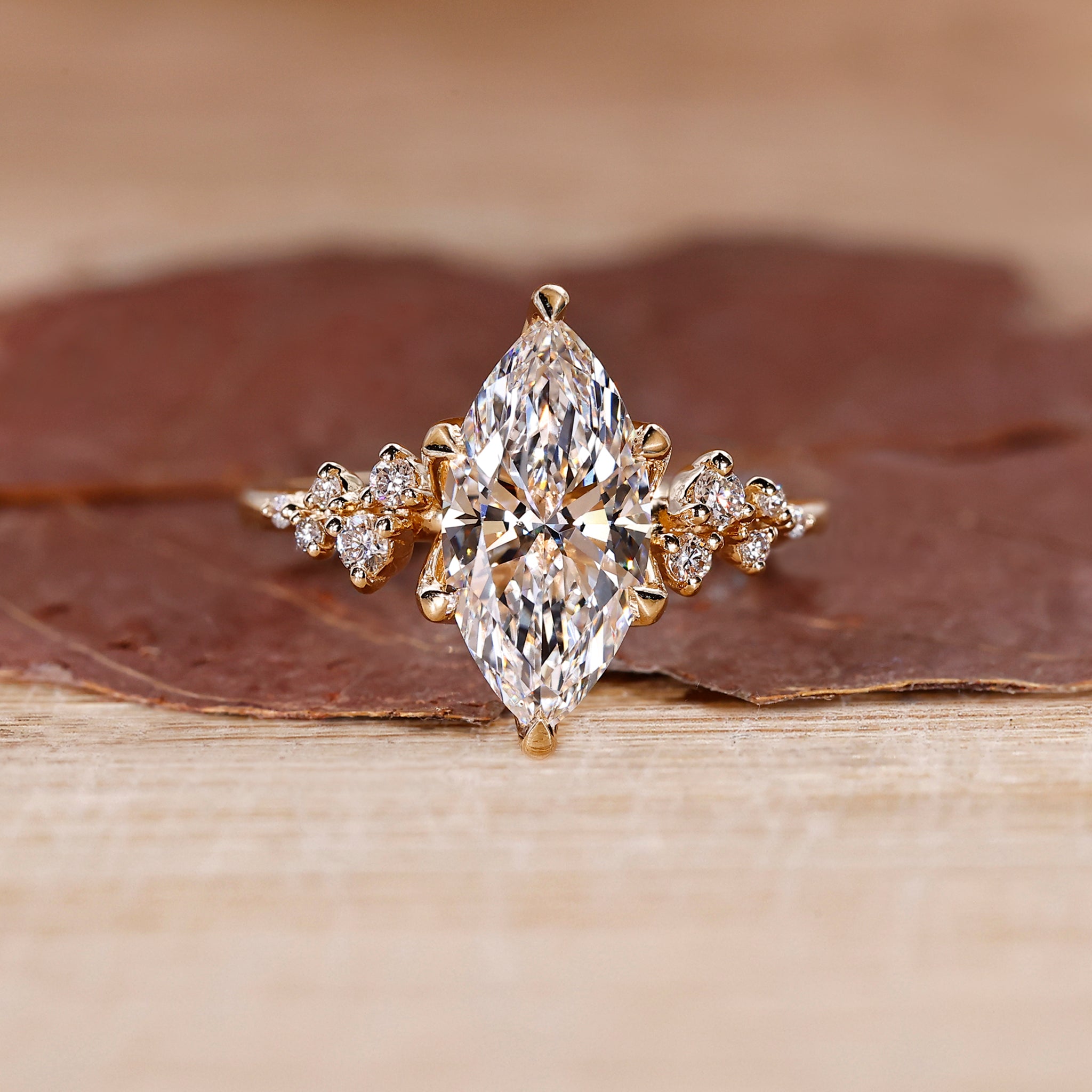
Marquise Cut Engagement Ring With Cluster Style
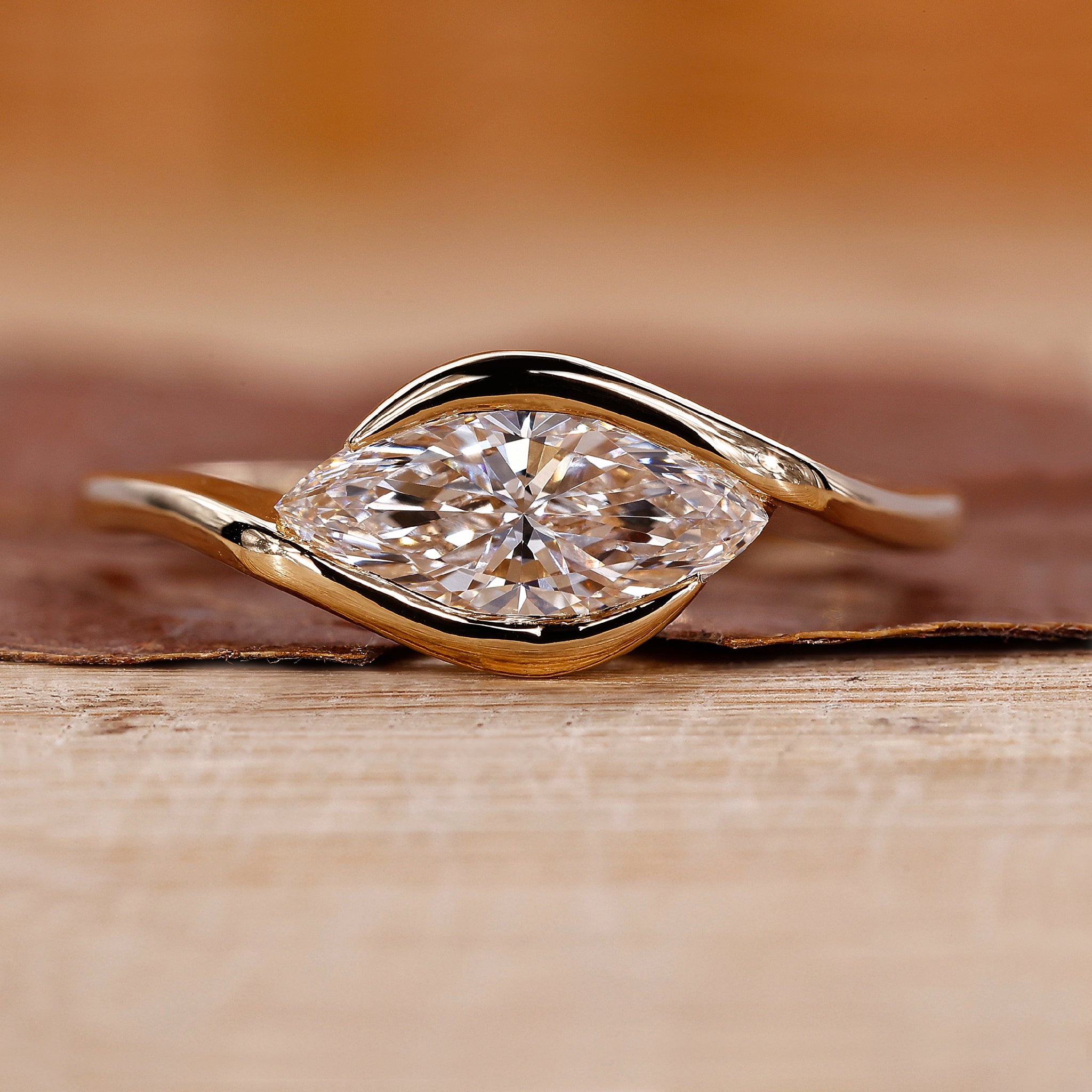
Marquise Diamond Engagement Ring in East West Style
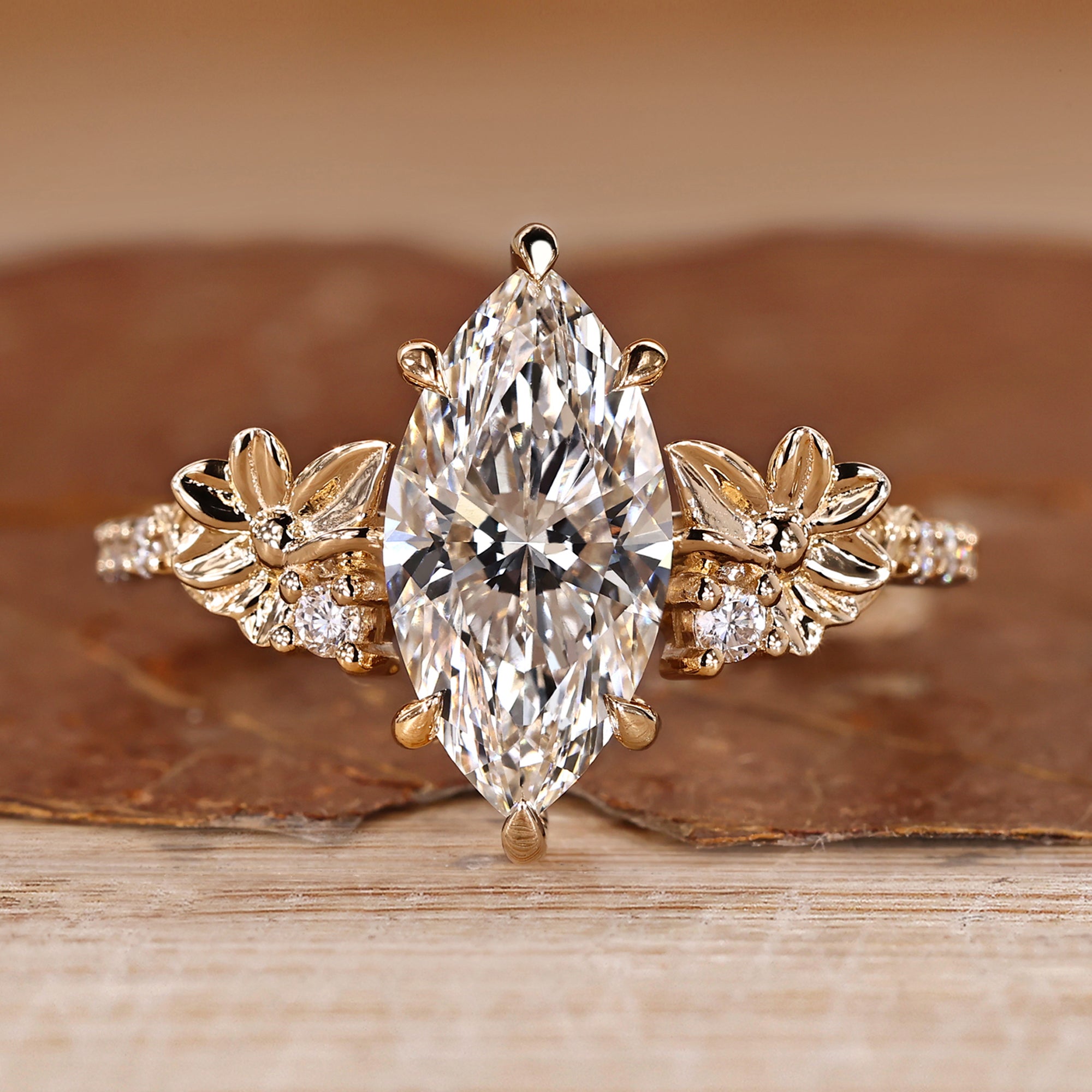
Nature Inspired Marquise Cut Engagement Ring with Flower Design
A V-prong solitaire remains the traditional choice and protects both tips directly. A bezel setting wraps the stone in a full metal rim for a more modern, protective look. Setting the stone east-west, meaning horizontally rather than point to point, gives the ring a contemporary feel and reduces how easily the tips catch on fabric. A halo setting amplifies the stone's visual size, though it also adds width to the overall profile, so choosing a slightly higher length-to-width ratio helps preserve that elongated character. Diamondrensu offers all of these settings in both lab grown diamond and Moissanite.
Dutch Marquise Setting Recommendations
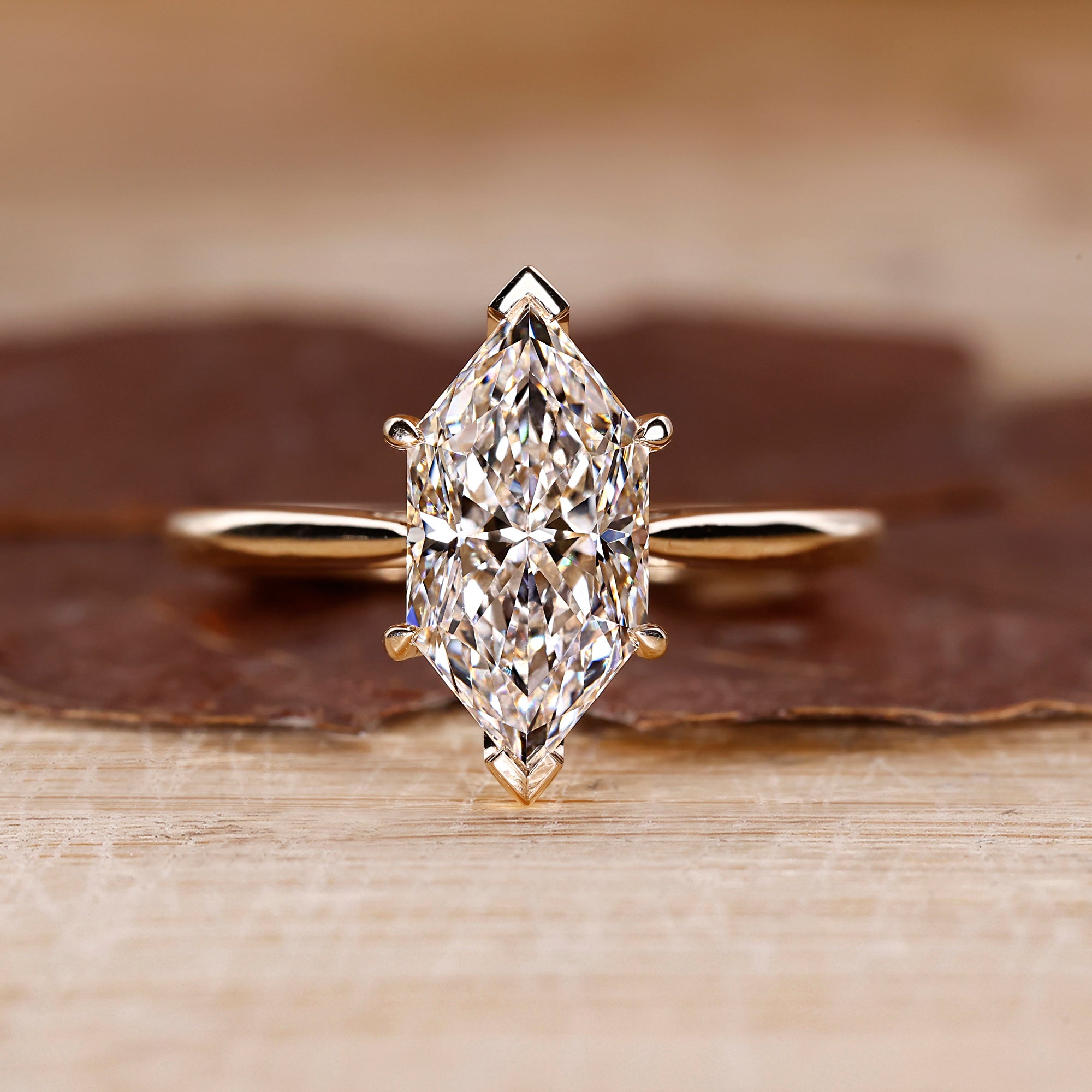
Dutch Marquise Diamond Cathedral Setting Ring
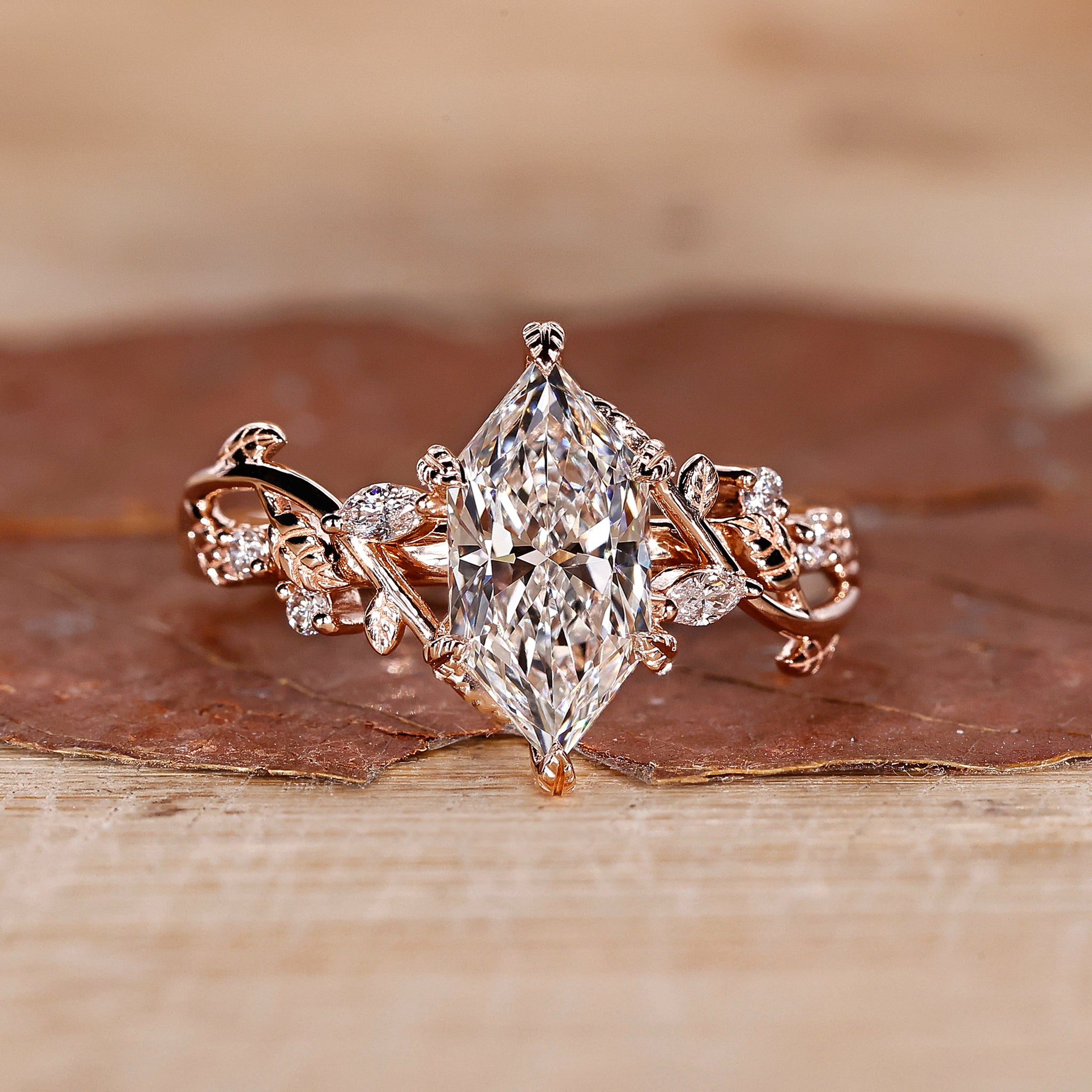
Nature Inspired Engagement Ring Using Dutch Marquise Diamond
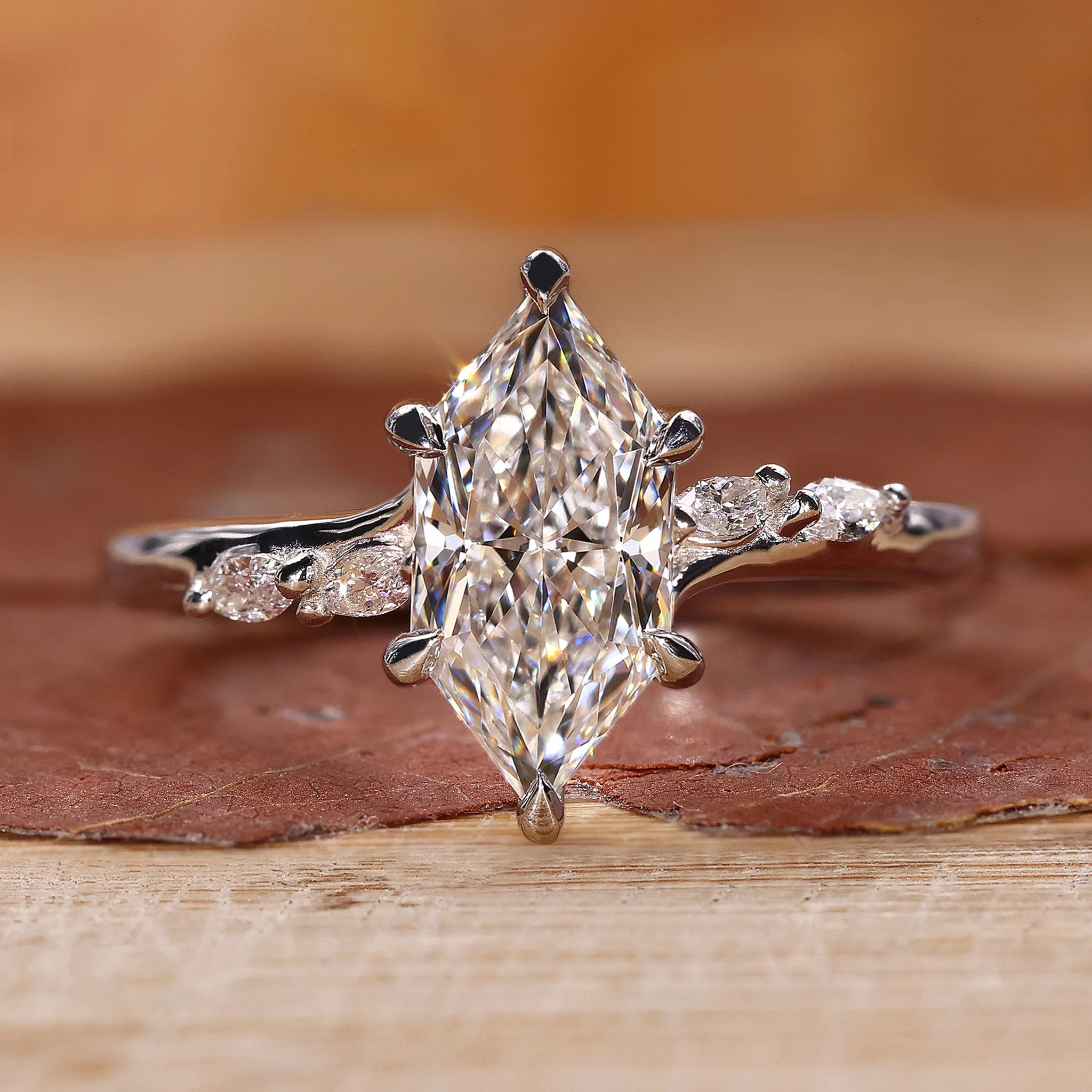
Dutch Marquise Ring - Pave Setting
A V-prong solitaire highlights the geometric, hexagonal outline without distraction. A bezel setting draws attention to the sculptural quality of the straight sides. The Dutch Marquise looks particularly striking when set east-west since the flat sides create an unusually clean horizontal line across the finger. Vintage-inspired settings with milgrain or filigree detailing also suit this cut well, since its antique European references make it a natural match for period-inspired designs.
Which Should You Choose?
Buyers who type Dutch Marquise vs Marquise into a search bar are usually asking the same question and the answer still comes down to the same two profiles below.
Choose the Classic Marquise If…
You want the most dramatic elongation and the largest face-up surface area available in any diamond shape. You lean toward flowing, organic lines over geometric angles, and you'd rather choose a shape with an established history and strong cultural recognition. You also want the most affordable elongated shape available per carat.
Choose the Dutch Marquise If…
You want a shape that feels distinctive without being instantly recognizable to everyone who sees it. You prefer a geometric, structured outline over organic curves and you still want the elongating effect of a Marquise, just with a fuller, more balanced center. A less prominent bow-tie effect also tends to matter more to those who choose this cut.
Dutch Marquise and Classic Marquise at Diamondrensu
Once the difference between these two cuts are clear, the next question usually becomes where to actually buy them. Diamondrensu carries both the classic Marquise and the Dutch Marquise across its lab grown diamond and moissanite ranges, so buyers can compare the flowing curve of one against the angular hexagon of the other before choosing a setting. Every stone in either cut comes graded to IGI standards or an equivalent quality benchmark, so the certification question doesn't get in the way of the style decision. Buyers who want the word "diamond" on the certificate tend to lean toward lab grown, while those chasing maximum brilliance at an affordable price-per-carat often land on moissanite and either stone works in either cut.
Conclusion
Yes, there's a real difference between these two shapes. The Dutch Marquise uses straight, geometric sides to build a pointed hexagon, while the classic Marquise relies on flowing curves to form its boat-like silhouette. Both elongate the finger, both perform as brilliant cuts, and both are available in lab grown diamond and moissanite. The real choice comes down to whether you want flowing elegance or architectural structure on your hand, and Diamondrensu's collections make it easy to compare both before deciding.
Create Your Own Dutch Marquise or Marquise Engagement Ring
Bring your ring idea to life with a custom design made around your preferred shape, setting, and personal style.
Create Your Custom RingFrequently Asked Questions
Leave a comment
Please note, comments must be approved before they are published.