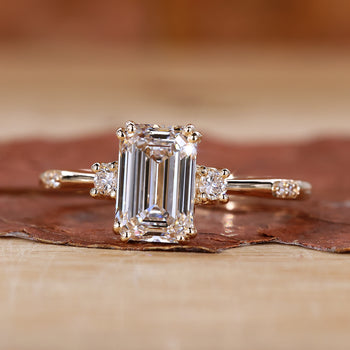
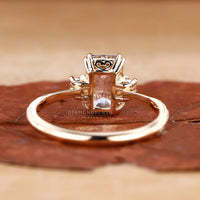
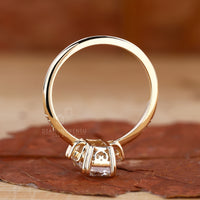
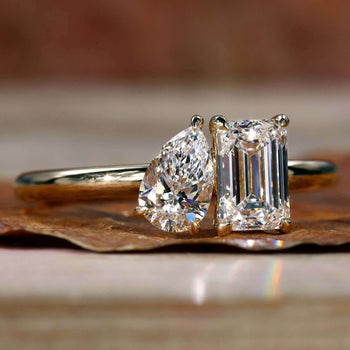
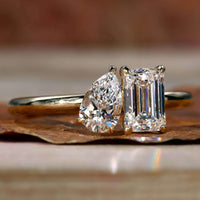
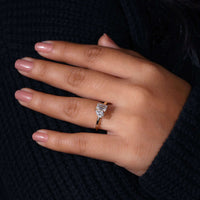
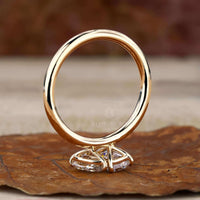
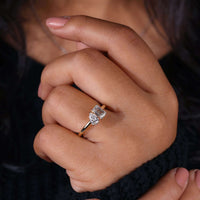
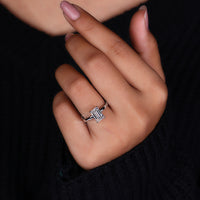
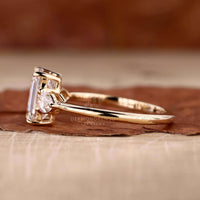
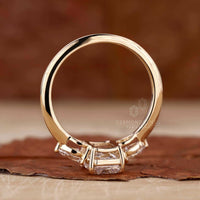
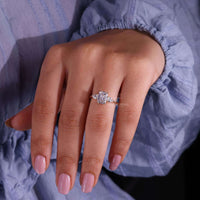
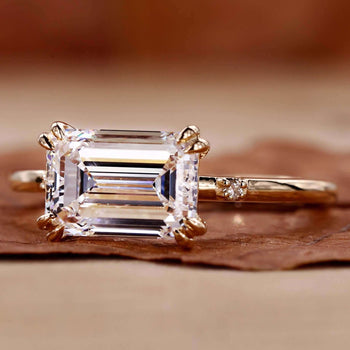
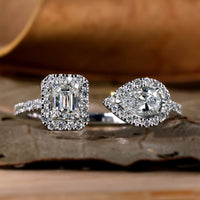
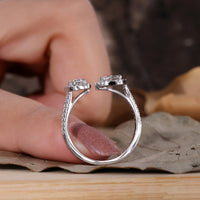
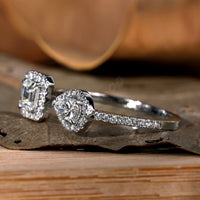
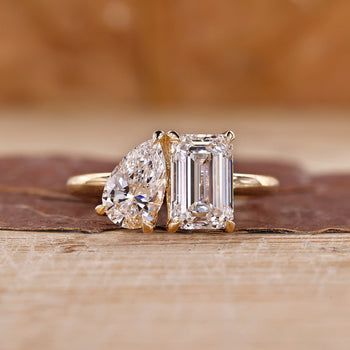
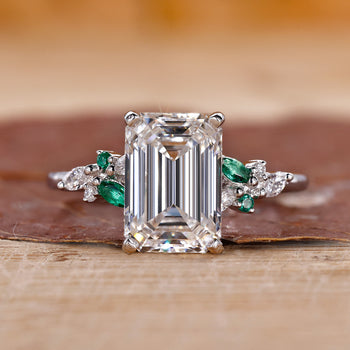
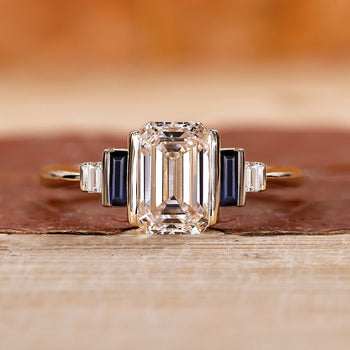
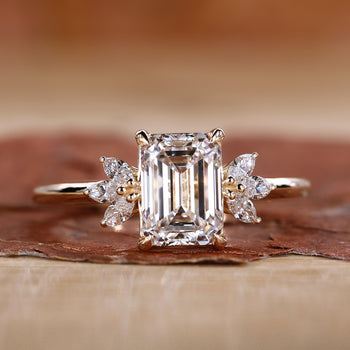
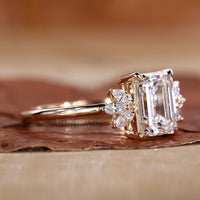
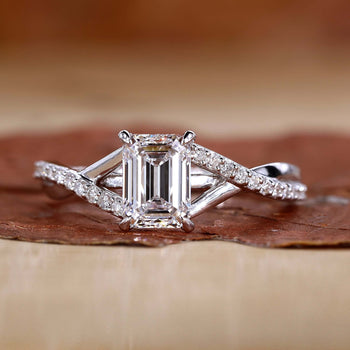
Our Most Popular Emerald Cut Lab-Grown Diamond Engagement Ring Styles
Emerald cut lab-created diamonds suit a wide range of aesthetics, from crisp minimalism to Art Deco romance. Explore our customers’ go-to designs and choose the look that fits your story.
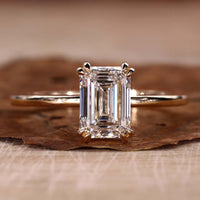
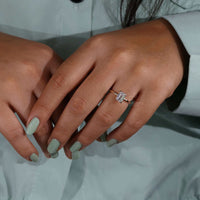
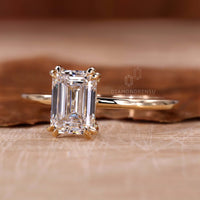
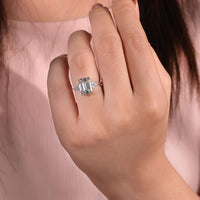
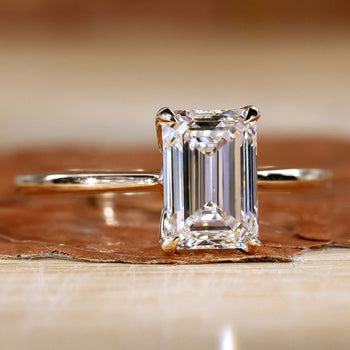
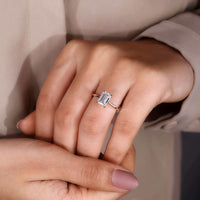
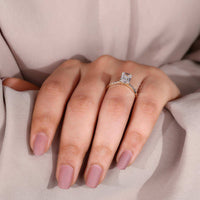
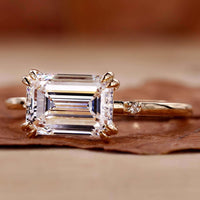
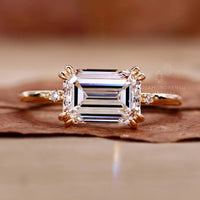
Emerald Cut Solitaire Rings
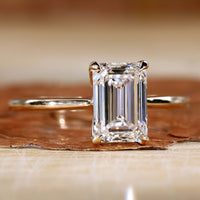
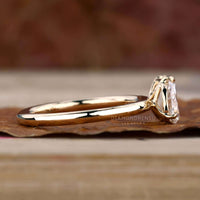
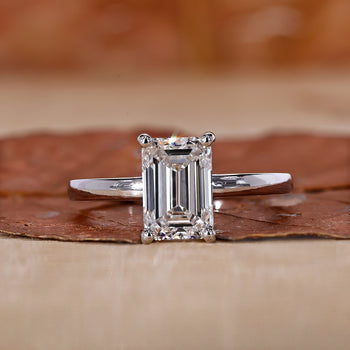
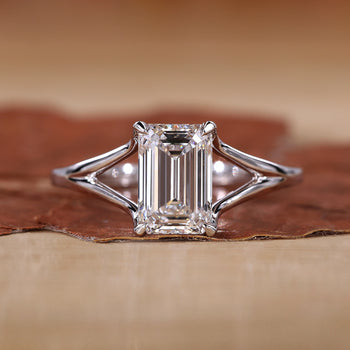
Minimal, sculptural, and timeless, a solitaire gives the emerald cut the spotlight. Select slim prongs for an airy feel or a refined bezel for a sleek, protective frame.
Four- or six-prong heads keep attention on the diamond’s silhouette and straight lines, allowing the step facets to take center stage. East-west orientations add a fashion-forward twist and can make the diamond appear larger face up. This clean approach highlights the stone’s unique architecture.
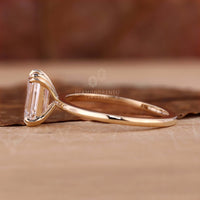
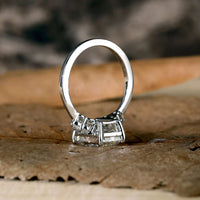
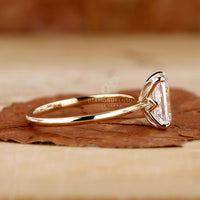
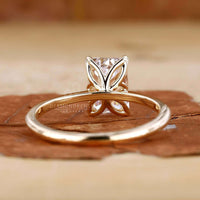
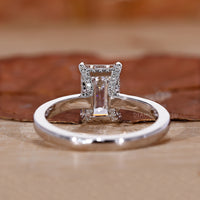
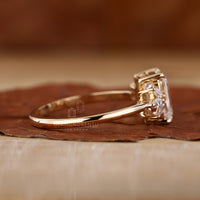
Emerald Cut Hidden Halo Rings
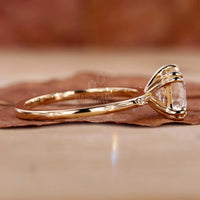
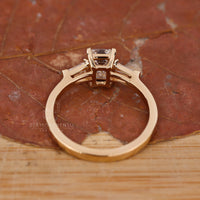
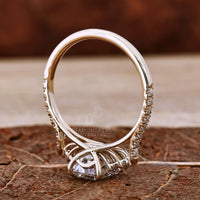
Want extra radiance without a halo on top? A hidden halo nestles petite diamonds beneath the center, creating secret shimmer from every angle.
This setting is ideal for 1.5 to 3 carat centers when you want added fire without overpowering the step-cut glow. It preserves a clean top view while the profile lights up beautifully. You get the best of both worlds: modern sparkle from the side and classic elegance from above.
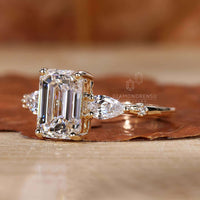
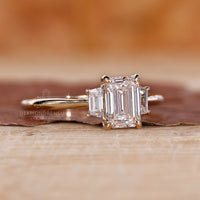
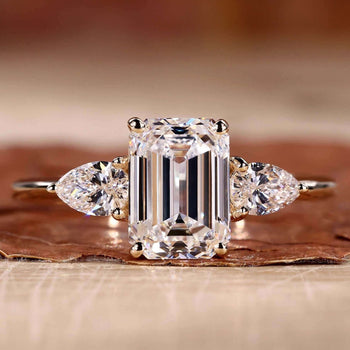
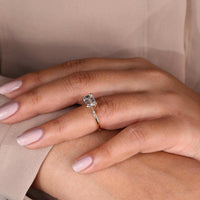
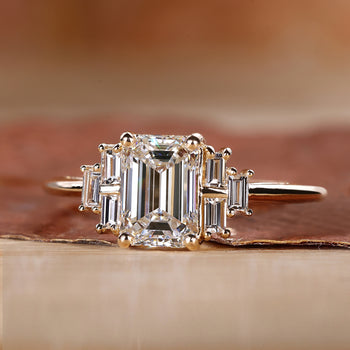
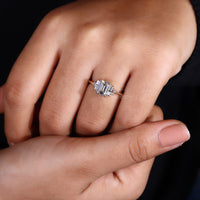
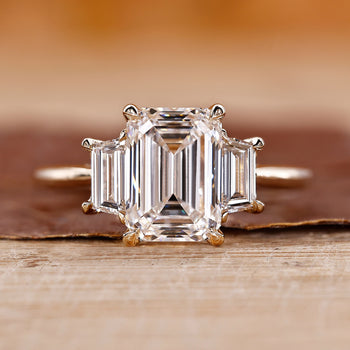
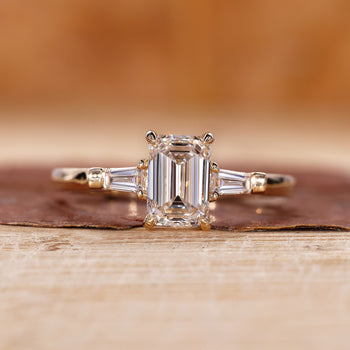
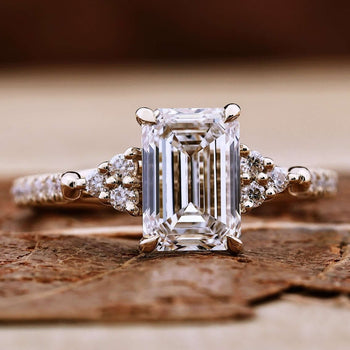
Emerald Cut Three-Stone Rings
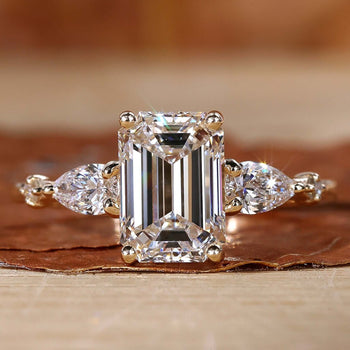
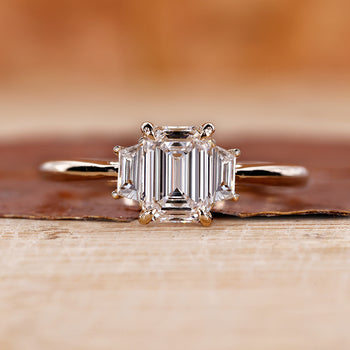
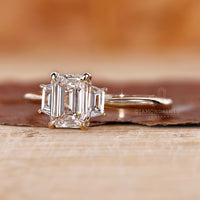
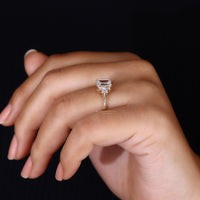
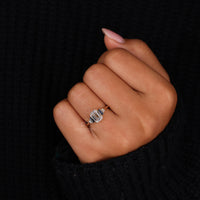
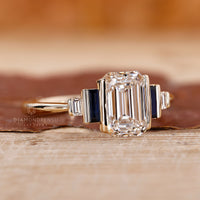
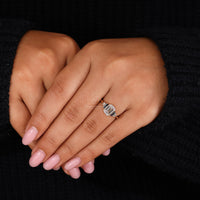
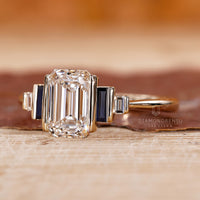
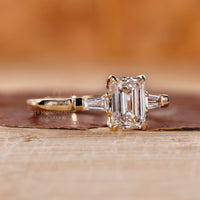
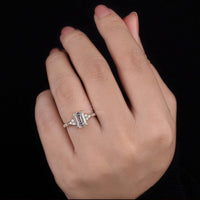
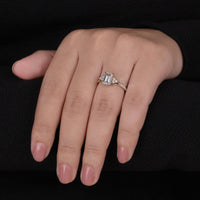
Three stones offer balance and symbolism, representing past, present, and future, while honoring the emerald cut’s geometry. Tapered baguettes or trapezoids echo the center’s linear grace.
Thoughtful side-stone proportions add width and presence without stealing the show. This makes a smart choice if you want composed grandeur with meaningful design. The linear accents draw the eye across the hand, emphasizing the elongated silhouette of the main stone.
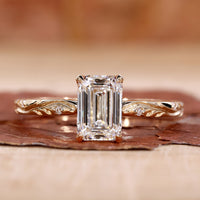
Emerald Cut Vintage-Inspired Rings
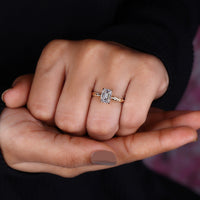
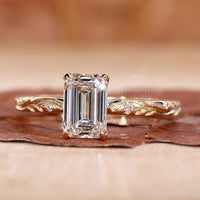
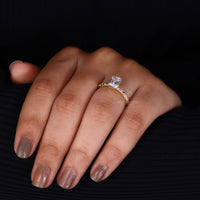
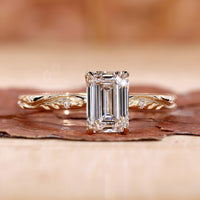
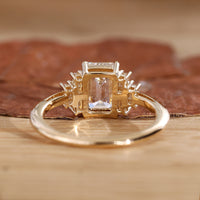
Channel Art Deco charm with milgrain, filigree, or engraved details that celebrate the cut’s 1920s heritage. The look is romantic yet distinctly architectural.
Geometric halos, stepped shoulders, and baguette accents feel heirloom-inspired and deeply nostalgic. Yellow or rose gold enrich this character, while white metals keep it crisp and clean. These details pair beautifully with the step-cut diamond for a ring that feels like a modern treasure.
Choosing the Right Emerald Cut Diamond Size
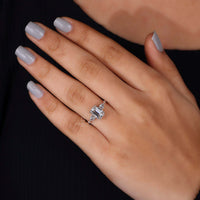
Because of their generous table and elongated outline, emerald cuts often appear larger than round diamonds of the same carat weight. Use the size cues below as a guide, keeping in mind that dimensions vary with length-width ratio and depth.
1 Carat Emerald Cut
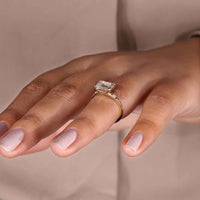
A 1 carat emerald cut measures around 7 mm by 5 mm, delivering sleek minimalism that feels refined on smaller finger sizes. It’s a beautiful starting point if you prefer understated elegance.
1.5 Carat Emerald Cut
Around 7.5 mm by 5.5 mm is typical, offering noticeable presence while staying comfortable for daily wear. Many couples pair this weight with a hidden halo for added radiance.
2 Carat Emerald Cut
Approximately 8.5 mm by 6.5 mm, this weight balances presence and proportion on many hands. It’s a customer favorite for its camera-ready look that still feels effortless.
3 Carat Emerald Cut
Near 9.3 mm by 7.5 mm, a 3 carat emerald cut reads dramatic yet poised. Think red-carpet energy with quiet sophistication. Choose secure prongs or a bezel for confident daily wear.
5 Carat Emerald Cut
Roughly 11 mm by 9 mm, this weight is unmistakably grand. Opt for a streamlined solitaire, bezel, or tapered baguette sides to keep the look balanced and comfortable.
Selecting the Best Setting for an Emerald Cut Diamond
The right setting protects your diamond, highlights its character, and fits your lifestyle. Consider how much sparkle you prefer from the band and profile, then choose a style designed for everyday comfort.
Solitaire Setting
Clean and versatile, a solitaire showcases the emerald cut’s shape. Pick prongs for an open, airy feel or a bezel for smooth, modern lines.
- Four prongs maximize openness; six prongs add security and a classic touch.
- Slim bands draw the eye to length and can make the center look larger.
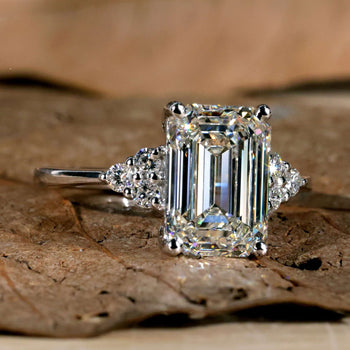
Hidden Halo Setting
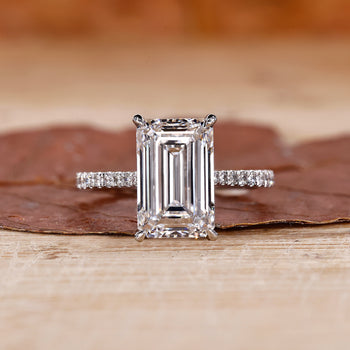
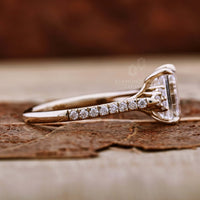
Diamonds beneath the center add subtle fire without changing the top view. It’s a favorite for boosting radiance while preserving the emerald cut’s sleek surface.
- Enhances glow from the side with a graceful under-gallery.
- Pairs beautifully with pavé bands for extra scintillation.
Halo Setting
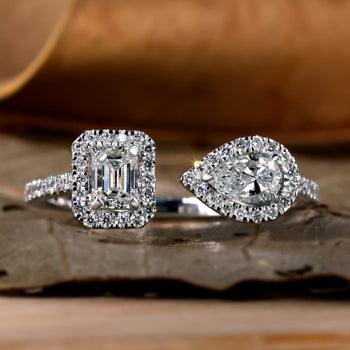
A traditional halo frames the center and increases perceived size. With step cuts, a halo brings lively contrast to the emerald’s mirrored flashes.
- Micro-pavé halos keep the outline crisp and refined.
- Double or geometric halos lean into Art Deco drama.
Three-Stone Setting
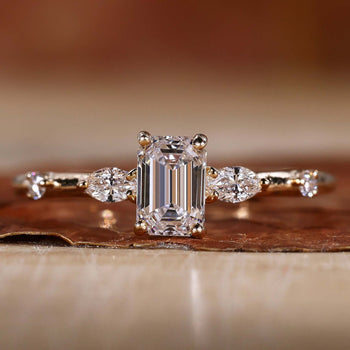
Side stones complete the composition, adding width and symbolism. Choose shapes that echo the emerald’s steps for a cohesive effect.
- Tapered baguettes, bullets, or trapezoids preserve clean lines.
- Rounds or ovals soften the geometry for a tender contrast.
Bezel Setting
A bezel encircles the diamond with metal for excellent security and a sleek profile. It’s comfortable, modern, and ideal for active lifestyles.
- Frames the emerald cut sharply, emphasizing its rectangular form.
- Low-set bezels are snag-resistant and glove-friendly.
Best Metal Options
Metal color shapes the ring’s overall character and can subtly influence how color appears in the diamond. Match the metal to your wardrobe, skin tone, and preferred aesthetic.
White Gold
Bright and modern, white gold keeps attention on the diamond’s crisp facets. It pairs beautifully with higher color grades and cool-toned wardrobes.
- Rhodium-plated for a luminous finish.
- A popular pick for contemporary, minimal designs.
Yellow Gold
Warm and classic, yellow gold nods to the emerald cut’s vintage lineage. By contrast, it can make near-colorless diamonds look a touch whiter.
- Complements milgrain, engraving, and Art Deco details.
- A flattering choice if you love a timeless, golden glow.
Rose Gold
Soft and romantic, rose gold adds a modern twist to vintage-inspired settings. The rosy hue flatters a wide range of skin tones.
- Beautiful with pavé and filigree details.
- Creates a gentle contrast that feels fresh and distinctive.
Platinum
Naturally white and dense, platinum offers exceptional durability for prongs that stay secure longer. It’s a top pick for heirloom-intended rings.
- Hypoallergenic with a rich, silvery luster.
- Ideal for intricate settings and delicate micro-pavé.
Why Choose Diamondrensu?
You deserve a ring made with care, both for you and for the planet. Diamondrensu blends artisan skill with ethical, lab-grown brilliance to create rings that feel as good as they look.
Expertly Handmade Jewelry
Each ring is handmade in our Surat workshop, where generations have honed diamond artistry. From shaping the setting to the final polish, our artisans attend to every detail.
IGI-Certified Lab-Grown Diamonds
We offer International Gemological Institute (IGI) certification for our lab-grown center diamonds so you can shop with complete confidence. Your certificate verifies the diamond’s quality and origin.
Fully Custom Emerald Cut Engagement Rings
Have a vision? Our team will design it from scratch. You’ll collaborate one-on-one with a specialist to refine every detail.
- Share your inspiration and must-haves during a 1-on-1 consultation.
- Approve a tailored design concept and precise 3D render.
- Our artisans handcraft your ring and perform a meticulous quality review.
- We deliver your finished ring with care, documentation, and support.
Ethically Created and Sustainably Sourced Diamonds
Lab-created diamonds are 100% conflict-free and use about 85% less water and energy with zero land displacement. It’s luxury that honors people and the environment. Kind, not mined.™
Extensive Selection of Emerald Cut Designs
Explore 50+ emerald cut designs across fewer than 20 distinct shapes overall, from minimal solitaires to Deco-inspired halos. Prefer a one-of-a-kind design? We’ll customize every element.
Direct-to-Consumer Pricing
Our direct model lets you choose a larger, higher-quality diamond for your budget. This often results in 30 to 50% more diamond compared to traditional retail. Superior value, with no compromise.
30-Day Return Policy
We want you to feel certain. Request a return within 30 days of delivery for eligible items that are unused and unworn, and our team will take care of you.
Rigorous Quality Inspection
Every ring passes multiple checks for setting integrity, finish, and overall craftsmanship before it leaves our workshop. Your ring arrives ready for a lifetime.