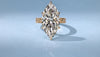
Morganite Engagement Rings: Pros, Cons, and Care Tips
Key Takeaways
- Morganite is a beautiful, romantic pink-to-peach gemstone in the beryl family, offering a unique alternative to traditional diamond rings.
- It’s significantly more affordable than diamonds, allowing you to choose a larger center stone while staying within your budget.
- With a Mohs hardness rating of 7.5 to 8, morganite is durable enough for jewelry but requires more care and protection than harder stones like diamonds or moissanite.
- Regular cleaning with warm soapy water is essential, as morganite can appear cloudy when exposed to everyday oils and dirt.
- Pairing morganite with a rose gold setting is the most popular choice, as it beautifully enhances the stone's warm, feminine hues.
What Is Morganite?
Morganite is a captivating gemstone known for its delicate pink-to-peach hues. It belongs to the beryl mineral family, which also includes well-known gems like emerald and aquamarine.
The soft, romantic color of morganite has made it an increasingly sought-after choice for modern engagement rings.
The Origins of Morganite
This beautiful pink stone was first discovered in Madagascar in 1910 by George F. Kunz, a prominent gemologist, and was originally referred to as "pink beryl" or “rose beryl”. It was later named in honor of Kunz’s friend, the American financier and gem collector J.P. Morgan.
Today, morganite is sourced from various locations around the world, including Brazil, Afghanistan, Mozambique, Namibia, and the United States. Its connection to the heart chakra makes it a symbol of divine love, compassion, and emotional healing.
Morganite's Signature Color
Morganite's color range spans from pale pink and rose to peach, salmon, and even violet-pink. The captivating color is primarily caused by traces of manganese within the crystal structure.
In the current market, pure pink and rose tints are highly fashionable. Almost all morganite undergoes a gentle, undetectable heat treatment to remove any yellow or orange undertones, resulting in a stable and pure color that will not fade under light exposure.
Why Morganite Is Popular for Engagement Rings
The rising popularity of morganite engagement rings is largely due to their unique, feminine aesthetic. The warm blush tones offer a distinct departure from colorless stones, appealing to those who want a ring that stands out.
Additionally, morganite provides exceptional value. It allows couples to invest in a stunning, substantial piece of jewelry without the premium price tag associated with mined diamonds.
Pros of Morganite Engagement Rings
Choosing a morganite engagement ring comes with several distinct advantages. These benefits make it an attractive option for many couples seeking the perfect symbol of their commitment.
From its enchanting appearance to its accessible price point, morganite has much to offer.
Beautiful Romantic Color
The primary draw of morganite is its exquisite color. The soft pink and peach tones exude a romantic, vintage charm that’s hard to replicate with other gemstones.
This delicate coloring makes morganite an ideal choice for a deeply personal and meaningful engagement ring.
More Affordable Than Diamonds
Morganite is generally much more affordable than traditional diamonds. On average, a morganite stone costs a fraction of what a comparable diamond would.
This affordability makes it an excellent choice for budget-conscious buyers who still want a beautiful, high-quality ring.
Larger Appearance Within Budget
Because of its lower price point, couples can often afford a significantly larger morganite stone than they could with a diamond.
Morganite crystals are frequently found in large sizes, so carat weight doesn’t significantly inflate the price per carat.
Excellent Clarity
Morganite is classified as a Type I clarity gemstone, meaning it is almost always eye-clean. It rarely features visible inclusions that distract from its beauty.
This high level of transparency allows the stone's color and brilliance to take center stage.
Complements Rose, White, and Yellow Gold
The versatile hues of morganite pair beautifully with various metal types. It looks stunning set in rose gold, which accentuates its warm pink tones.
It also provides a striking contrast when set in cool white gold or platinum, and it harmonizes perfectly with the classic warmth of yellow gold.
Unique Alternative to Traditional Diamond Rings
For those who prefer non-traditional jewelry, morganite offers a distinctive look. It’s a wonderful way to express individual style while still wearing a timeless piece.
A morganite ring is sure to be a conversation starter and a unique reflection of your love story.
Cons of Morganite Engagement Rings
While morganite is undeniably beautiful, it is important to understand its limitations. Knowing the potential drawbacks will help you make an informed decision and properly care for your ring.
Like any gemstone, morganite requires specific considerations for daily wear.
Softer Than Diamonds
Morganite has a Mohs hardness rating of 7.5 to 8, which is softer than a diamond's perfect 10. This means it is more susceptible to scratching from harder materials.
It’s also a brittle stone, meaning a hard, direct blow could potentially chip or shatter it.
Can Show Wear Over Time
Because it’s not as hard as diamond or moissanite, a morganite ring may show signs of wear over the years. Fine scratches can accumulate on the stone's surface if it is not handled with care.
This wear can slightly dull the stone's appearance over a long period.
Requires Regular Cleaning
Morganite tends to attract oils, lotions, and dirt, which can quickly make the stone look cloudy or dull. To maintain its sparkle, it requires more frequent cleaning than a diamond.
You’ll need to commit to a regular cleaning routine to keep your ring looking its best.
May Need Occasional Re-Polishing
If a morganite stone accumulates significant scratches or wear over time, it may lose some of its original luster. In these cases, the stone may need to be professionally re-polished.
Re-polishing can restore the stone's brilliant surface, but it is an additional maintenance step to consider.
Not Ideal for Extremely Active Lifestyles
Due to its moderate hardness and brittle nature, morganite is not the best choice for individuals with highly active, hands-on lifestyles.
If your daily routine involves heavy lifting, gardening, or rigorous sports, a morganite ring will require careful attention and frequent removal.
Is Morganite Durable Enough for an Engagement Ring?
The durability of an engagement ring is crucial, as it’s intended to be worn for a lifetime. Morganite is durable enough for jewelry, but it requires mindful wear.
Understanding how its hardness translates to everyday life will help you protect your investment.
Mohs Hardness Explained
The Mohs scale measures a mineral's resistance to scratching. Morganite ranks at 7.5 to 8 on this scale.
While this is a respectable rating, it’s important to remember that a diamond at 10 is exponentially harder than a morganite at 8.
Everyday Wear Expectations
You can certainly wear a morganite engagement ring regularly, but it should be treated with care. It’s not a stone that you can wear indiscriminately through all activities.
Mindful wear means being aware of your ring and protecting it from unnecessary hazards.
Scratch and Chip Resistance
Morganite can be scratched by harder gemstones, such as diamonds, sapphires, and moissanite. It is also brittle, so it can chip if it is struck against a hard surface.
Cuts with pointed edges, like princess or marquise shapes, are particularly vulnerable to chipping at the corners.
Best Ring Settings for Protection
Choosing the right setting can significantly enhance the durability of a morganite ring. A protective setting shields the stone's vulnerable edges.
Consider these options to keep your morganite secure:
- Halo: Surrounding the center stone with a circle of accent diamonds provides a buffer against bumps and knocks.
- Bezel: A metal rim that fully encircles the stone provides maximum protection.
- Six-Prong: Using six prongs instead of the traditional four provides more secure coverage for the gemstone.
- Avoid Cathedral: While elegant, cathedral settings raise the stone higher, which can sometimes increase the risk of it catching on objects.
Morganite vs. Other Popular Engagement Stone Options
When shopping for an engagement ring, it is helpful to compare morganite against other popular choices. Each gemstone offers a different balance of beauty, durability, and value.
Here is how morganite stacks up against the competition.
Morganite vs. Diamond
Diamonds are the traditional standard, prized for their unmatched hardness (10 on the Mohs scale) and brilliant, colorless sparkle. Morganite is softer and offers a distinct pink hue.
While diamonds are far more durable and brilliant, morganite provides a larger stone for a much lower price, along with a unique, romantic aesthetic.
Morganite vs. Moissanite
Moissanite is a lab-created gemstone known for its exceptional brilliance, fire, and durability (9.25 on the Mohs scale). It is an excellent, ethical alternative for those who want a diamond-like appearance.
Morganite offers a softer, pastel look compared to moissanite's intense sparkle. Moissanite is better suited for rigorous daily wear, while morganite requires more gentle handling.
Morganite vs. Pink Sapphire
Pink sapphires are another option for those seeking a pink engagement ring. Sapphires are significantly harder than morganite (9 on the Mohs scale) and generally feature more vivid, saturated pink colors.
Morganite tends to have softer, more pastel peach and blush tones. Pink sapphires are more durable for everyday wear but often come at a higher price point.
Morganite vs. Lab-Grown Diamond
Lab-grown diamonds are chemically and physically identical to mined diamonds, offering the same supreme durability and brilliance but at a more accessible price point. They’re an ethical, conflict-free choice.
A lab-grown diamond provides superior longevity and classic sparkle, whereas morganite offers a distinct colored look. Diamondrensu specializes in premium lab-grown diamonds for those seeking ultimate durability and value.
Comparison Table
To help summarize the differences, here’s a quick overview of how these gemstones compare.
- Hardness: Diamond (10), Moissanite (9.25), Pink Sapphire (9), Morganite (7.5-8).
- Sparkle: Moissanite has the highest fire, followed by Diamond. Morganite has a softer, romantic glow.
- Price: Morganite and Moissanite are highly affordable. Lab-Grown Diamonds offer great value. Mined Diamonds and Sapphires are the most expensive.
- Maintenance: Morganite requires frequent cleaning to prevent cloudiness. Diamonds and Moissanite are easier to maintain.
- Color: Morganite offers pastel pink/peach. Pink Sapphire offers vivid pink. Diamonds and Moissanite are typically colorless.
- Best For: Morganite is best for vintage romance on a budget. Moissanite and Lab-Grown Diamonds are best for maximum durability and brilliant sparkle.

How to Choose a High-Quality Morganite
If you decide that morganite is the right choice for you, knowing what to look for will ensure you select a beautiful stone. The quality of morganite is evaluated based on specific characteristics.
Pay attention to the color, cut, clarity, and carat weight when making your selection.
Color
Color is the most important factor in determining morganite's value. Look for stones with a pure, transparent pink or warm peachy-pink hue.
The color should be even throughout the stone. While pale stones are common, those with deeper, more saturated color are considered more valuable.
Cut
A high-quality cut is essential to maximize the stone's brilliance and life. Because morganite is pleochroic (showing different colors at different angles), the cutter must carefully orient the rough stone.
Look for a cut that evenly reflects light and showcases the stone's best color, without dark areas or "windowing" in the center.
Clarity
Morganite should generally be eye-clean, meaning there are no visible inclusions when you look at the stone without magnification.
Avoid stones with visible dark spots, large feathers, or cloudiness, as these will detract from the gem's overall beauty and structural integrity.
Carat Weight
Morganite crystals grow quite large in nature, so finding a substantial carat weight is easier and more affordable than with many other gems.
Larger stones often display stronger, more attractive color saturation. Focus on the dimensions of the stone to understand how large it will appear on the finger.
Popular Morganite Shapes
Morganite can be fashioned into almost any shape. The shape you choose will influence the overall style of the ring. Certain shapes also offer better protection for the stone.
- Oval: A highly popular choice that elongates the finger and features safe, rounded edges.
- Cushion: Offers a vintage, romantic feel with soft, rounded corners that protect the stone.
- Pear: An elegant, teardrop shape; the pointed tip should be protected by a V-prong.
- Emerald: A sophisticated step-cut that highlights the stone's clarity and subtle color.
- Round: The classic brilliant cut that maximizes light return and offers excellent durability.
- Marquise: A distinctive, boat-shaped cut; requires protective prongs on both points.
- Radiant: Combines the elegant silhouette of the emerald cut with the brilliant facet pattern of a round stone.
Best Metal Choices for Morganite Engagement Rings
The metal you choose for the setting will dramatically affect the final look of your morganite ring. Different metals bring out different qualities in the stone.
Consider your personal style and how the metal will interact with the morganite's specific hue.
Rose Gold
Rose gold is by far the most popular choice for morganite engagement rings. The warm, pinkish tones of the metal seamlessly blend with the gemstone, creating a cohesive, romantic appearance.
This pairing enhances the stone's blush color, making it appear richer and more vibrant.
White Gold
White gold provides a crisp, modern contrast to the warm tones of morganite. The bright white metal makes the stone's pink or peach color pop.
For the best results, jewelers often use a rose-gold collet (the part that holds the stone) beneath the morganite to enhance its color, even when the rest of the band is white gold.
Yellow Gold
Yellow gold offers a classic, warm aesthetic that pairs beautifully with morganite, particularly stones that lean more toward peach or salmon hues.
This combination has a distinctively vintage and regal feel.
Platinum
Platinum is a premium, highly durable white metal. Like white gold, it offers a striking contrast to the pink stone.
Platinum is an excellent choice for those who want the maximum durability in their ring setting, though it is a less common pairing for morganite due to the higher cost.
Popular Morganite Engagement Ring Styles
Morganite is incredibly versatile and looks stunning in a wide variety of ring designs. The style you choose should reflect the wearer's personality.
Here are some of the most sought-after styles for morganite rings.
Solitaire
A solitaire setting features a single morganite stone on a plain band. This classic design allows the unique color and beauty of the gemstone to take center stage without distraction.
It’s a timeless choice that highlights the stone's elegant simplicity.
Halo
A halo setting encircles the center morganite with a ring of smaller accent diamonds or moissanite. This style adds incredible sparkle and makes the center stone appear larger.
The halo also provides a layer of physical protection for the morganite's edges.
Three-Stone
The three-stone design features a central morganite flanked by two side stones. This style is rich in symbolism, often representing a couple's past, present, and future.
It offers a balanced, substantial look across the finger.
Vintage
Vintage-inspired settings are a perfect match for morganite's romantic color. These designs often feature intricate details like milgrain edging, filigree, and ornate halos.
They evoke the elegance of the Victorian or Edwardian eras.
Hidden Halo
A hidden halo features a subtle ring of diamonds set just beneath the center stone, visible primarily in profile.
This adds a secret touch of sparkle while keeping the top-down view clean and focused on the morganite.
East-West
In an east-west setting, an elongated stone (like an oval or emerald cut) is set horizontally across the band rather than vertically.
This provides a modern, sleek, and unexpected twist on traditional ring styles.
Nature-Inspired Designs
Nature-inspired rings incorporate organic elements like vines, leaves, or floral motifs into the metalwork.
These whimsical designs pair beautifully with the soft, natural hues of morganite.
How to Care for a Morganite Engagement Ring
Proper care is essential to keep a morganite ring looking brilliant and to protect it from damage. Because it’s not as hard as a diamond, it requires a bit more attention.
Establishing a good maintenance routine will preserve your ring's beauty for years to come.
Regular Cleaning
Morganite tends to attract oils from your skin, lotions, and everyday dirt, which can quickly make the stone appear cloudy.
To keep it sparkling, you should clean your ring at home every few weeks.
Safe Cleaning Methods
The safest way to clean morganite is to soak it in a bowl of warm water mixed with a few drops of mild dish soap. Use a soft-bristled toothbrush to gently scrub away dirt, especially behind the stone where grime accumulates.
Rinse the ring thoroughly with clean water and dry it with a soft, lint-free cloth. Ultrasonic cleaners are generally safe unless the stone has liquid inclusions, but warm soapy water is always the most reliable method.
What to Avoid
Never expose your morganite ring to harsh chemicals, such as bleach, chlorine, or household cleaners. These can damage the stone and the metal setting.
You should also avoid exposing the stone to extreme heat, which can cause the color to fade.
Proper Storage
When you’re not wearing your ring, store it carefully to prevent scratches. Keep it in a soft fabric pouch or a dedicated compartment in your jewelry box.
Do not store it loose with harder gemstones such as diamonds or sapphires, which can easily scratch the morganite's surface.
Professional Inspection and Maintenance
Have your ring inspected by a professional jeweler at least once a year. They can check the prongs to ensure the stone is secure and perform a deep cleaning.
If your morganite becomes scratched over time, a jeweler can evaluate whether it needs to be professionally re-polished to restore its original shine.
Can You Wear a Morganite Ring Every Day?
While morganite is durable enough for fine jewelry, wearing it every single day requires a level of mindfulness. It’s not a ring you can put on and forget about.
Knowing when to wear it and when to take it off is key to its longevity.
Daily Wear Tips
You can enjoy your morganite ring in everyday activities, such as working at a desk, running errands, or socializing.
The key is to be aware of your hands and avoid knocking the ring against hard surfaces, such as countertops or door handles.
Activities to Avoid
You should avoid wearing your morganite ring during activities that expose it to impact, pressure, or chemicals.
This includes heavy lifting, rigorous exercise, gardening, cleaning with harsh products, or swimming in chlorinated pools.
When to Remove Your Ring
Get into the habit of removing your ring as soon as you get home. Take it off before applying lotions, perfumes, or hairspray, as these will cause the stone to cloud quickly.
It is also wise to remove your ring before sleeping to prevent it from catching on bedding or being accidentally knocked against a nightstand.
Does Morganite Lose Its Sparkle or Color?
A common concern among buyers is whether a morganite ring will lose its beauty over time. Understanding how the stone behaves will help set realistic expectations.
With the right care, morganite can maintain its lovely appearance.
Why Morganite Can Look Cloudy
Morganite doesn’t permanently lose its sparkle, but it’s highly susceptible to becoming cloudy. This is almost always due to a buildup of everyday oils, soap scum, and dirt on the surface and underside of the stone.
Because morganite is a lighter-colored gem, this grime is much more visible than it would be on a darker stone.
Does Morganite Fade?
The color of morganite is generally stable under normal light exposure; it will not fade from exposure to sunlight.
However, exposure to extreme heat can cause the color to alter or fade, so it should be kept away from intense heat sources.
Restoring Its Brilliance
If your morganite looks dull or cloudy, a simple cleaning with warm soapy water and a soft brush will almost always restore its original brilliance.
If the stone has accumulated fine surface scratches over the years of wear, professional repolishing can restore its pristine shine.
How Much Do Morganite Engagement Rings Cost?
One of the most appealing aspects of morganite is its accessible price point. It allows couples to maximize their budget without sacrificing beauty.
Understanding the pricing structure will help you find the best value.
Factors That Affect Price
The cost of a morganite stone is primarily determined by its color quality and clarity. Stones with a rich, saturated pink or peach hue are more valuable than pale stones.
Custom cuts and flawless clarity will also increase the price. The metal and accent stones used in the setting will significantly contribute to the ring's total cost.
Price by Carat Weight
On average, morganite costs between $100 and $300 per carat. Unlike diamonds, the price per carat doesn’t jump exponentially as the stone gets larger.
For example, larger stones in the 2.5- to 4-carat range might cost between $800 and $1,800 per carat, making substantial center stones very attainable.
Natural Morganite vs. Rings with Lab-Grown Accent Diamonds
When purchasing a morganite ring, consider pairing the natural center stone with lab-grown accent diamonds or moissanite in the setting.
Lab-grown diamonds offer the exact same brilliance and durability as mined diamonds but at a much better value, allowing you to create a spectacular ring while staying mindful of your budget and ethical sourcing.
Budget Planning Tips
Determine your total budget before shopping. Because the center stone is relatively affordable, you may have more room to invest in an intricate, high-quality setting or a matching wedding band.
Focus on finding a stone with a color you love, as that’s the defining feature of morganite.
Who Should Choose a Morganite Engagement Ring?
Morganite is a stunning choice, but it’s not the perfect fit for everyone. It appeals to a specific aesthetic and lifestyle.
Consider your priorities to decide if it’s the right gemstone for your engagement.
Best for Budget-Conscious Buyers
If you dream of a large, eye-catching center stone but are working within a strict budget, morganite is an excellent option.
It provides a substantial look and undeniable beauty at a fraction of the cost of traditional diamonds.
Best for Vintage and Romantic Styles
Morganite is the ultimate gemstone for those who adore romantic, feminine, and vintage-inspired aesthetics.
Its warm blush tones perfectly complement intricate settings, rose gold metals, and heirloom-style designs.
Best for Those Seeking a Unique Engagement Ring
If you want a ring that breaks away from the conventional clear diamond, morganite offers a distinctive and elegant alternative.
It’s a beautiful way to express your individual style and stand out from the crowd.
When Another Gemstone May Be a Better Choice
If you have a highly active lifestyle, work with your hands, or simply don’t want to worry about frequent cleaning and careful maintenance, morganite may not be the best choice.
In these cases, a more durable option like a lab-grown diamond or moissanite from Diamondrensu will provide the peace of mind and lasting brilliance you need for everyday wear.
Final Thoughts
Morganite engagement rings offer a captivating blend of romantic color, impressive size, and remarkable affordability. While they require a bit more mindful care than harder gemstones, their unique beauty makes them a cherished choice for many couples.
By understanding the pros, cons, and proper maintenance, you can ensure your morganite ring remains a stunning symbol of your love. Whether you choose the soft blush of morganite or the unmatched durability of a lab-grown diamond, the most important thing is selecting a ring that truly reflects your personal story.
Your vision. Your diamond. Your ring.
Work with Diamondrensu experts to create a piece that’s uniquely yours.
Frequently Asked Questions
Is morganite a good stone for an engagement ring?
Yes, morganite is a beautiful and affordable choice for an engagement ring, especially for those who love romantic, pink hues. However, because it’s softer than a diamond, it requires more careful wear and frequent cleaning.
How long do morganite engagement rings last?
With proper care, mindful wear, and regular cleaning, a morganite engagement ring can last a lifetime. It may require occasional professional re-polishing to remove surface scratches over the years.
Does morganite scratch easily?
Morganite ranks 7.5 to 8 on the Mohs scale, meaning it is durable but can be scratched by harder everyday items or other gemstones like diamonds and sapphires.
Can you wear a morganite ring every day?
You can wear it daily, but you must be mindful. It should be removed before heavy lifting, exercising, cleaning, or applying lotions to protect it from damage and cloudiness.
Does morganite become cloudy over time?
Morganite doesn’t permanently cloud, but it quickly shows dirt, oils, and soap scum on its surface. Regular cleaning with warm soapy water will easily restore its clarity and sparkle.
How often should a morganite ring be cleaned?
To keep it looking its best, you should clean your morganite ring at home every two to three weeks, or whenever you notice it beginning to look dull.
What metal looks best with morganite?
Rose gold is the most popular choice as it beautifully enhances the stone's pink and peach tones. White gold and platinum provide a striking, modern contrast.
Is morganite more affordable than a diamond?
Yes, morganite is significantly more affordable than a mined diamond. It allows buyers to purchase a much larger center stone for a fraction of the cost.
Which shapes look best for morganite engagement rings?
Oval and cushion cuts are highly popular as they offer a romantic look and feature rounded edges that are less prone to chipping.
Does morganite require special care?
Yes, it requires frequent cleaning to maintain its sparkle and should be protected from hard impacts, harsh chemicals, and extreme heat.
Is morganite suitable for active lifestyles?
No, morganite is not recommended for highly active, hands-on lifestyles due to its moderate hardness and susceptibility to chipping or scratching. A lab-grown diamond or moissanite is a better choice for rigorous wear.
Can a morganite engagement ring be resized or reset?
Yes, a morganite ring can be resized or reset by a professional jeweler, but the jeweler must take care not to expose the stone to the extreme heat of a jeweler's torch during the process.

Leave a comment
Please note, comments must be approved before they are published.