What You Need to Know about Buying a Vintage Engagement Ring
Vintage engagement rings have an unmatched charm of their own; a beauty that is built from detail rather than size. But before falling for one, it helps to know what "vintage" really means, since antique jewelry engagement rings and vintage-inspired designs aren't quite the same thing. This guide breaks down those differences, walks through the major eras, and helps you pick a ring that fits your style and everyday life.
Vintage vs. Antique Engagement Rings: What's the Difference?
People toss around "vintage" and "antique" like they're interchangeable. But with antique jewelry engagement rings, the distinction genuinely matters, as it can save you from paying antique prices for something that's really just a vintage-style engagement ring dressed up to look older.
Antique Engagement Rings: 100 Years or Older
An antique ring is generally at least a century old, which today puts genuine antique engagement rings around 1925 or earlier - Victorian, Edwardian, and the earliest Art Deco pieces all fall here.
True antique rings often show their age honestly. You might spot worn details, delicate settings that need care, or signs of past repairs, and resizing can get tricky with intricate old metalwork. Authentication matters a lot with antique jewelry engagement rings, so it's worth buying from specialists who can explain a piece's history and condition clearly.
Vintage Engagement Rings: 20 to 100 Years Old
Vintage covers a much wider window - roughly 20 to 100 years old - which includes Art Deco, Retro, and mid-century designs. Unlike antique pieces, vintage engagement rings can come from many different decades, and that range is part of what makes them fun to shop for.
You'll find them in a mix of conditions and price points. Some have been carefully restored, others still carry visible wear, and their real appeal comes from genuine age paired with a design language that unmistakably belongs to its time.
Vintage Style and Vintage-Inspired Engagement Rings
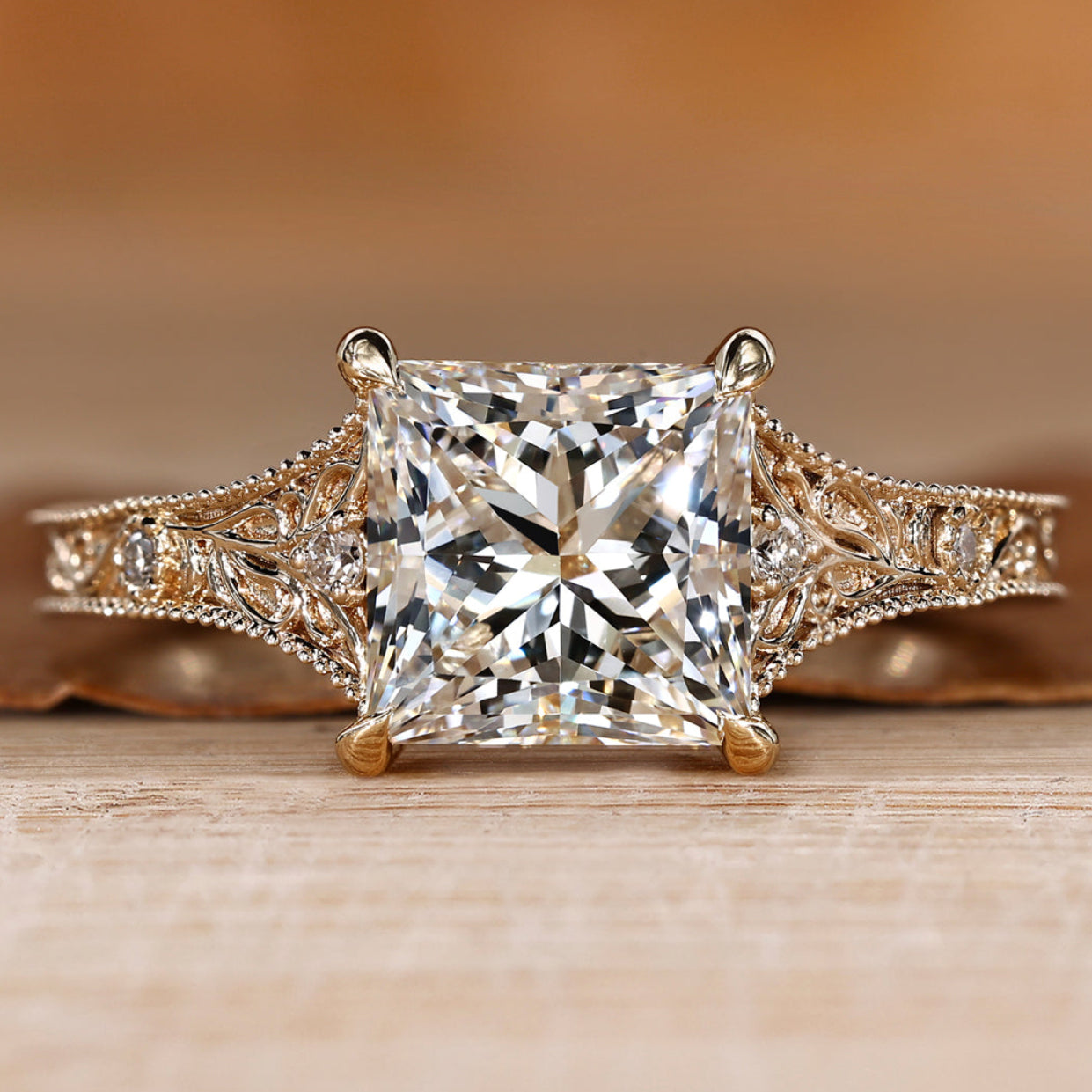
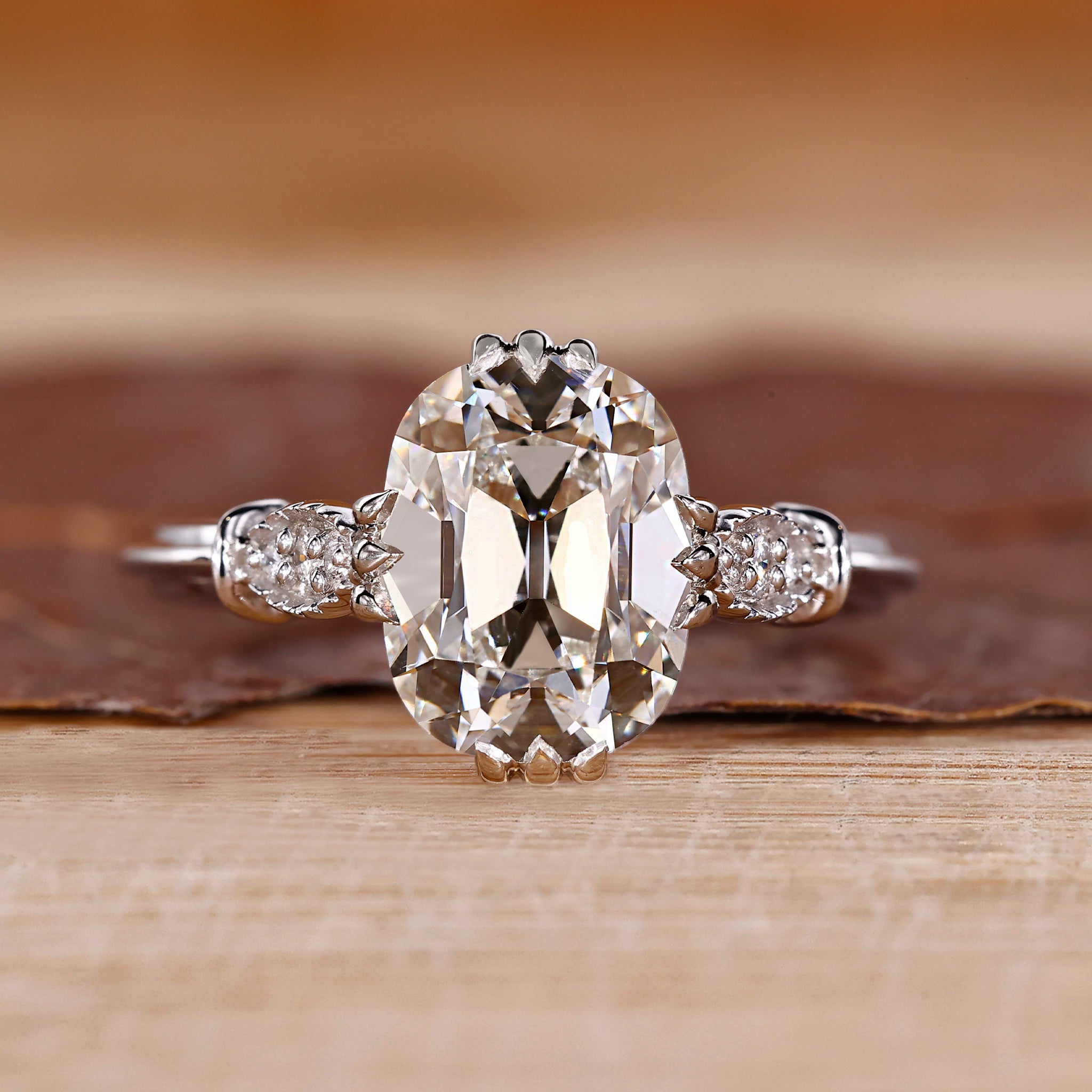
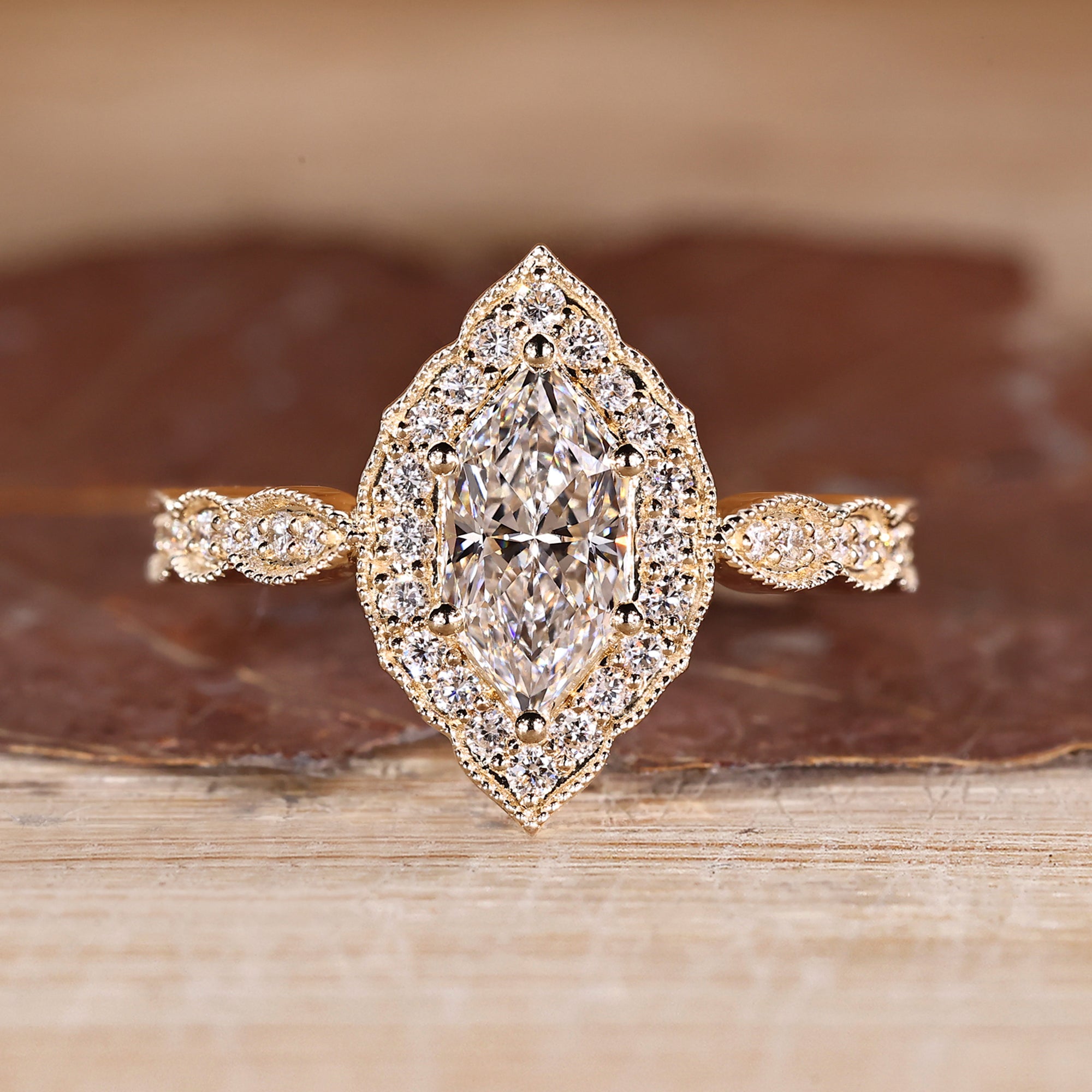
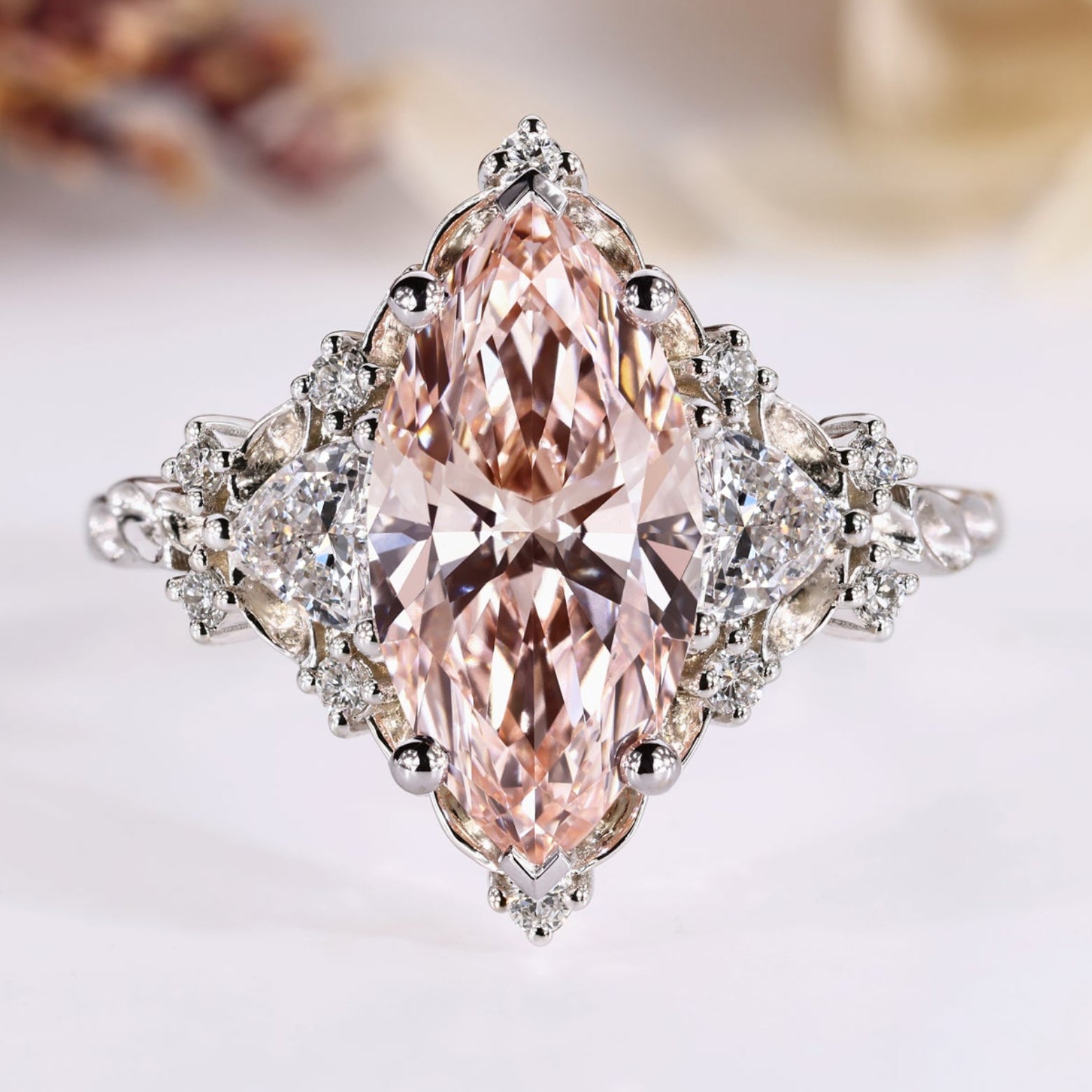
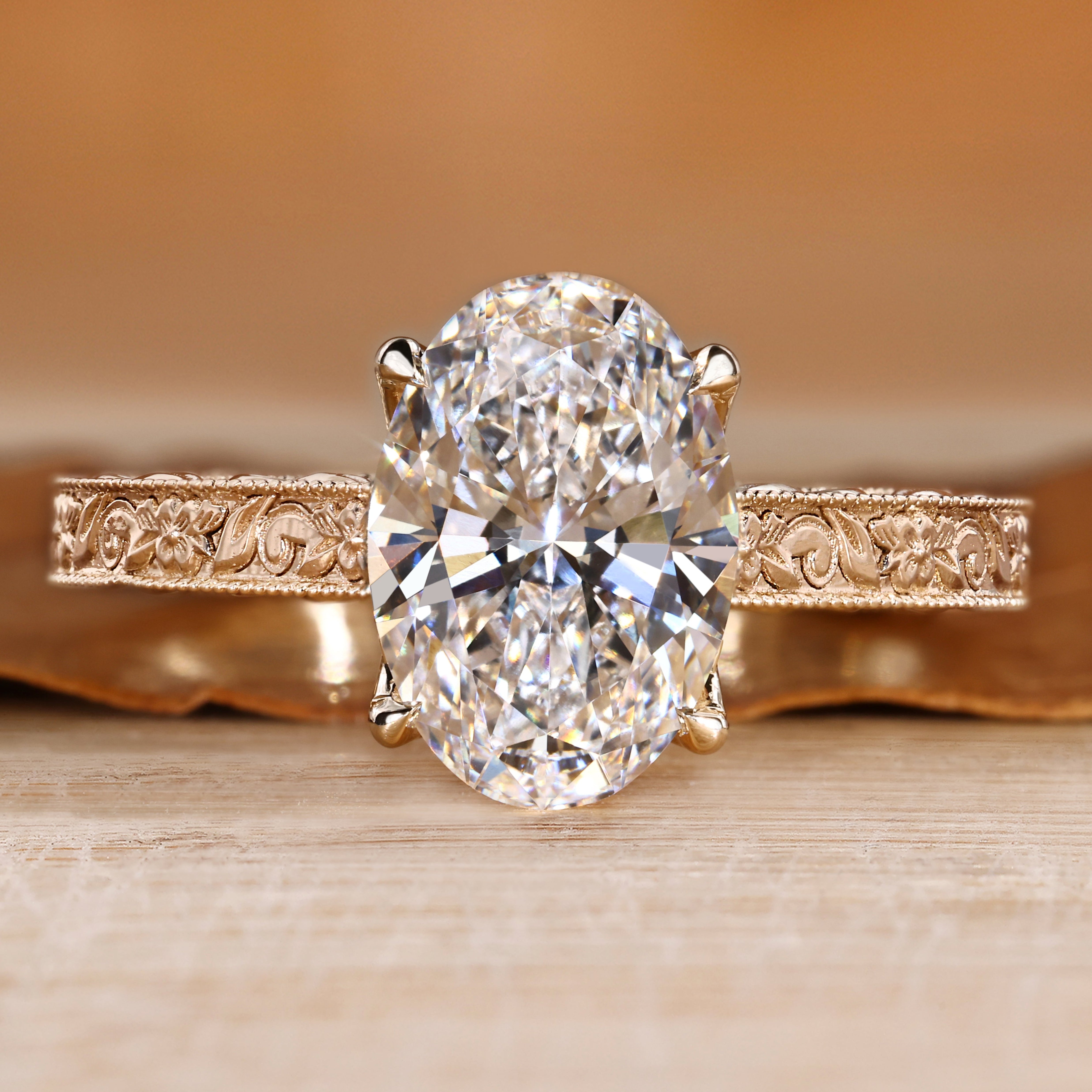
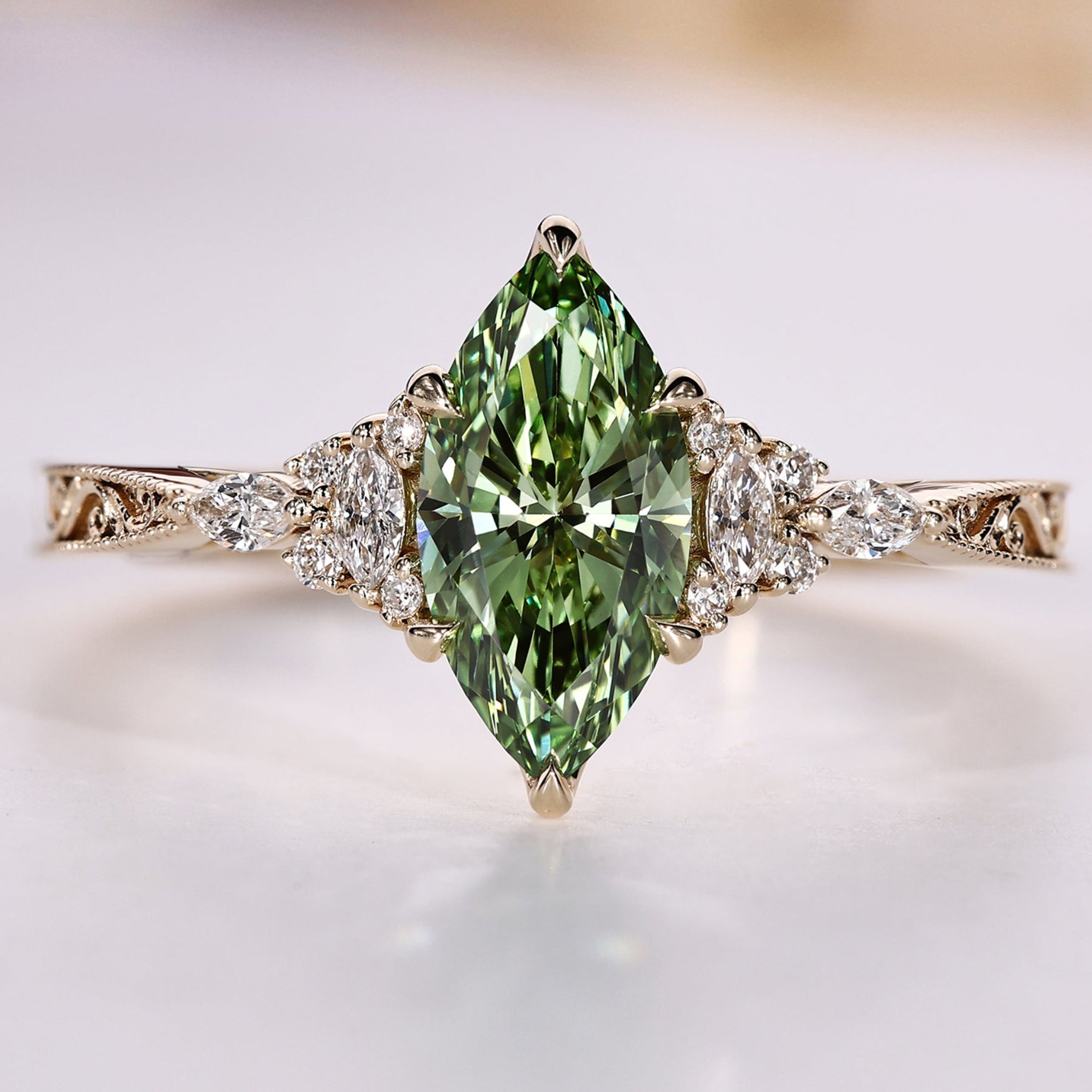
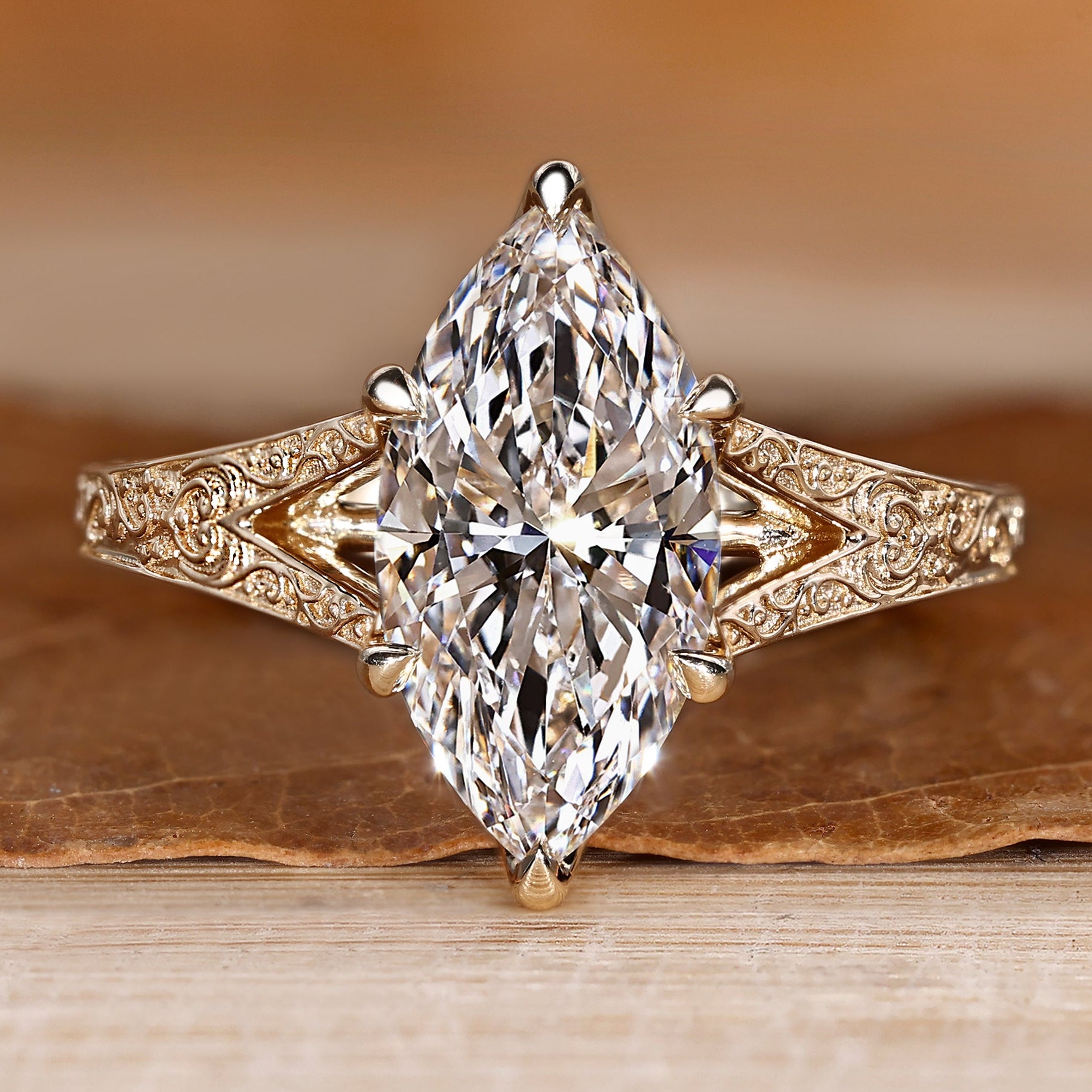
Vintage style engagement rings are brand-new jewelry built around an older look. A vintage-inspired engagement ring might borrow Victorian florals, Edwardian filigree, or Art Deco geometry, but the ring itself is entirely modern underneath.
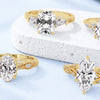
That's actually what makes old designs so easy to live with day to day. You get modern stones, consistent sizing, and fresh metalwork, without ever worrying about hidden damage. Diamondrensu's vintage collection leans into this exact idea, offering period-inspired designs in both lab grown diamonds and moissanite.
Vintage Engagement Ring Eras: An Era-by-Era Reference
Every jewelry era carries its own personality. Do you lean romantic, or do you gravitate toward delicate detail, bold geometry, or old Hollywood glamour? GIA points to Victorian, Edwardian, Art Deco, and Retro as the four major periods worth knowing when exploring antique and vintage engagement rings.
| Era | Key Details | Common Cuts | Metal | Best For |
|---|---|---|---|---|
| Victorian, 1837-1901 | Romantic florals, hearts, sentimental symbols | Old mine, rose cut | Yellow gold, rose gold | Hopeless romantics |
| Edwardian, 1901-1915 | Delicate filigree, milgrain, lace-like patterns | Old European, transitional | Platinum, white gold | Anyone who loves fine, airy detail |
| Art Deco, 1920s-1930s | Bold geometry, sharp symmetry, striking contrast | Step cuts, old European | Platinum, white gold | Fans of clean, modern structure |
| Retro, 1940s-1950s | Large center stones, sculptural, glamorous forms | Round, fancy cuts | Yellow gold, rose gold | Those who want vintage with real presence |
Victorian Vintage Engagement Rings: 1837 to 1901
Victorian jewelry feels deeply sentimental because of floral motifs, hearts, and little symbolic details that show up everywhere, and yellow and rose gold suit the warmth of these designs beautifully.
Old mine cuts are closely tied to this era. Their higher crowns and smaller tables throw a softer, candlelit sparkle compared to modern brilliant cuts. Also, a lab grown diamond cut in an old mine style can recreate that character without needing an actual antique stone.
Edwardian Engagement Rings: 1901 to 1915
Edwardian jewelry feels delicate and airy, almost like lace turned into metal. Platinum gave jewelers the strength to create fine filigree, intricate openwork, tiny milgrain beading, garlands, ribbons, and lace-inspired patterns.
Old European cuts suit this era wonderfully, as their rounded outline and broader facets create a gentler sparkle that pairs naturally with fine metalwork. Moissanite can also bring extra fire to these delicate settings if you want more brilliance.
Art Deco Engagement Rings: 1920s to 1930s
Art Deco pulled jewelry in a sharper, bolder direction with straight lines, symmetry, geometric shapes, and strong contrast. Platinum and white gold were the preferred metals, while emerald and Asscher cuts reinforced that architectural look.
If a clean structure with a vintage edge appeals to you, Art Deco is hard to overlook, and it remains one of the easiest vintage styles to translate into a modern engagement ring.
Retro Vintage Engagement Rings: 1940s to 1950s
Retro jewelry is bold, glamorous, and sculptural. Gold took center stage during this period, and designers often reached for large center stones paired with rounded, sweeping forms.
You can feel old Hollywood glamour in nearly every piece. Choose Retro if you want a vintage character that reads as confident rather than delicate.
How to Choose Your Vintage Diamond Ring: The Buyer's Framework
Choosing vintage diamond rings gets much easier when you work through things in order - design language first, then stone, construction, and fit.

Step 1: Choose Your Era First
The era shapes almost everything else about the ring. Victorian suits romantic tastes, Edwardian leans into fine filigree, Art Deco brings strong geometry, and Retro feels bigger and more glamorous. Pick the era before the exact ring, as it gives your search for vintage diamond rings a clear direction from the start.
Step 2: Vintage Style or True Vintage?
Ask yourself honestly - do you want history, or just the look of it? A true vintage or antique engagement ring carries genuine age, natural patina, and sometimes a few condition concerns worth accepting.
A vintage-inspired design hands you more control instead: modern construction, easier sizing, newer stones, predictable quality. For a ring you'll wear daily, that matters more than it might seem. Diamondrensu can help you with vintage-style engagement rings made with period-inspired details, using both lab grown diamonds and moissanite.
Step 3: Lab Grown Diamond or Moissanite?
A lab grown diamond is a real diamond - chemically, physically, and optically identical to a mined one. And Diamondrensu offers you IGI-certified lab grown diamonds at a noticeably lower price than mined alternatives.
Moissanite offers a different kind of sparkle, with a higher refractive index that creates strong fire and colorful flashes. It suits buyers who want vintage detail paired with plenty of brilliance. Both options show up across Diamondrensu's collection.
Step 4: Consider Sizing and Wearability
Older rings can be genuinely difficult to resize - delicate filigree often can't handle major changes, and some settings limit adjustment altogether.
Modern vintage-inspired rings are much easier to plan around your actual size, and Diamondrensu also offers made-to-order customization across stone shape, size, color, and setting, which takes the guesswork out of choosing among vintage diamond rings.
Vintage Wedding Rings: Pairing a Band With Your Vintage Engagement Ring
Your wedding band should work with your engagement ring, and not against it so vintage wedding rings are meant to feel like one complete story. The right pairing comes down to height, shape, and how much detail each piece carries.
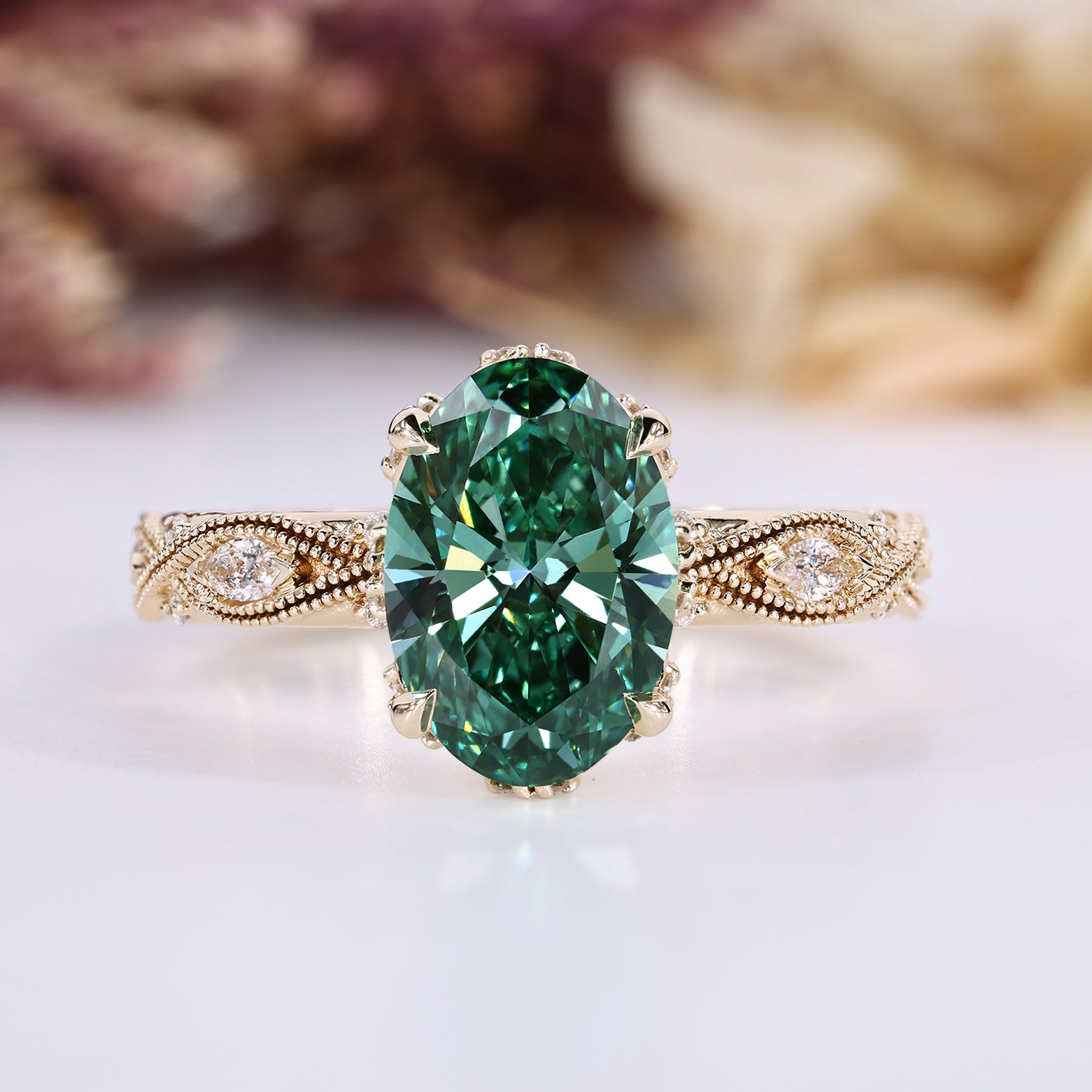
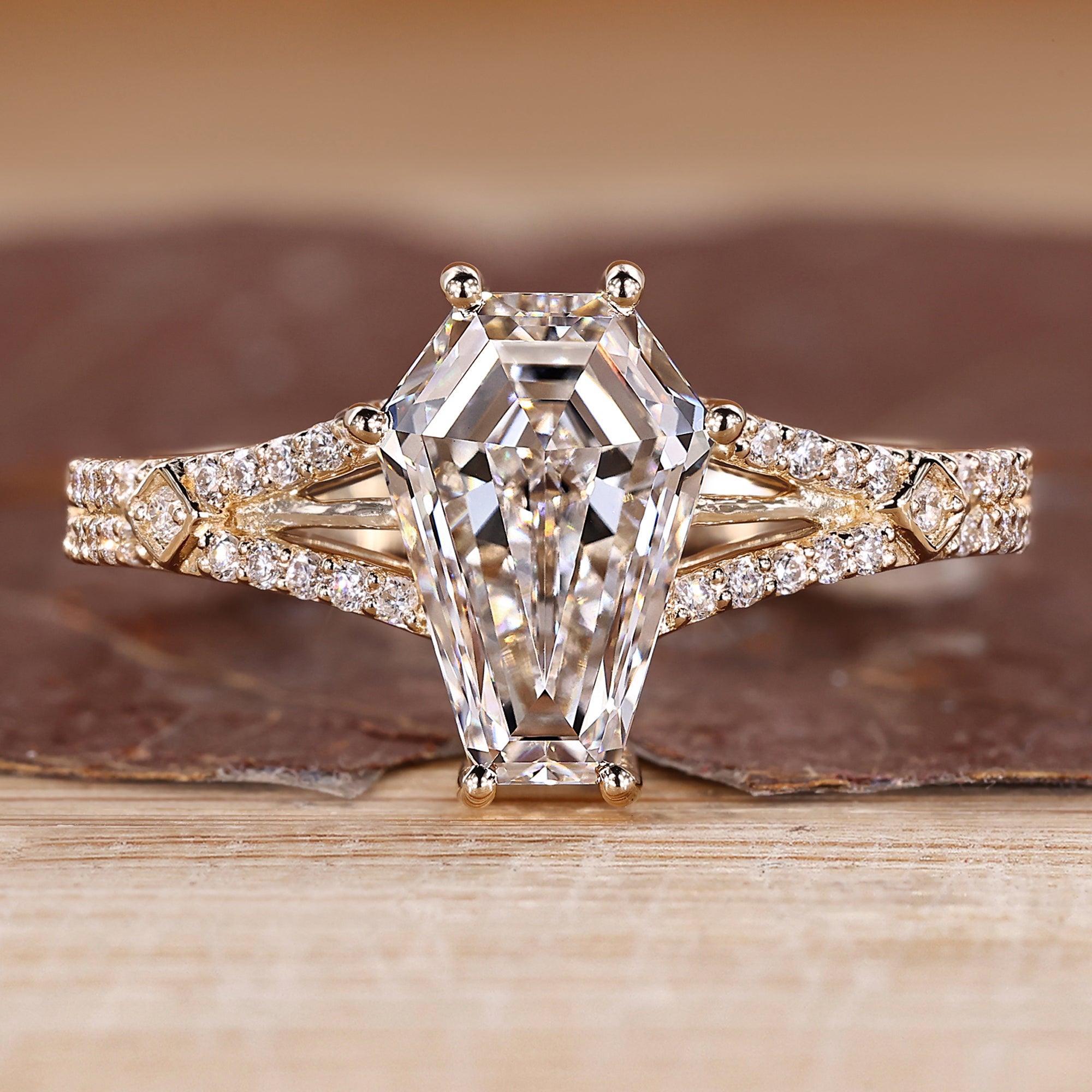
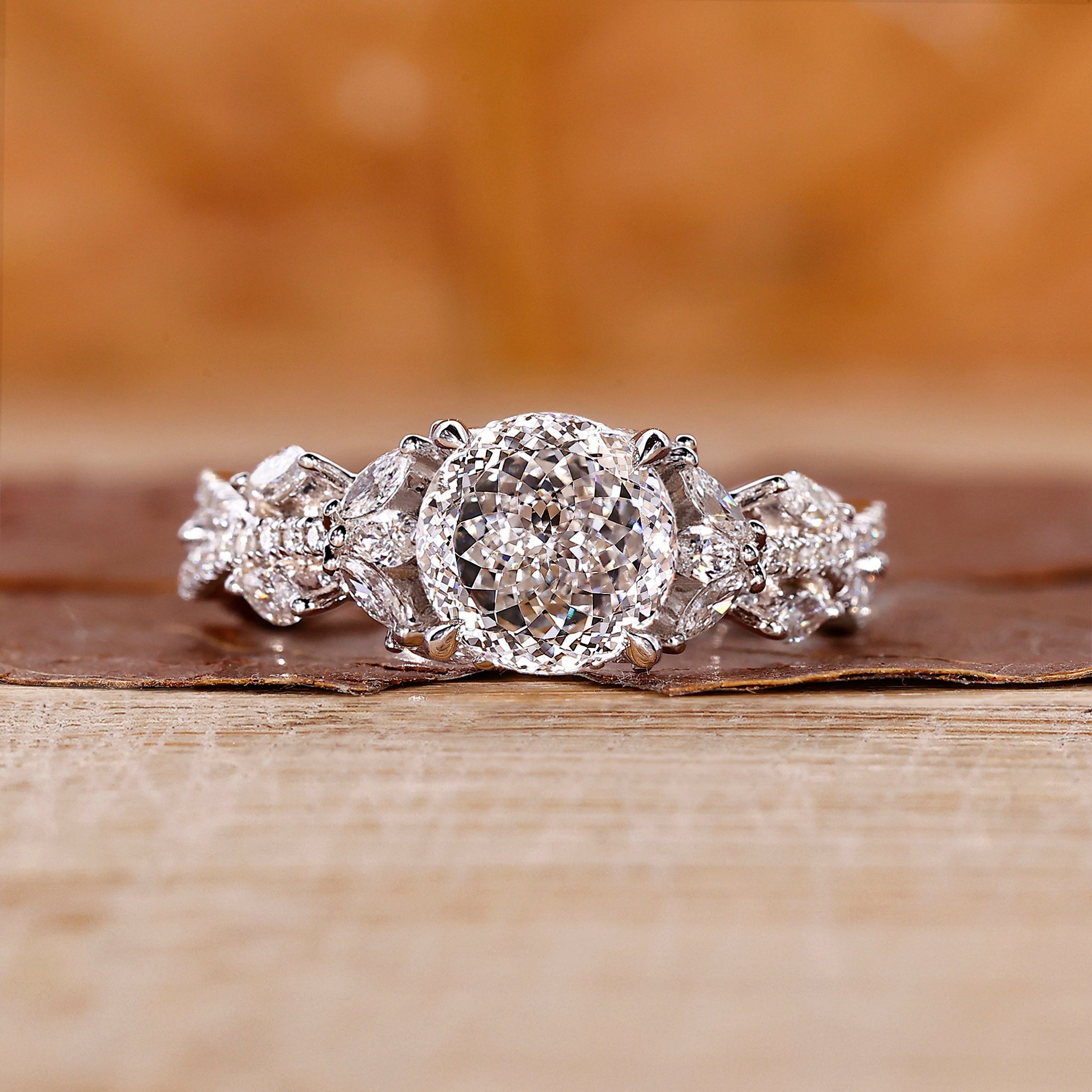
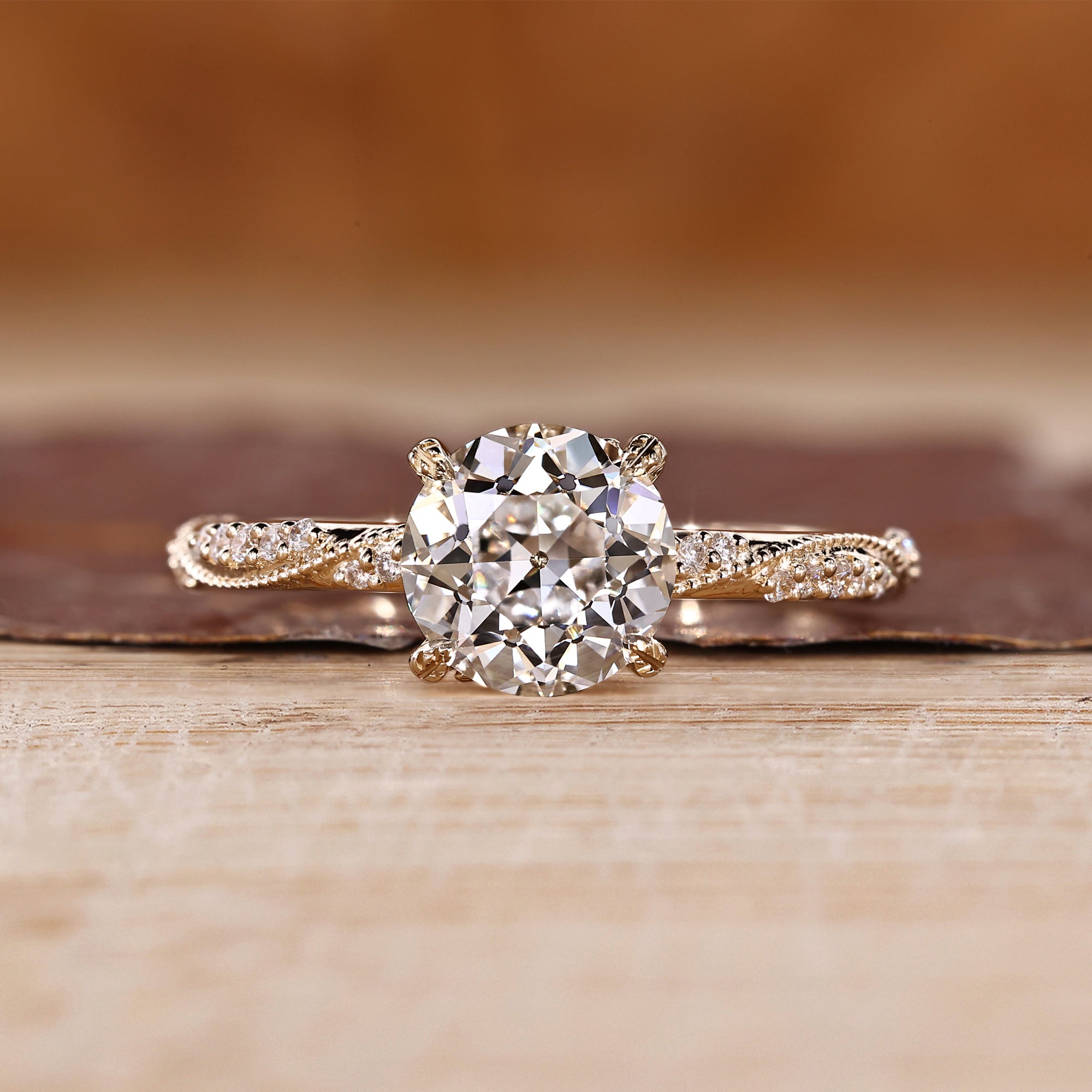
Straight Bands With Art Deco and Retro Settings
Art Deco and Retro rings pair beautifully with straight bands. A plain metal band creates clean contrast, while a milgrain edge keeps the whole set speaking the same period-inspired language.
Curved Bands for Victorian and Edwardian Settings
Floral, detailed Victorian or Edwardian rings often need a bit more room. A curved or contoured band follows the engagement ring's profile naturally and closes up any awkward gaps.
Matching Milgrain and Filigree Details
For a set that feels truly coordinated, repeat one key detail across both rings. A shared milgrain edge or filigree pattern ties vintage wedding rings and their matching engagement ring together, and Diamondrensu's customizable designs make this kind of pairing easy to pull off.
Vintage Inspired Engagement Rings at Diamondrensu
If you love older jewelry but want modern reliability, vintage-inspired engagement rings offer a genuinely practical middle ground. Diamondrensu's collections span both lab grown diamond and moissanite, with old mine, old European, antique cut, and rose cut options available across the wider site.
Lab Grown Diamond Vintage Engagement Rings
Lab grown diamonds bring modern quality into period-inspired settings. Our lab grown diamonds share the same chemical, physical, and optical properties as mined diamonds, and come with IGI certification and a lower price per carat.
Moissanite Vintage Engagement Rings
Moissanite looks especially striking in vintage settings because its lively, colorful fire stands out against detailed filigree, milgrain, and geometric metalwork. Diamondrensu's moissanite collection includes vintage, antique cut, old European, and old mine inspired designs.
Conclusion
Vintage engagement rings offer more than an old-fashioned look, and the same goes for antique jewelry engagement rings that carry real history in every detail. They let you choose a design language with genuine personality. Diamondrensu brings that vintage character into modern jewelry through handcrafted settings. It can be with lab grown diamonds or moissanite, but thoughtful customization remains consistent. Whether your taste leans Victorian, Edwardian, Art Deco, or Retro, it's worth exploring the collection and finding what feels right for you.
Find Your Vintage Inspired Engagement Ring
Explore vintage inspired engagement rings from Diamondrensu UK, with Victorian, Edwardian, Art Deco and Retro details in lab grown diamond and moissanite designs.
Shop Vintage Engagement RingsFrequently Asked Questions
Leave a comment
Please note, comments must be approved before they are published.