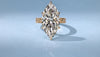
Are Lab Grown Diamonds In Themselves Too Good To Be True?
Are lab grown diamonds real? This feels like a trick question when prices look wildly different. You see two stones that look the same, then the quote lands, and your brain does the math fast.
Here is the problem: the word “real” is doing too much work. “Real” can mean “made of diamond,” “from the earth,” or “holds value the way my family expects.” Those are three different tests, and mixing the tests creates confusion.
So the better question is practical: what kind of “real” matters for your purchase, your story, and your paperwork? Whether a lab grown diamond is real becomes less of a debate and more of a definition exercise, and clear definitions make purchase decisions easier.
See What 'Real' Looks Like - Explore Our Lab Diamonds
What Are Created Diamonds?
A created diamond is not a “diamond-like” stone playing dress-up. It is a diamond, but the origin story runs through machines, not geology.
Created diamonds are also called lab grown diamonds in everyday talk. The labels can sound like marketing, so the safest move is to focus on material identity first. When a seller says “created diamond,” the seller is claiming the stone is made of crystalline carbon arranged in the same structure that defines diamond.
What "real diamond" means at the atomic level
If you strip away the romance associated with natural diamonds, what remains is a carbon crystal with a specific lattice. That lattice drives the hardness, the sparkle behavior, and the way light moves through the stone after cutting. When the lattice matches diamond, the stone is a diamond, period.
This is where the statement is a lab grown diamond real’ gets a clear answer at the material level. The question is not about “vibes” or “natural energy”; the question is about structure and measurable properties.
To keep the category clean, separate diamonds from simulants. The simulants can look similar, but they are not diamonds.
How created diamonds are formed and controlled
Created diamonds grow under controlled conditions that mimic the pressure-and-temperature environment needed for diamond growth. You do not need the engineering details to buy a lab diamond, but you do need one practical idea: created growth can be tuned.
That tuning often affects consistency. A buyer can target certain sizes, clarity, and color ranges with less reliance on rare geological luck. That level of control is one reason lab created diamonds often come at lower prices, even though they perform strongly across key diamond quality metrics.
Where real debates start: origin vs properties
Most debates about natural vs created diamonds start when real slides from the material to the origin. Is a lab grown diamond real is best treated as a materials-based definition, not a branding debate; decide whether you mean material identity, where the stone is a diamond, or origin, where the stone is natural. Although the terms sound alike, they point to different meanings.
If your goal is lifetime wear, material identity carries heavy weight. If it is for a rare narrative, origin matters more. The household in the engagement ring scenario usually starts with material doubt, then realizes the real stress comes from value expectations and social perception.
Is a lab grown diamond real at the material level? This is usually the easy part. The harder part is the “so what” part: if the material is real, why does the market treat the stones differently?
The Appeal of Created Diamonds
The appeal is not only price; the appeal is optionality. A created diamond lets you choose size, quality, and ethical constraints with more freedom.

The simplest reason people look at created diamonds is the budget stretch. You can often allocate money toward cut quality, setting design, or overall craftsmanship instead of paying only for origin. That shift matters when you want a durable ring that looks balanced on a hand, not just a high carat number on paper.
What you gain: Price, Access, and Consistency
Start with constraints, not slogans. A created diamond can solve several common constraints at once:
- Budget ceiling: You can hit a target look without forcing a compromise in cuts.
- Design freedom: Bigger center stones or matched side stones can be easier to source.
- Availability: A specific size and shape may be easier to find quickly.
- Predictable specs: You can shop within a tighter range of color and clarity.
This is where why lab grown diamonds are good matters in an everyday, practical sense. “Good” is not a vibe; “good” means durable enough for daily wear, cut to sparkle well, and graded so you understand the quality.
Fair comparison: natural diamonds and when they win
Natural diamonds win when the buyer values a geological origin story, tradition, and certain social scripts around rarity. Some families care deeply about “from the earth,” and that preference can be honest and valid. The premium buys an origin narrative plus a market that has older habits around resale and heirloom framing.
Natural diamonds can also win for buyers who want to minimize “explaining.” A buyer who hates defending choices might feel more at ease with a familiar category, even if the buyer pays more for that calm.
Are lab grown diamonds worth it for your goal?
Answering if lab grown diamonds are worth it becomes easier when you name your goal in one sentence. Your goal might be “best daily-wear ring within a set budget,” “family-tradition stone with a natural origin,” or “a big look without debt stress.”
The tricky part is that people sneak in a second goal without noticing. A buyer says, “I want an ethical choice,” then quietly hopes for a strong resale, and then feels disappointed later. That disappointment is avoidable when you separate use value from market value.
What value means next: expectations you must set
Now for the question nobody loves: Are lab grown diamonds worth anything in the future? The honest answer depends on what “worth” means.
Use value is clear: a diamond that you wear and love can be “worth it” even if resale is weak. Market value is a bit more complex: resale depends on demand, channel, documentation, and how buyers perceive origin categories over time. A jeweler's buy-back policy or trade-in policy can change the practical outcome, but you should treat policies as part of the deal, not a bonus.
Not Sure Yet? Browse Our Collection
Identifying Created Diamonds
Following this step saves you later. Most buying stress disappears when your paperwork and disclosure match the stone in your hand.

Identifying Created Diamonds Created and natural diamonds can look identical to a buyer’s eyes. That visual similarity is exactly why verification matters, especially when the price gap is large and the salesperson is confident. The goal is not to become a gem lab; the goal is to reach a documentation standard that matches your risk tolerance.
Are lab grown diamonds real diamonds by testing standards?
At the material level, testing can confirm diamond identity. Whether lab grown diamonds are real diamonds is determined by scientific standards, not marketing claims. Testing can also focus on origin markers, because created growth often leaves patterns that require specialized tools to detect.
A normal person does not need to tell the difference by sight because they can demand disclosure and written verification.
What can and can’t be seen without instruments
A buyer cannot reliably separate created and natural diamonds by naked-eye inspection alone. Some stones show clues, but clues are not proof. A seller who promises an “easy visual tell” is usually selling confidence, not accuracy.
Safe checks can still help you shop smarter:
- Ask for the grading report and confirm that the report matches the stone details.
- Look for laser inscriptions when a report references an inscription.
- Check the setting work, because sloppy setting work can create durability risk.
Those checks do not replace origin testing. The checks only reduce obvious mismatch risk.
Stop treating is a lab grown diamond real like a label debate and think of it like a process check. Verify what proof exists and who produced the proof.
Certification: what it verifies and what it misses
Certification can mean two different things: grading quality and determining origin. A grading report often covers the “4Cs” style factors and sometimes includes origin disclosure. A separate origin report or disclosure statement can add clarity.
Certification still has limits. Paper can be forged, stones can be swapped, and sales pressure can shorten your attention span. That is why the chain matters: you want a credible report, tied to the specific stone, supplied in a way that you can verify.
Design a Ring That Fits You - Start Customizing
Why settle for what’s available? Create a diamond ring that fits your budget, style, and standards.
Find Your Ring Today
Conclusion
You do not need a perfect choice; you need a choice you can defend easily.
Start by naming your primary constraint in plain language. Your constraint might be budget, tradition, ethics preferences, or future liquidity. Then choose a path that fits the constraint instead of trying to win every category.
Finally, answer the emotional question, not only the technical one. Are lab grown diamonds good for your relationship story, your lifestyle, and your comfort level? If the answer is yes and the documents back the stone, you can stop spiraling and start enjoying the ring.
When you choose a jewelry piece with us at Diamondrensu, it’s about more than just picking a design, it’s about trust. We work exclusively with lab grown diamonds and make sure everything is out in the open, with full documentation, so you’re never left guessing. Explore our in-stock collection as well as made-to-order pieces, which means we can adjust the cut, setting, and shape to fit you.
We put a lot of care into custom details and finishings, because we want your ring to look and feel premium, but also stand up to everyday life. If you’re looking for something personal, thoughtfully made, and backed by honest paperwork, you’ve come to the right place.
FAQ's
1. What exactly are lab grown diamonds?
They’re diamonds that grew in a lab instead of underground. That’s the whole twist. You’re not buying a “diamond-ish” stone. You’re buying diamond material, just with a different origin story.
2. How are lab grown diamonds made?
A lab grows a diamond the way nature does, just on a human timeline. A tiny diamond seed goes in, carbon gets added, and the crystal grows layer by layer.
3. Can you tell the difference between lab grown and mined diamonds?
If someone says they can spot it instantly, be skeptical. Most of the time, you can’t tell by eye, especially once the stone is set.
4. Are lab grown diamonds less expensive than mined diamonds?
Usually, yes. That’s why people even consider them. But don’t compare with a quick glance at carat size. Compare the full set of details, cut quality, color, clarity, and the overall finish. Two “one-carat” diamonds can feel like two different products.
5. Do lab grown diamonds come with certification?
Often they do, and you should want that report in your hand. A grading report tells you what you’re buying in plain specs, and it often states that the diamond is lab grown.
6. Are lab grown diamonds considered ethical and sustainable?
Sometimes. Not always. It depends. Lab grown avoids certain mining problems, but labs still use energy, equipment, and supply chains.
7. Is the quality of lab grown diamonds comparable to natural diamonds?
Yes, lab grown can be gorgeous. Natural can be gorgeous. Both can also be underwhelming if the cut is weak.
8. Will a lab grown diamond fade or change color over time?
No, it shouldn’t “fade.” Diamonds are stable. What does change is how clean the surface is.
Lotions, sunscreen, soap, cooking oils, and normal life stuff can dull the sparkle. Clean the ring, and it usually pops right back.
9. How can I ensure I am purchasing a real lab grown diamond?
You don’t need to become a gem nerd. You just need a clean paper trail and a seller who doesn’t get weird when you ask for it.
A practical checklist:
- Get the grading report and keep a copy.
- Confirm the report states “lab grown” clearly (not hinted, not implied).
- If the report mentions an inscription, ask to see that inscription.
- Make sure return and exchange terms are clear before you pay.
- If you want maximum peace of mind, take the ring to an independent appraiser and ask the appraiser to match the stone to the paperwork.
That’s how you avoid the “Wait, what did I actually buy?” spiral later.
10. What impact do lab grown diamonds have on the traditional diamond industry?
They’ve changed expectations. Buyers now ask sharper questions, compare more options, and expect clearer disclosure.
And the market is splitting into two honest camps:
- People who want the look, durability, and value-for-money.
- People who want the mined origin story, rarity feel, and tradition.
Both choices can make sense. The mess happens when you pay for one story but expect the other story’s resale or status rules.
Want to see our popular rings

Leave a comment
Please note, comments must be approved before they are published.